Step-by-Step Analysis of the Kahrizak Forensic Video
“There are so many [bodies] inside the warehouse, you can’t go in.”
Warning: This report references images and videos containing deceased individuals.
In mid-January 2026, a 16-minute video emerged from Kahrizak Forensic Medical Center in Tehran, showing the aftermath of suppression of protests earlier in the month. The footage, posted by Vahid Online, captures only male victims.
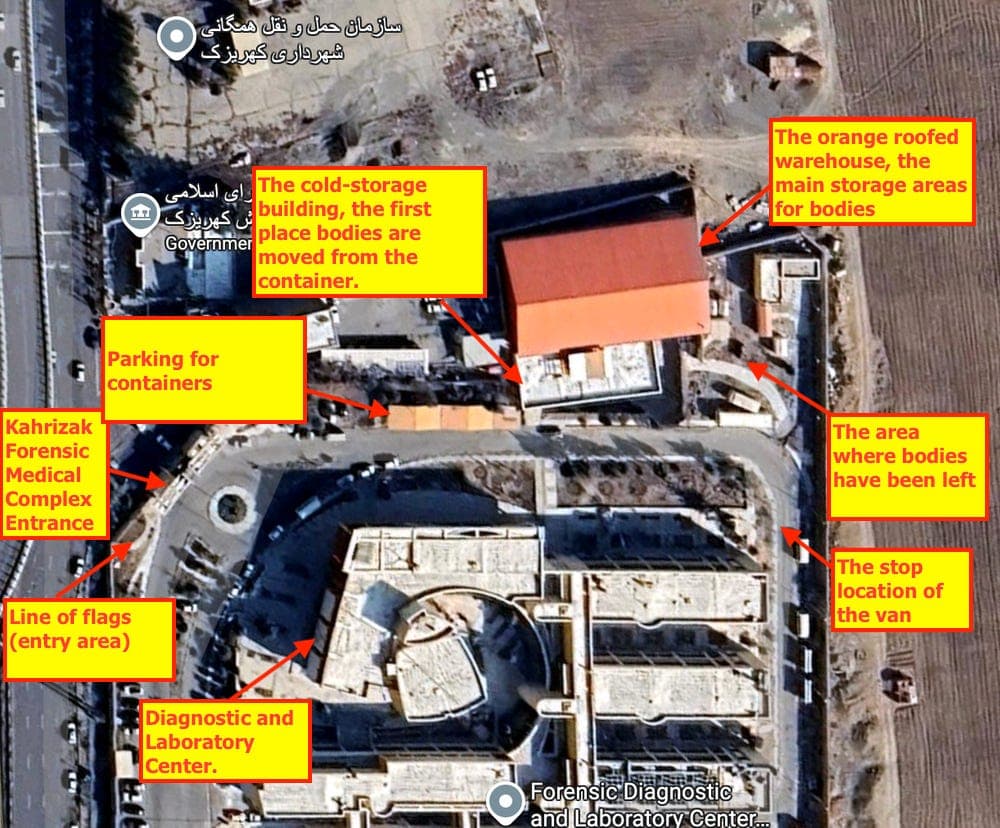
The narrator walks through multiple areas of the facility, which include an orange-roofed warehouse, a white-roofed cold storage building, a covered parking area, a diagnostic and laboratory center, and an adjacent dirt yard. A Google Maps link provides an aerial reference of the site: Google Maps.
Using the online tool, MapChecking, Factnameh estimated the maximum capacity of the area for bodies: approximately 1,100 individuals, assuming 2 m² per person. Accounting for unused corners and space inefficiencies, we estimate around 800 bodies could be accommodated in the cold storage, warehouse, and adjacent dirt area. This calculation excludes scattered bodies elsewhere visible in the video. MapChecking
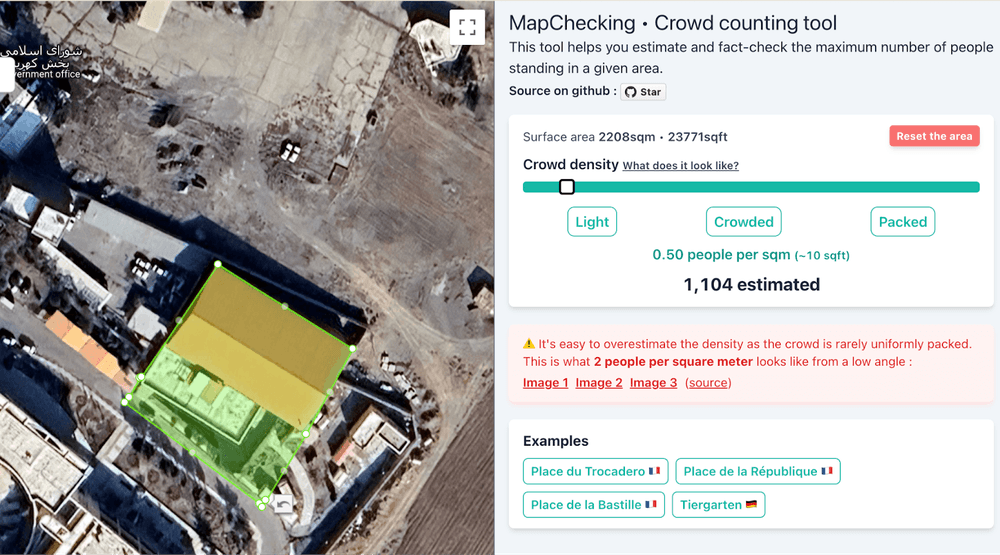
Bodies are constantly moved in and out for identification and storage, meaning that the number visible at any moment may not represent the total.
Video starts from here:
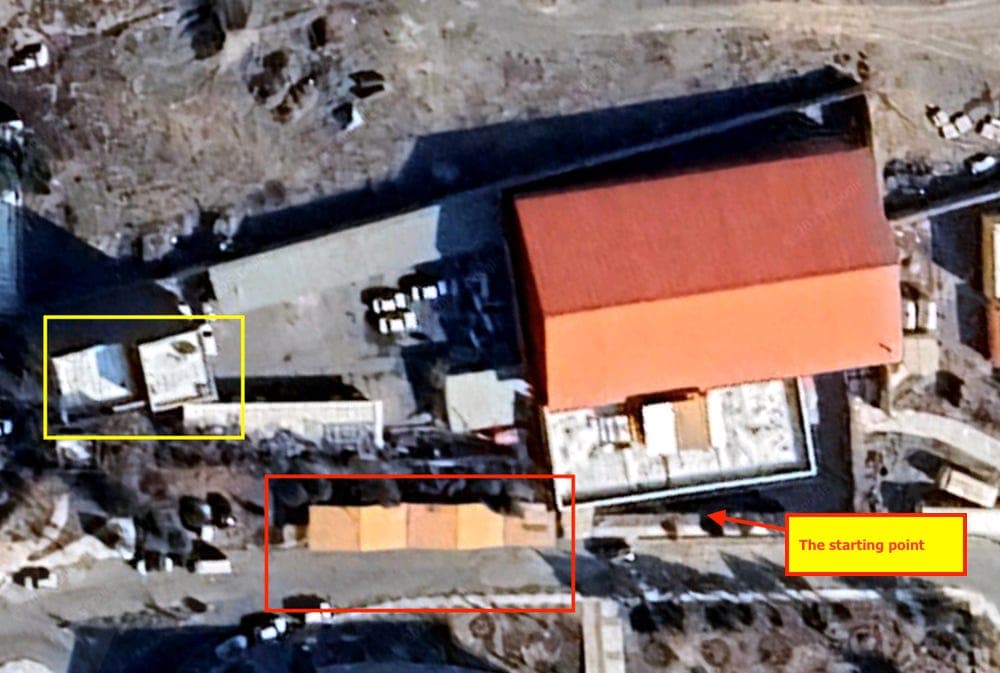
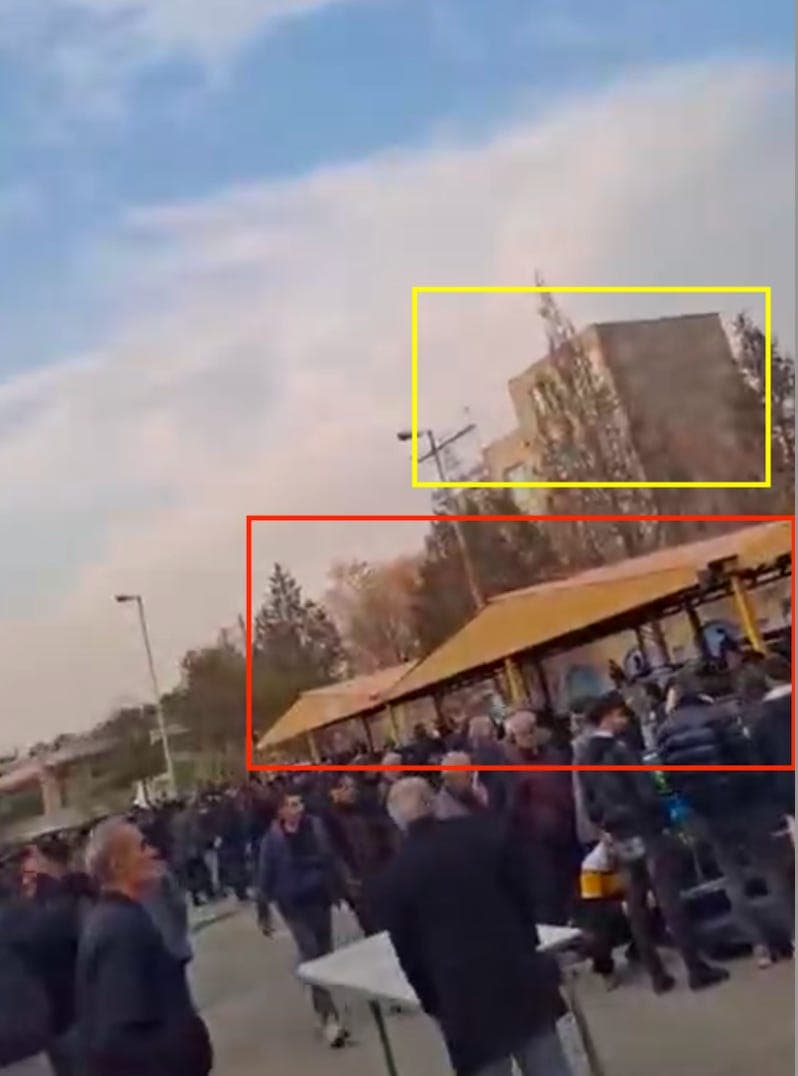
In the first 40 seconds, before the narrator enters the cold storage, roughly 37 bodies can be counted on the ground. Due to the crowds around them, many bodies are not visible in the footage.
The narrator, apparently speaking on the phone, mentions that they are waiting for a new container of bodies, and then proceeds into the hall with the white roof.
00:47: The narrator enters a cold-storage-like building with a white roof. The building’s exterior walls are brick with orange patterns. This rectangular structure has two entrances, at the front and rear. A column stands in the center, and its walls are striped white. The rear door opens onto a narrow corridor between the orange-roofed warehouse and the white-roofed building.
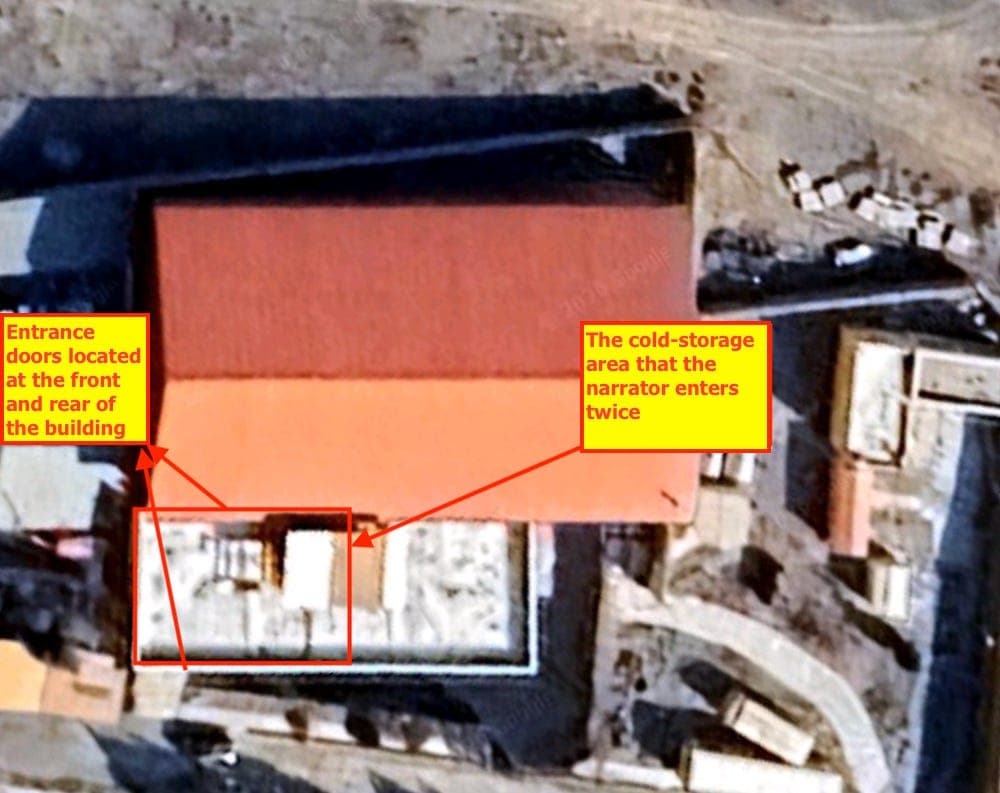
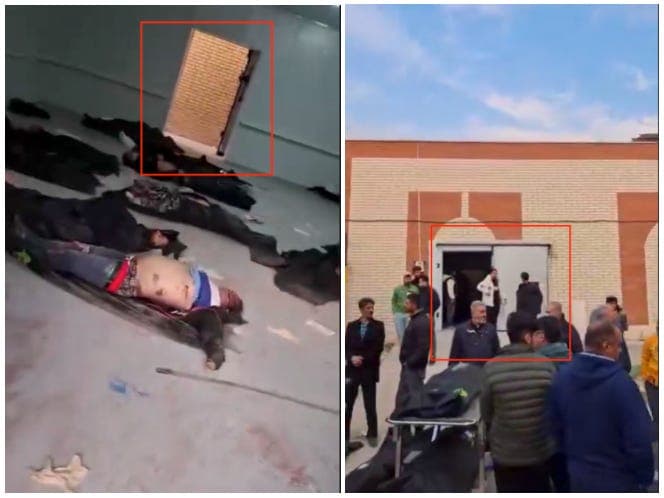
The interior space is not very deep. A door from this building opens to the right, There are two separate spaces beneath this roof, divided from each other, and the video does not show the interior of the second space.
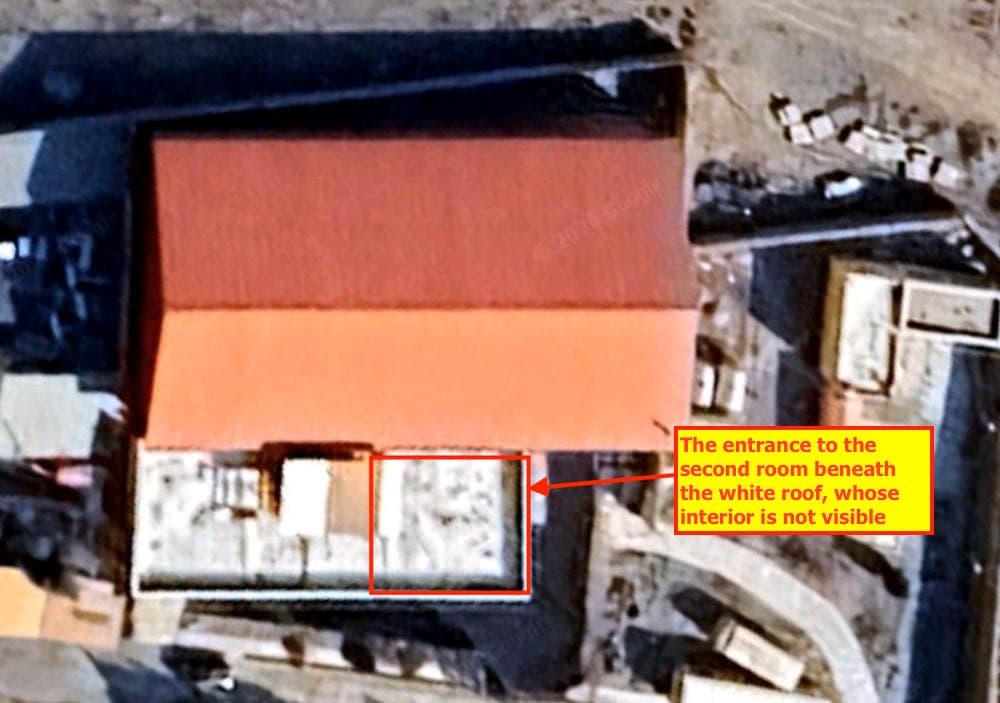
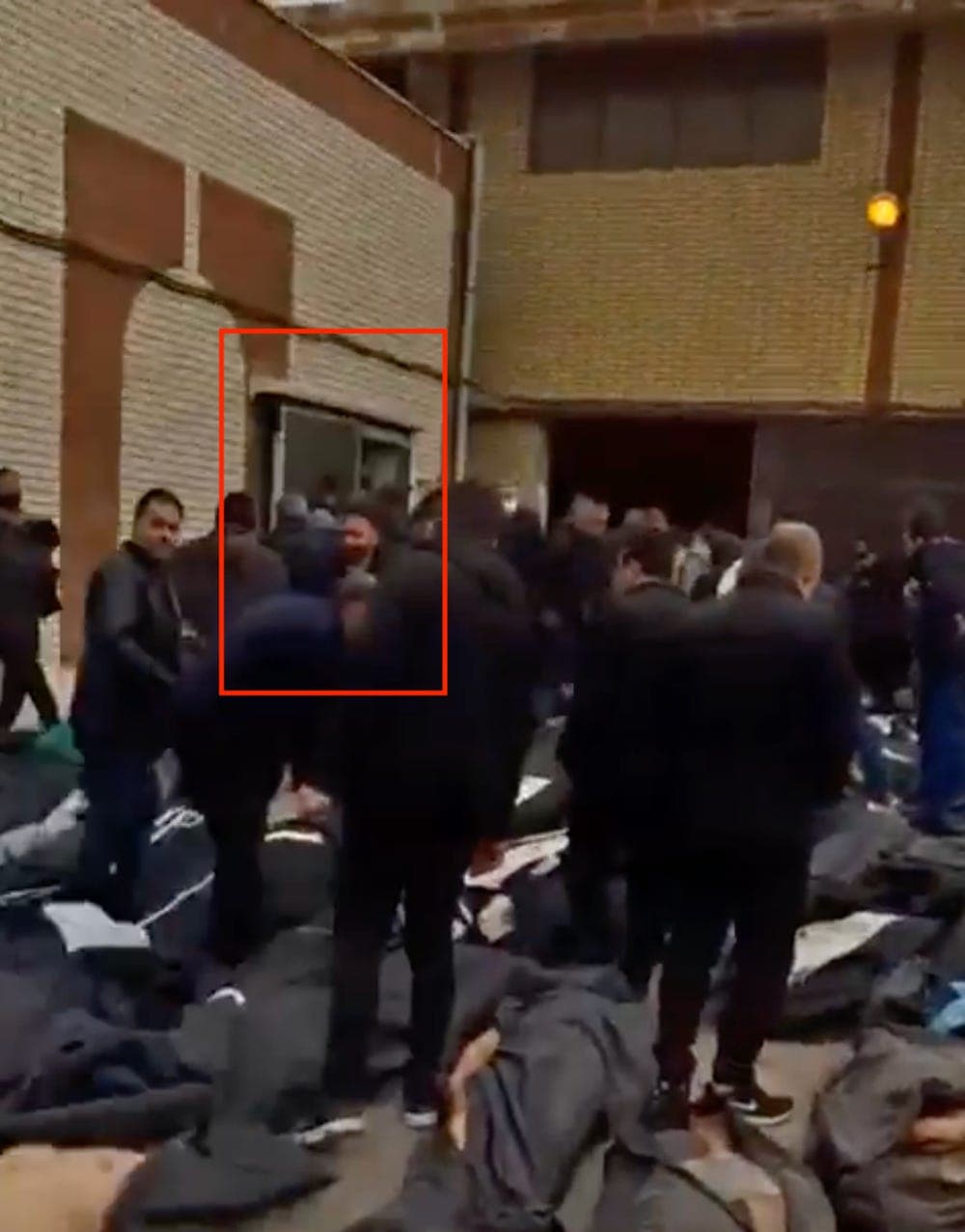
In the first room, the floor is bloodied, and scattered fabrics and plastics indicate corpses that have already been identified and cleared. The narrator explains that the remaining bodies are those that have not been identified. The video does not show the second room’s interior.
00:56: The scene changes to a composite of several short clips. A white van labelled “Shahed-shahr (a city in Tehran province) Municipality Cemetery Unit” is visible Based on visual clues, this segment appears to have been filmed on the southern road of the complex, near the main building with blue-patterned walls.
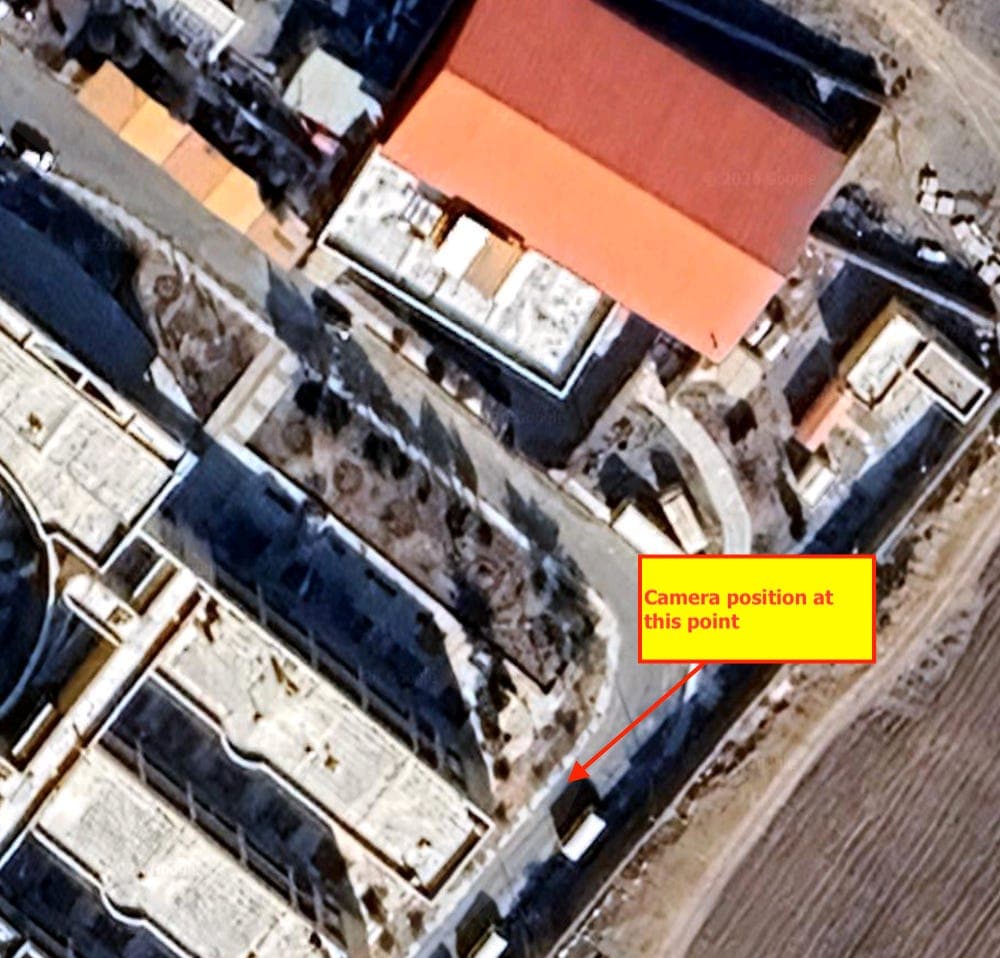
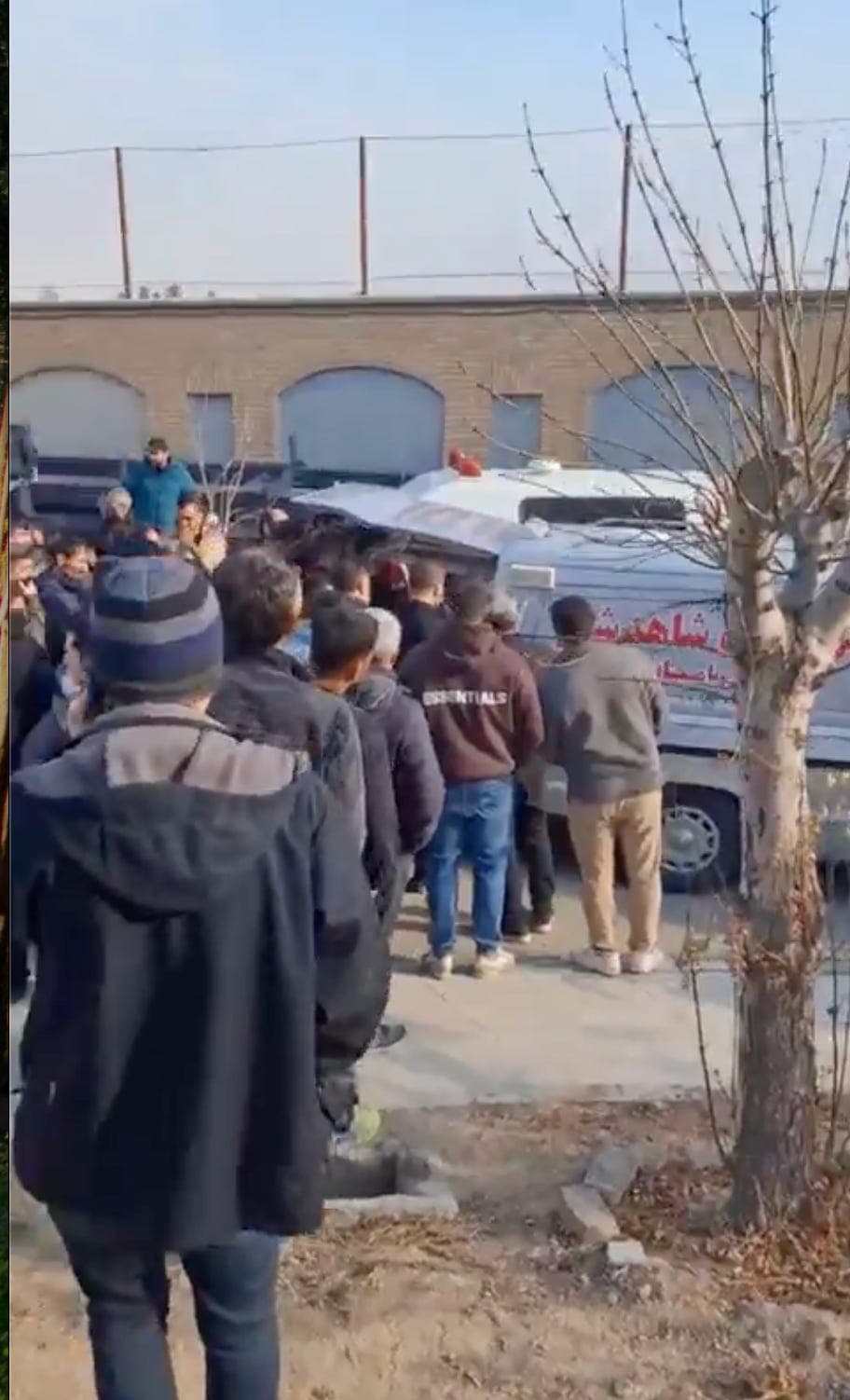
A large crowd gathers around the van to identify the bodies inside, though the number of corpses is not visible. The narrator tells someone out of frame that they are removing the bodies “one by one.”
2:14: A new shot begins. A bloodied body is seen from behind, being examined by two individuals, likely forensic specialists. The narrator asks, “Shot to the head?” and someone responds, “Yes.”
This video appears to have been recorded just beyond the entrance to the orange-roofed warehouse.
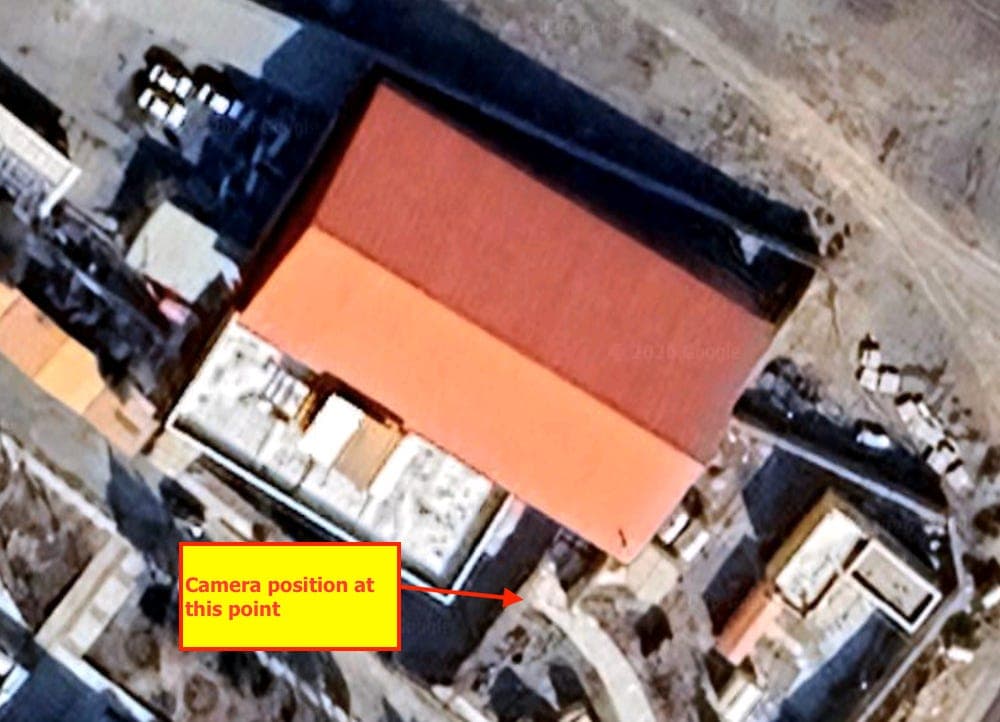
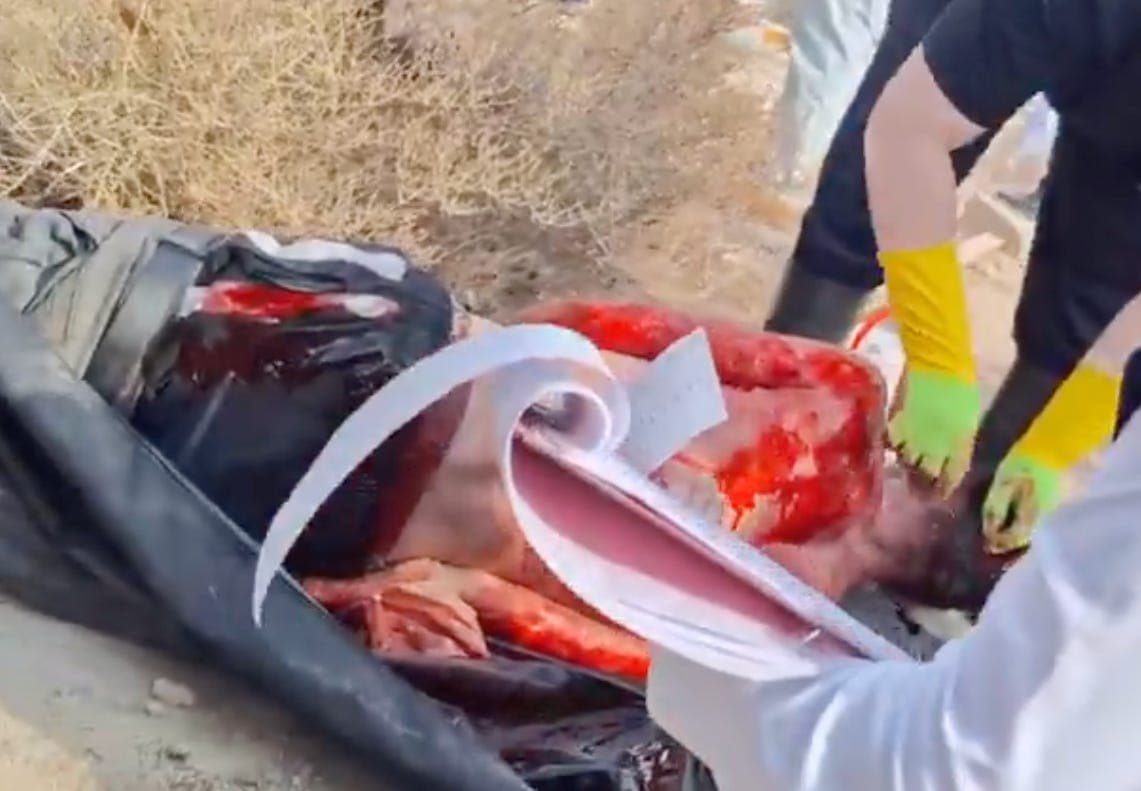
As the narrator moves along the main street in front of the warehouse, another bloodied body lies on the ground, being examined by a forensic specialist. Electrodes from a heart monitor are still visible, likely used for resuscitation. The body is covered in blood, with part of a hand apparently severed.
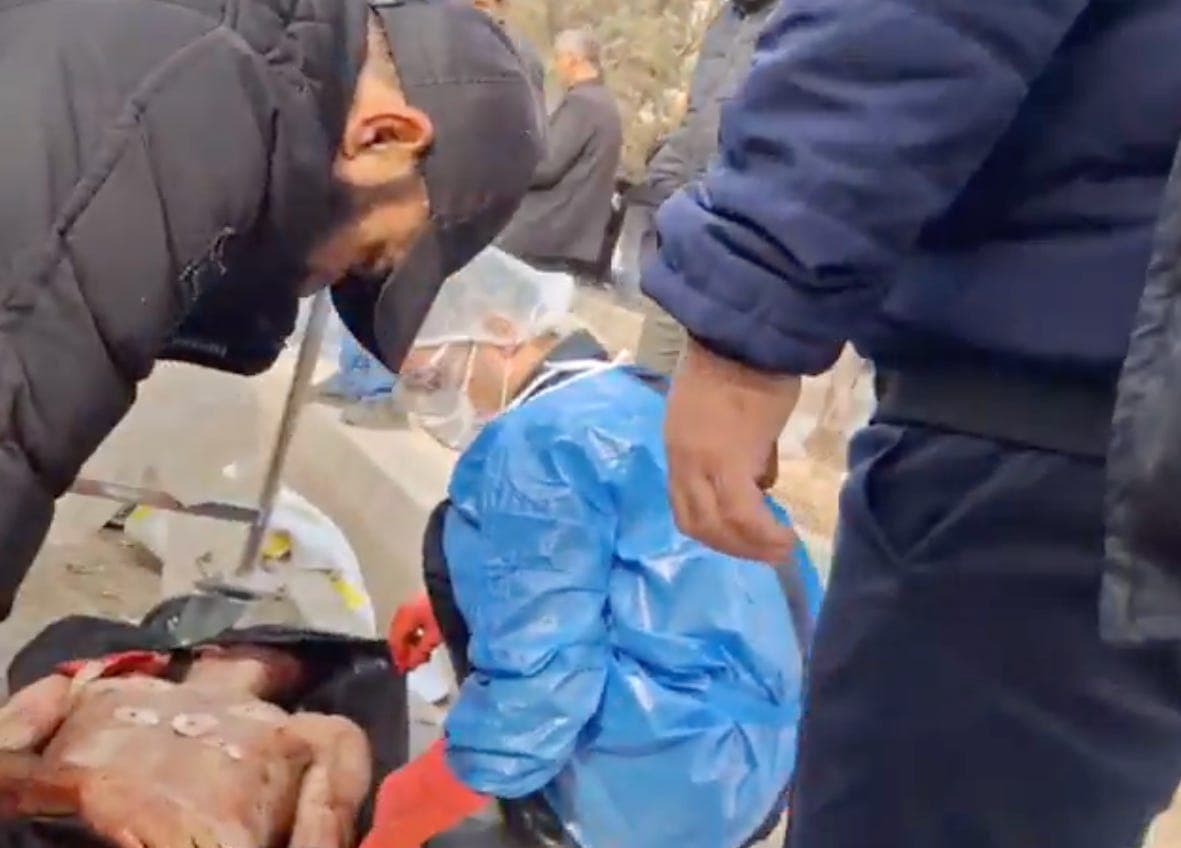
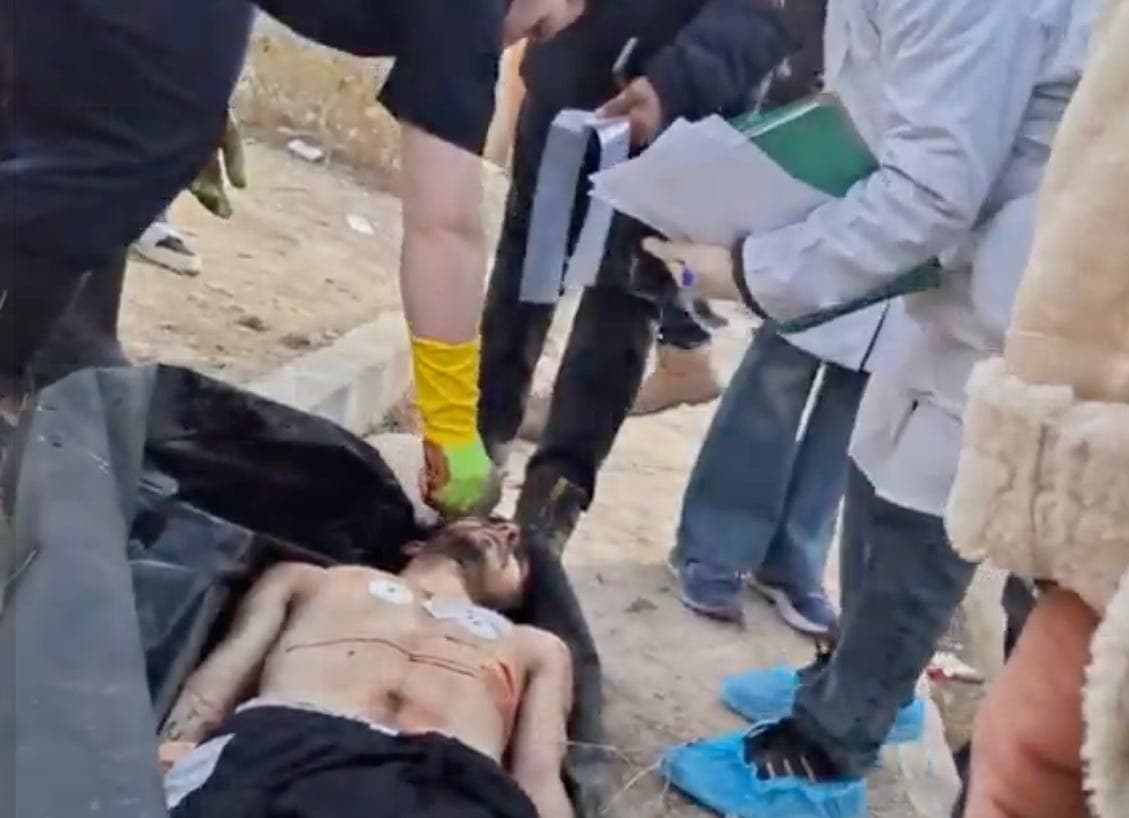
The narrator pans to another bloodied body, also with electrode patches.
The bodies examined by forensic specialists are those that have been identified. The doctor approaches each to determine the cause of death and the bullet impact location before clearance. People often mourn over these bodies. The area in front of the warehouse is filled with corpses.
The camera pans to a dirt yard in front of the warehouse where bodies lie near temporary shelters and construction debris. Another body undergoing examination and clearance is visible, with resuscitation equipment. The body appears intact; the doctor examines the head, which is partly obscured.
The doctor instructs the body to be moved down. A man says, “it’s my sister.” The men around the ambulance are cleared. The doctor says the body must be moved inside the hall to determine if the woman was pregnant.
06:19: The video cuts and moves closer to the complex entrance. The main entrance gate and, in the distance, signs for “Kahrizak Public Transport Organization” and the “Diagnostic and Laboratory Center.” A container branded MARAL is also visible, presumably used for body transport.
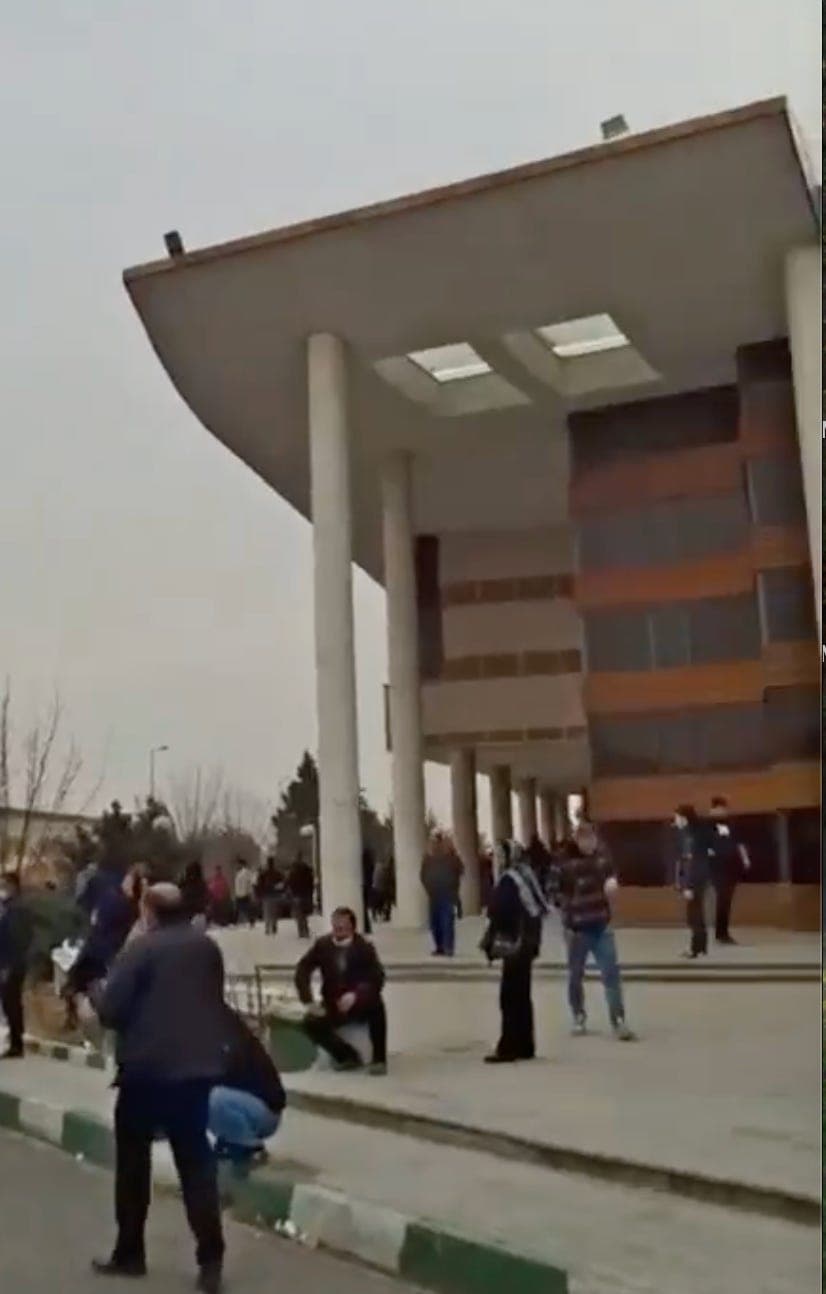
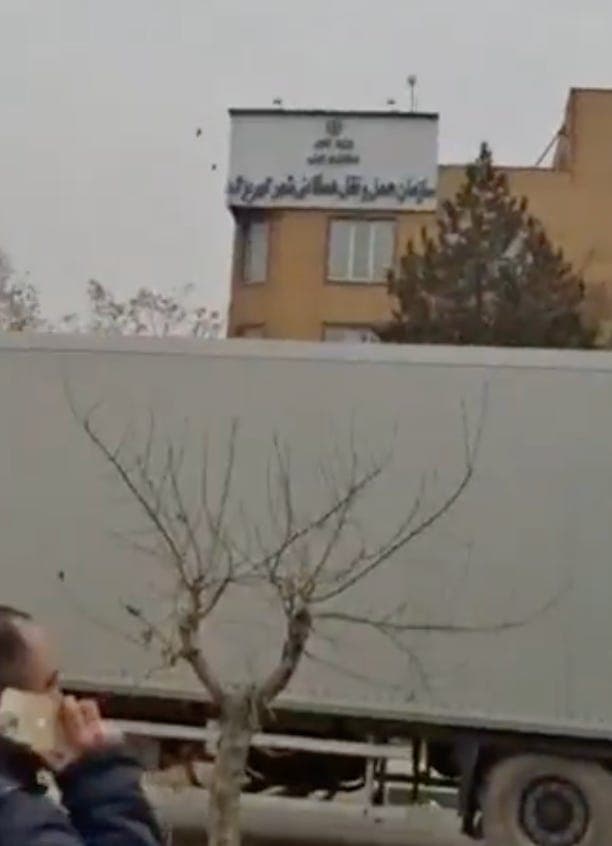
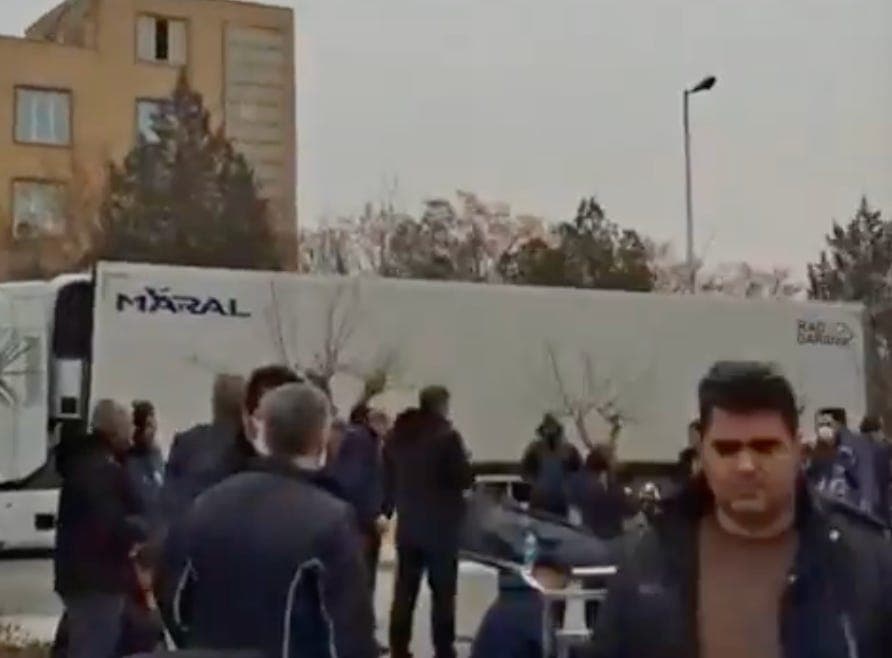
The narrator pans the camera several times, showing people wailing. Corpses are visible throughout the route. Without cutting, the camera returns to the orange-roofed warehouse.
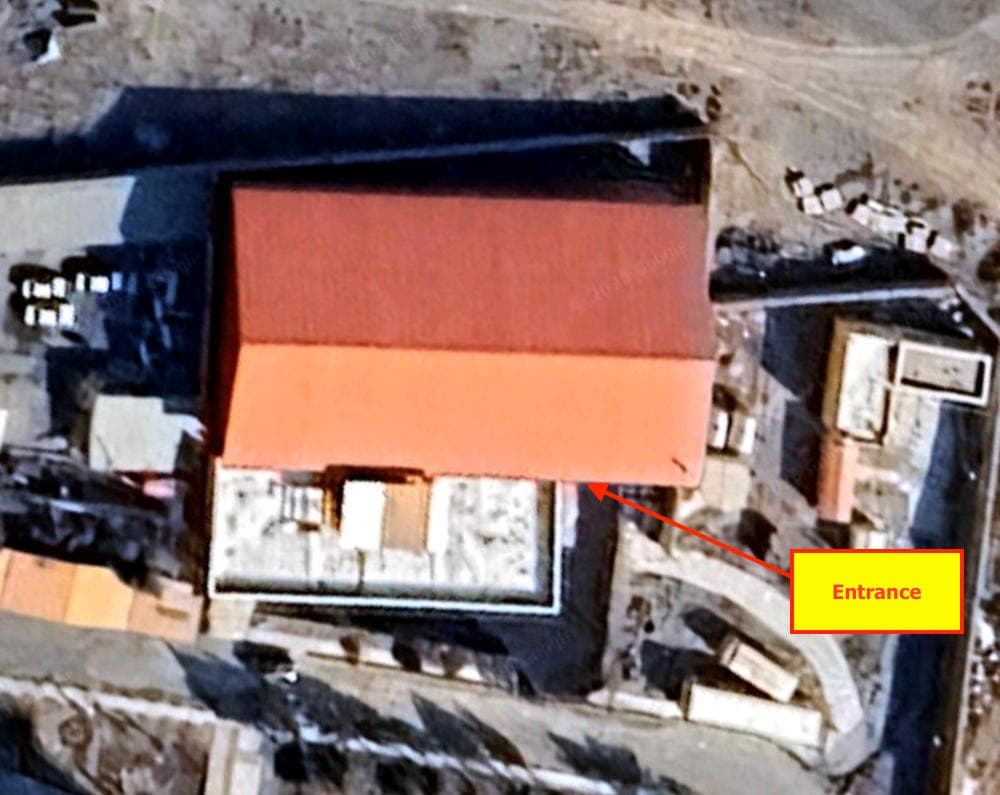
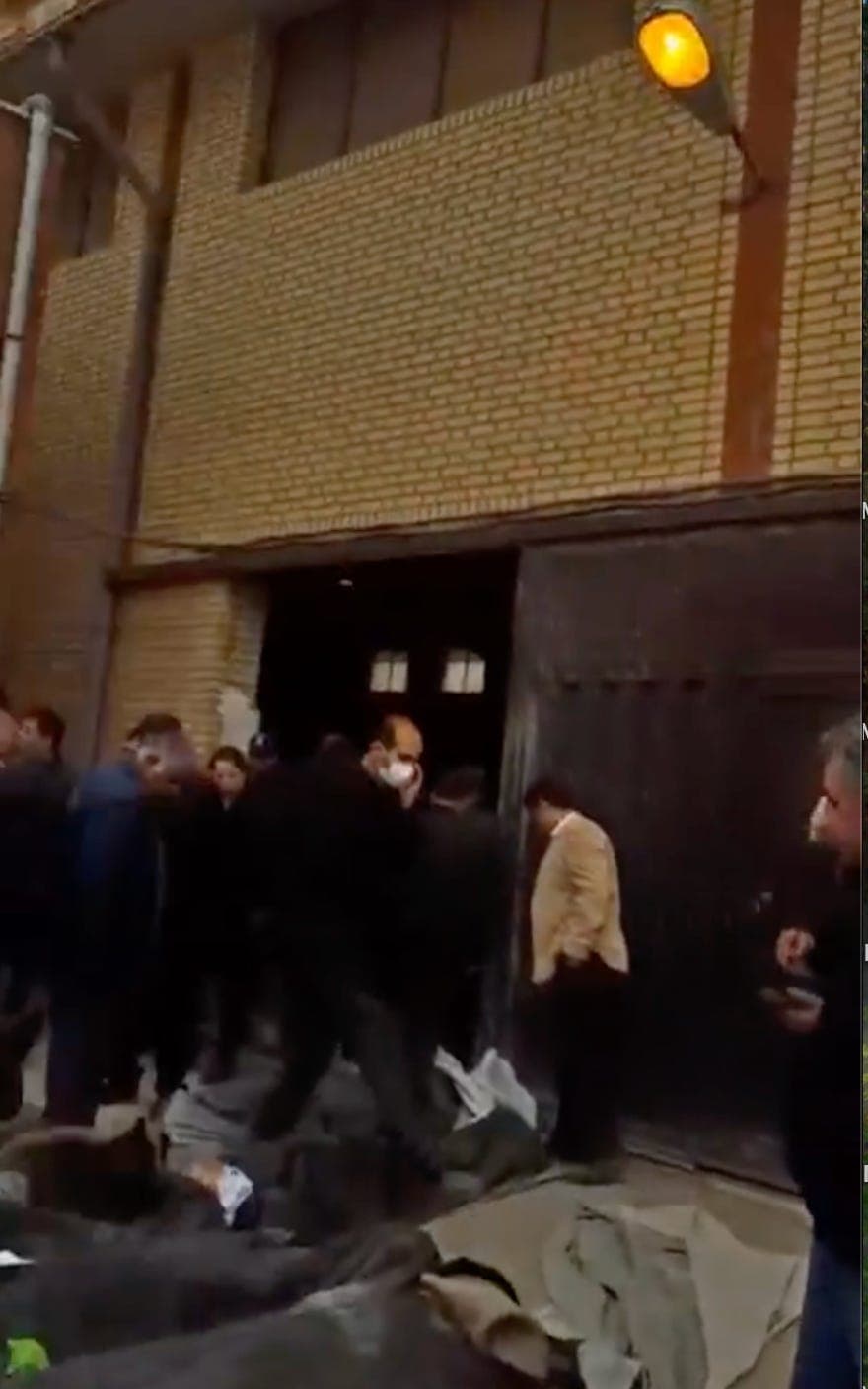
Inside, the warehouse is completely dark, but sounds indicate people are present. Another video shows the interior fully, filled with bodies.
10:43: A new shot begins. The camera, as indicated on a map, faces the Diagnostic and Laboratory Center.
11:14: The video cuts again, returning to the main street in front of the cold storage. The crowd has grown, with audible wailing.
12:43: The narrator is heard saying, “They brought [the bodies] with the container,” and a container with its door open is visible. He approaches it; bodies lie nearby, though the container is empty. He continues, “There are so many inside the warehouse, you can’t go in.”
15:26: A new shot begins, apparently near the end of the day. It is dark, and yard lights are on. Unidentified bodies are seen on the ground near flowerbeds and around the complex; the narrator explains they are nameless. Bodies are left around the entrance garden and near containers.
15:45: Camera returns to the yard behind the building. The narrator says, “The ambulance brought more bodies.”