Finishing Shots and the Enforced Disappearance of Wounded Protesters Inside Hospitals
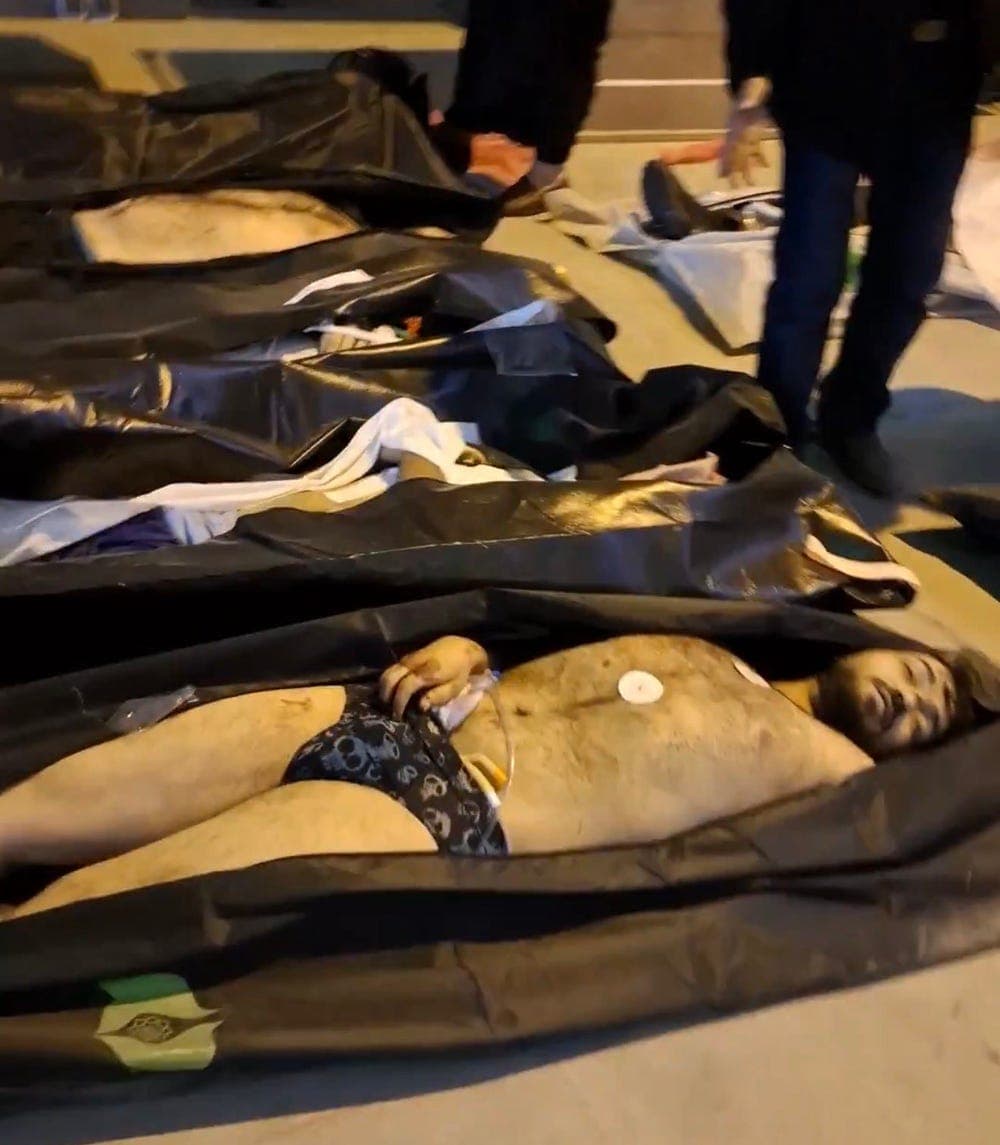
Warning: This report references images and videos containing deceased individuals.
The January 2026 nationwide protests represent a turning point in the history of social uprisings in contemporary Iran, one defined by state-led repression and mass killing.
Although previous protest waves in 2009, 2017, 2019, and 2022 were each met with severe crackdowns, on-the-ground evidence from January 2026 suggests a shift in the regime’s security doctrine toward the physical elimination of protesters at every level, even in places presumed to be safe, such as hospitals.
On January 20, 2026, Mai Sato, the United Nations Special Rapporteur on the situation of human rights in Iran, stated explicitly in an interview that the pattern of repression and killings during January 2026 could constitute “crimes against humanity”, although a final legal determination of that classification depends on the completion of official United Nations investigations.
Sato emphasized that the killing of protesters, widespread and arbitrary arrests, torture, and systematic violations of civilian rights, if proven to be “widespread and systematic”, may fall under the legal framework of crimes against humanity. She stated that the responsibility for examining this question lies with the Independent International Fact-Finding Mission on the Islamic Republic of Iran, which is expected to present its findings to the Human Rights Council within the next one to two months.
A key body of evidence supporting these allegations concerns the treatment of wounded protesters by security forces, particularly those who had been hospitalized. Attacks on medical facilities, the obstruction of medical treatment, and the killing of individuals who are hors de combat (individuals taking no active part in the hostilities, including those rendered out of combat due to injury) constitute a flagrant violation of international humanitarian law. As protected spaces under customary international law, hospitals must not be subjected to military attack, including the use of tear gas and live ammunition. Such acts amount to war crimes.
Images obtained from videos sent from inside Iran show the bodies of protesters with medical devices still attached to them, while also showing signs of gunshot wounds to the head consistent with an execution-style “finishing shot.” Drawing on media reports and human rights documentation, including testimony from medical personnel and forensic analyses, Factnameh seeks to clarify, as much as possible, the scope of the catastrophe that unfolded within hospital corridors.
Medical Equipment Still Attached to the Bodies of the Deceased
The presence of invasive medical devices on the bodies of dead protesters in morgues provides critical information about the timing and manner of their deaths. In forensic medicine, the chain of survival can be reconstructed in part through the analysis of such devices.
If a patient dies in the emergency department (Code 99), standard clinical and ethical protocols dictate that, following the termination of resuscitation efforts, all tubes and catheters be removed, the body cleaned, and then transferred to the morgue. The presence of these devices still attached to bodies found in the Kahrizak morgue indicates an abrupt and violent interruption of medical care. Such a situation can only occur under two circumstances:
- The number of patients and the state of the emergency department were so critical that medical staff capacity was completely overwhelmed, causing established hospital protocols to collapse—and bodies to be left without the usual procedures.
- Security forces removed bodies (or injured patients) from hospital beds and transferred them elsewhere to prevent accurate recording of the real cause of death.
A medical staff member in one of Iran’s southern provinces told Radio Farda:
“They killed many, they arrested many, many are on the run. In the hospital, they even deliver finishing shots. They won’t hand over the bodies. They demand 700 million for each body. Things are very bad. Since these Hashd al-Shaabi forces poured into the streets yesterday and the day before, the protests died down.”
⸻
1) Urinary Catheters (Foley Catheters)
Images from Tehran’s forensic medicine facility show some victims’ bodies with Foley catheters still in place. The presence of these devices carries significant clinical and time-related implications.
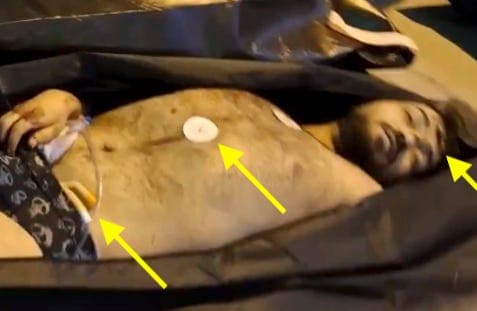
In standard trauma and emergency protocols (ATLS), inserting a urinary catheter is not part of the primary life-saving steps of the Primary Survey. Priority is given to securing the airway, breathing, and circulation. A catheter is typically placed during the Secondary Survey, after the patient’s condition has been partially stabilized, when the medical team intends to monitor urine output and kidney function as part of shock management.
The presence of a Foley catheter indicates that the victim was alive for at least 30 to 60 minutes after arriving at the medical facility, and had measurable vital signs. This directly refutes any claim that these individuals were “already dead before reaching the hospital.” The catheter proves that the patient not only entered the treatment cycle and was admitted, but that emergency staff, after conducting initial stabilization, moved to secondary procedures, and the patient received nursing care.
A general surgeon told IranWire:
“The images of those killed while a urinary catheter is still attached show that the medical team had at least about 30 minutes to treat the patient and that the person had vital signs and could have survived. In the early stages of cardiopulmonary resuscitation (CPR), the first step is endotracheal intubation. Under normal circumstances, if survival seems possible, even a urinary catheter might be placed later—but not in conditions like what we know from the reality of this disaster.
In such a violent and chaotic situation, there is essentially no time even for intubation, let alone catheterization. Therefore, the baseline assumption must be that a crime occurred: first, the crime of killing the wounded, and second, the crime of stealing bodies. These images show that the medical process that should have been carried out on the wounded was, for whatever reason, left unfinished and forcibly interrupted mid-way.”
2) Endotracheal Tubes (Intubation Tubes)
The presence of breathing tubes in the mouths of the bodies is another undeniable piece of evidence that the patient had been treated in an advanced emergency setting or intensive care unit.
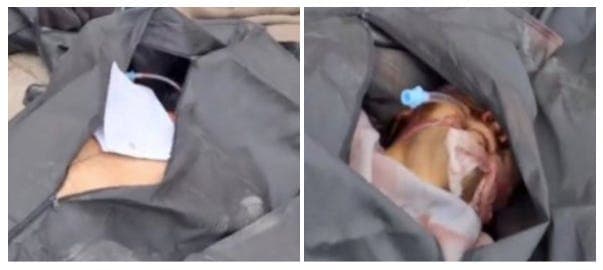
Intubation is performed by an emergency specialist for a patient with reduced consciousness or an inability to breathe independently. The use of specialized hospital bandaging to secure the tube indicates that this was done under sterile conditions by trained professionals in a medical environment.
Roozbeh Esfandiari, a physician based in Houston, United States, who previously worked in Tehran emergency departments, told IranWire:
“The mere fact that chest electrodes remain on the bodies of those killed does not necessarily mean they were abducted, because usually after death, in some cases the electrodes are not removed and the body is sent to the morgue. This is mainly the responsibility of nurse aides, but when the number of injured is high, they don’t have time to remove these devices from the bodies.”
3) Cardiac Monitoring Electrodes (Chest Electrodes)
The observation of ECG chest leads on the bodies of victims who also sustained gunshot wounds to the head further supports the likelihood of extrajudicial execution.

These electrodes indicate that the patient was connected to a monitor and had a heartbeat. If the victim had been killed on the street by a direct gunshot to the head, there would have been no medical justification for attaching these electrodes in a hospital setting. The combined presence of resuscitation equipment with a fatal gunshot wound to the head (consistent with handgun calibres fired from close range) reinforces the hypothesis of a “finishing shot”. In other words, a person admitted with a non-lethal injury (for example, to the leg or abdomen) was subsequently killed on a hospital bed by a final gunshot.
In general, a coup de grâce is a fatal shot intended to end the life of a severely wounded person or living being. In some wartime cases, it may occur with the injured person’s consent to end suffering, particularly when there is no hope of reaching medical care in time. But in cases of repression or mass killing, security forces fire finishing shots to facilitate the enforced disappearance of citizens and wounded individuals, people who could have been brought to treatment centers and might have survived.
⸻
Field evidence of security forces raiding hospitals
Documented reports from multiple provinces indicate that attacks on hospitals were not isolated incidents, but rather part of a nationwide directive. By surrounding medical centers, firing tear gas inside hospitals, and abducting the wounded, security forces violated the Geneva Conventions and the principle of medical neutrality.
⸻
1) Ilam: Khomeini Hospital
One of the most well-documented cases of human rights violations during this uprising is the attack on Khomeini Hospital in the city of Ilam. After severe clashes in Malekshahi County and the transfer of injured individuals to Ilam, special units of Iran’s law enforcement forces surrounded the hospital.
Verified videos show riot police units firing tear gas into the hospital compound and forcibly entering wards after breaking glass doors. The use of chemical agents (tear gas) in an environment where respiratory patients and critically injured individuals are present constitutes a clear instance of a war crime.
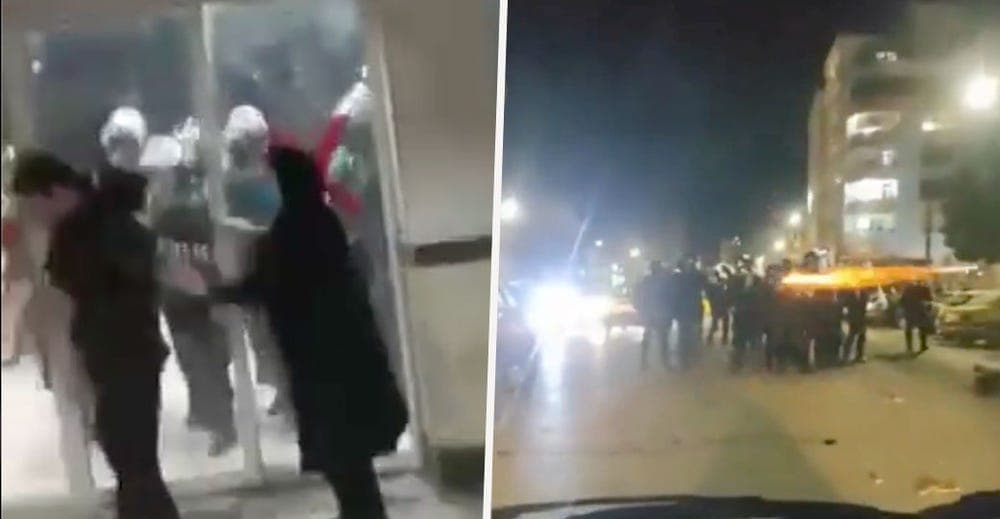
The primary objective was the arrest of injured protesters and their companions. Reports indicate that security forces even attempted to remove the bodies of those killed from the hospital morgue to prevent funeral ceremonies in Malekshahi.
⸻
2) Mazandaran: finishing shots in Babol and Chalus
Accounts from Mazandaran Province, especially from the cities of Babol and Chalus, have emerged that directly refer to the issue of “finishing shots.”
Citizens reported that the number of injured was so high that medical staff were forced to step over bodies. In the midst of this, security forces entered and fired finishing shots (to the heart and head) at injured people lying on the ground. It has also been claimed that hospitals in Babol were ordered not to admit injured protesters. On the evening of January 9, 2026, the city morgues were filled, and bodies were piled on top of one another.
⸻
3) The Condition of Hospitals in Tehran and Karaj
In Tehran and Karaj, hospitals reportedly were operating under dire circumstances.
Soleimani Hospital, Fardis: On the night of January 8, 2026, 87 bodies were transferred to this hospital.
Sina Hospital and Al-Ghadir Hospital: In Tehran, security forces were stationed at the entrances of Sina and Al-Ghadir hospitals and reportedly separated protest-related wounded patients from other patients. Reports indicate that bodies accumulated in the courtyards or corridors of these facilities.
A taxi driver in Karaj recounts, quoting a doctor, that security agents entered the emergency department, separated their own wounded personnel, and transported injured protesters, not by ambulance, but in cargo trucks, to unknown destinations.
⸻
Patterns of Injury and Gunfire
Field evidence indicates a deliberate tactical approach by security forces in firing on protesting civilians. Reports from ophthalmologists at Farabi Hospital and Noor Eye Hospital in Tehran describe thousands of cases of pellet-related eye injuries. In one account, an eyewitness claimed that 800 people had their eyes removed in a single night, a figure that, if accurate, would indicate a systematic strategy of blinding protesters as a form of permanent “marking” and extrajudicial punishment.
Unlike the more common use of paintball weapons or shotguns, reports from January 2026 describe extensive use of DShK heavy machine guns, snipers, and Kalashnikov rifles against unarmed crowds. Amir Mobarez Parasta, head of the Munich Eye Center, told Radio Farda:
“In just one private hospital in Tehran, six thousand eye injuries have been recorded so far. In the university hospitals of major cities such as Tehran, Mashhad, Shiraz, and Tabriz, at least 600 cases of eye removal have also been reported.”
The concentration of gunfire on vital areas of the body (the head, neck, and chest) indicates an explicit directive to shoot to kill, a directive that could only be authorized at the highest levels, including the Supreme National Security Council.
The scale of violence carried out during January 2026 could not have occurred without centralized decision-making at the top levels of the Islamic Republic. Ali Larijani, Secretary of the Supreme National Security Council, has been identified as one of the principal architects of the crackdown. On Sunday, January 11, 2026, Larijani appeared alongside Commander Radan (head of the Law Enforcement Command of the Islamic Republic of Iran) in a press interview and described the protests as an “ISIS-like act.” By declaring a quasi-martial-law situation, the Council granted the IRGC and Basij forces unlimited authority to manage the crisis.
The widespread and organized killing of civilian protesters aligns precisely with the definition of crimes against humanity in Article 7 of the Rome Statute. When murder, enforced disappearance, and torture are carried out as part of a widespread or systematic campaign against a civilian population, they constitute crimes against humanity, an element that is clearly present in these cases:
- Murder: street executions and hospital executions.
- Enforced disappearance: abducting patients from hospital beds, transferring them to unknown locations, and demanding enormous sums of money (between 300 million and 1.5 billion tomans), along with a box of sweets, from families in exchange for releasing bodies.
- Torture: deliberate gunfire aimed at the eyes and sexual organs.
Alongside the large-scale and organized killings taking place on the ground, the Islamic Republic’s propaganda apparatus attempted to evade responsibility through fabricated narratives. On January 12, 2026, Abbas Araghchi, the Foreign Minister of the Islamic Republic, told foreign ambassadors in Tehran that some wounded individuals had indeed been executed with “finishing shots”, but—without providing evidence—claimed the act was carried out by “terrorists.” He stated:
“They attacked ambulances… in one case they took 11 wounded people away, and later their bodies were found, and they had been shot with finishing shots.”
Conclusion
Field evidence, human rights reporting, and statements by international officials supports the assertion that the January 2026 nationwide protests represent the peak of the Islamic Republic’s pattern of repression. This pattern extended beyond “crowd control” and moved toward an organized physical elimination of protesters, including within internationally protected spaces such as hospitals.
The UN Special Rapporteur’s remarks indicate that killings, widespread arrests, torture, and enforced disappearances, if proven to be widespread and systematic, may constitute crimes against humanity.
Evidence of raids by security forces on hospitals, the firing of tear gas and live ammunition, the obstruction of medical treatment for the wounded, and the abduction of injured protesters is documented in videos, media reports, and the testimony of numerous eyewitnesses.
Multiple reports from cities such as Ilam, Babol, Chalus, Tehran, and Karaj point to a coordinated and nationwide pattern rather than isolated incidents.
The presence of medical equipment such as urinary catheters, intubation tubes, and cardiac monitoring electrodes on victims’ bodies indicates that many of those killed were alive and already receiving medical treatment. This evidence undermines the claim that they died before reaching hospital care, and strengthens the hypothesis that wounded protesters were executed on hospital beds through finishing shots and extrajudicial killings.
The injury pattern (concentrated shots to the head, neck, and chest), combined with widespread reports of targeted blinding eye injuries, the use of military-grade weapons against unarmed crows, and corroboration from senior state officials, strongly suggests a shoot-to-kill directive.