“Another Sepehr” — A Review of IRIB’s Forced Confession Video Featuring the Families of Protest Victims
Forced interviews and televised confessions are among the techniques used by the Islamic Republic of Iran Broadcasting (IRIB) as part of its disinformation campaigns and the organized dissemination of fabricated information.
One of the most well-known examples of this practice is the interviewing of families who have lost relatives in Iranian street protests.
On numerous occasions, IRIB cameras have approached family members and compelled them, under pressure, to repeat the narrative dictated by IRIB reporters.
An Attempt to Distort the Video “Sepehr, Where Are You, Dear?”
In one of its latest disinformation campaigns, IRIB has sought to fabricate an alternative narrative about the killing of a person named “Sepehr.”
Initially, Vahid Online, an Iranian blogger who republishes videos received from Iran on his Twitter and Telegram accounts, shared a 12-minute video showing a father searching for his son, “Sepehr,” among a large number of bodies of people killed during the recent protests. Throughout the video, the father’s voice can be heard calling out: “Sepehr, where are you, my dear?”. This phrase was widely echoed in numerous social-media posts and was even chanted during street protests by Iranians outside the country.
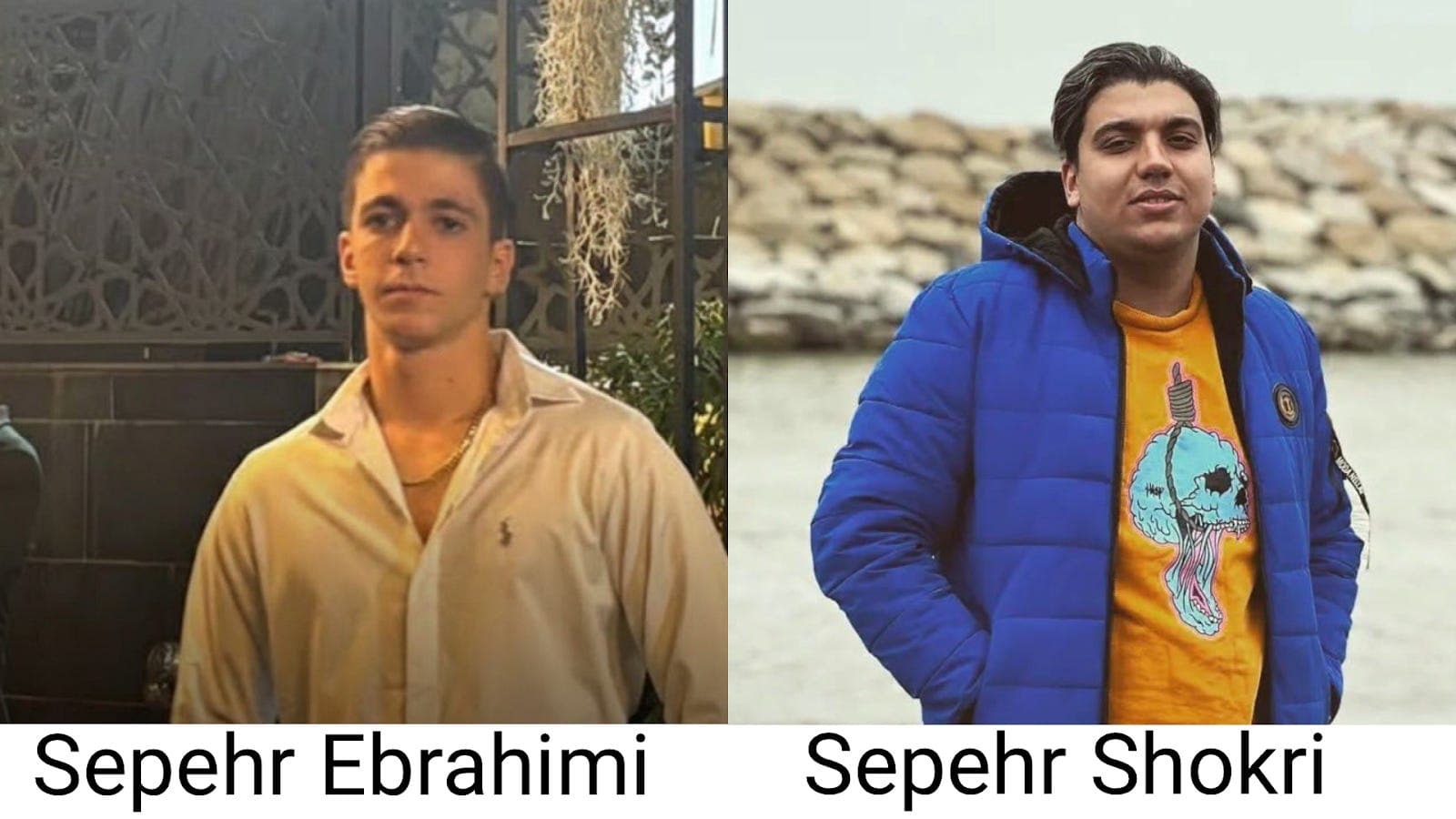
Some social-media accounts subsequently circulated a photo of another protest victim, Sepehr Ebrahimi, presenting him as the individual whose father was calling out in the video. It was later confirmed that this photo depicted a different person named Sepehr.
In one such post, for example, users speculated that the video might be related to Ebrahimi’s father.
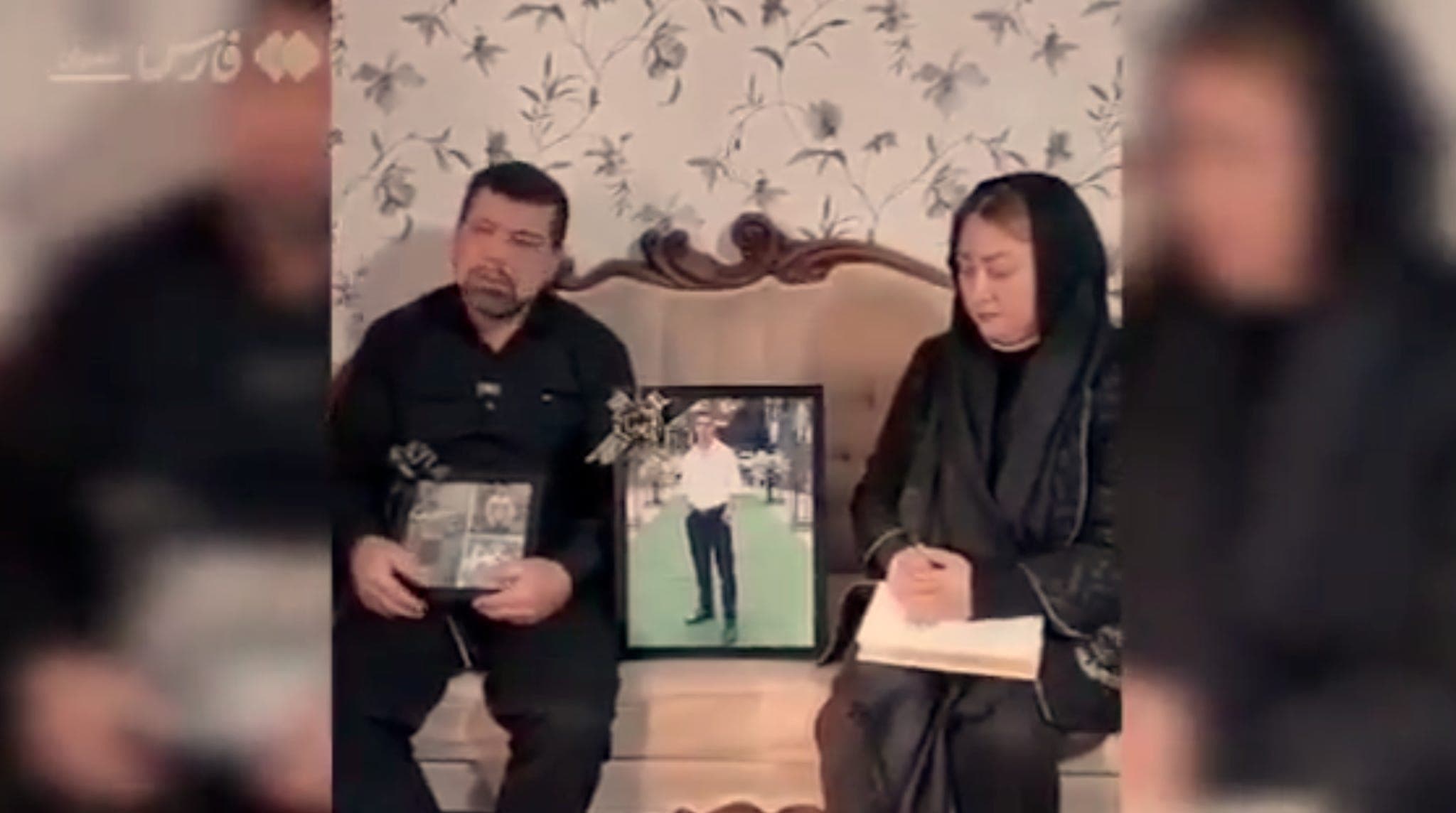
Following these developments, IRIB aired a report claiming to have interviewed “Sepehr’s father.” The televised segment opened with Vahid Online’s video (“Sepehr, where are you, dear?”), after which the reporter stated that they had visited the home of Sepehr Ebrahimi. The televised report concluded by asserting that the video was fabricated.
In response to the broadcast, Vahid Online published the full version of the video and explained:
“Following the false report by IRIB about this video and its attribution to another grieving family, I replaced the video above with the original version and added the name Sepehr Shokri to the description above.”
In reality, the IRIB reporter extracted a forced confession from the family of Sepehr Ebrahimi, another individual killed during the protests, while the video in question documented the search for the body of Sepehr Shokri, a different young man who had lost his life in the protests.
Hossein Bastani, a BBC journalist, wrote on the social network X:
“IRIB, in its attempt to deny the historic video of #Sepehr_Shokri (‘Sepehr, where are you, dear?’), turned to the family of another protest victim named #Sepehr_Ebrahimi. It was obvious that this state lie would be exposed quickly. But they have grown accustomed to the practice of ‘identity fabrication to deny reality’—even if it only works for a day or two.”
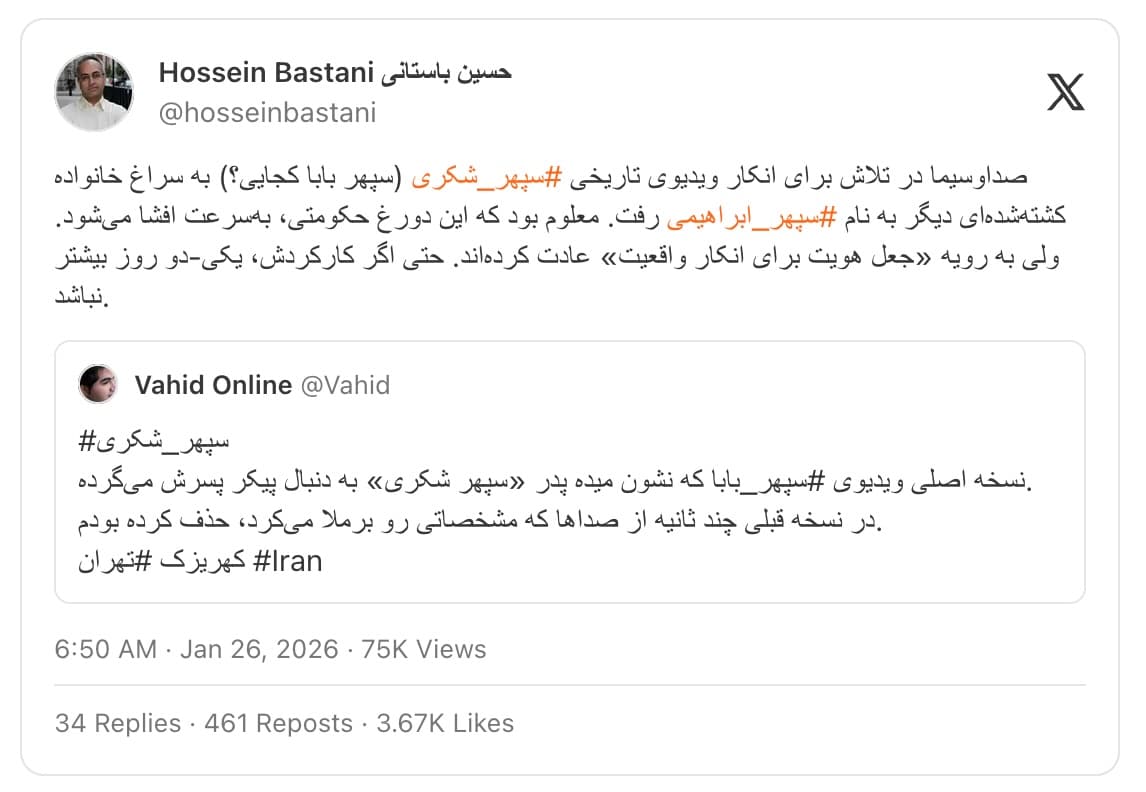
https://x.com/hosseinbastani/status/2015754253587865965?s=20
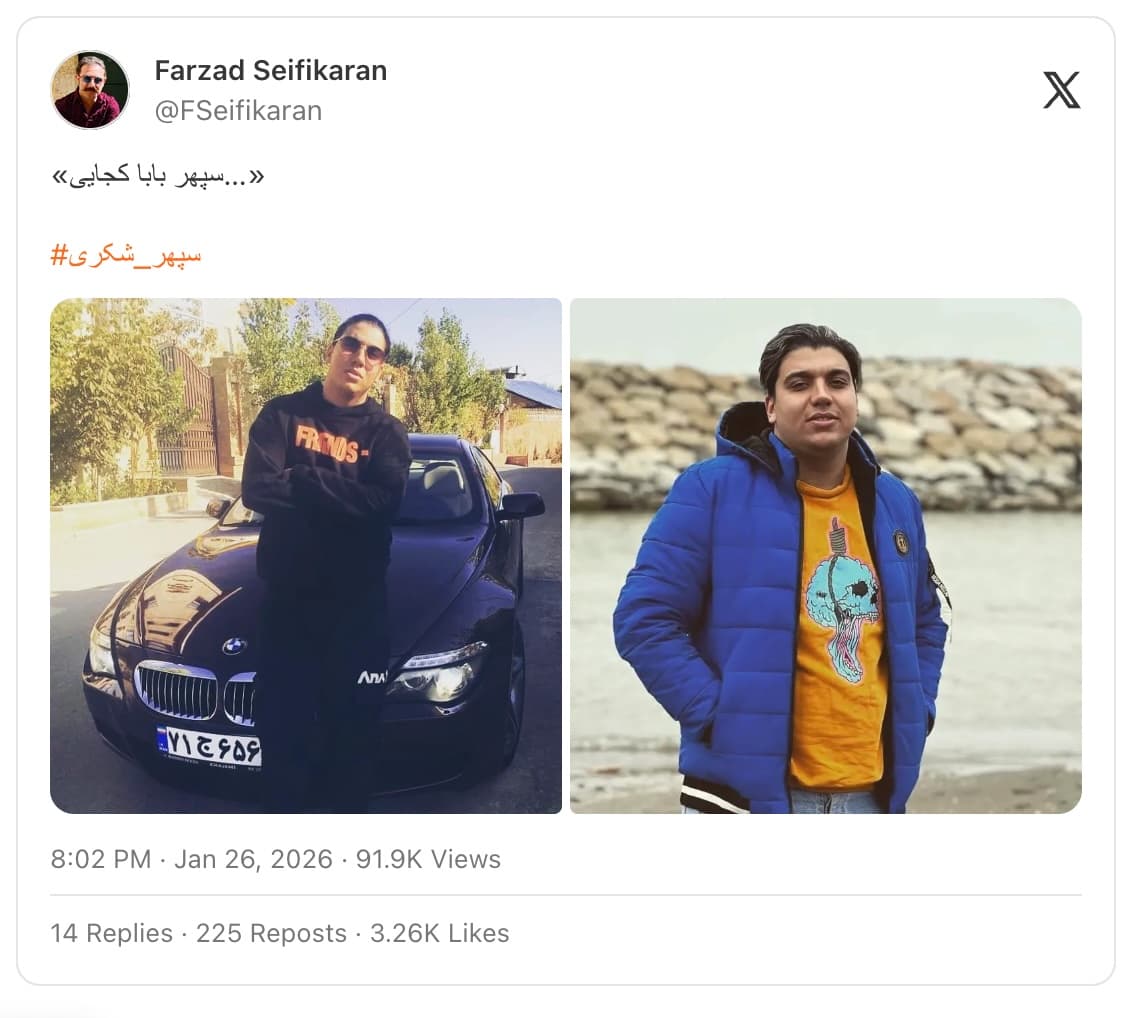
Farzad Seifikaran from BBC Persian’s fact-checking unit published two photographs that belong to Sepehr Shokri: