IRGC Terror Designation: Implications for Mandatory Servicemen
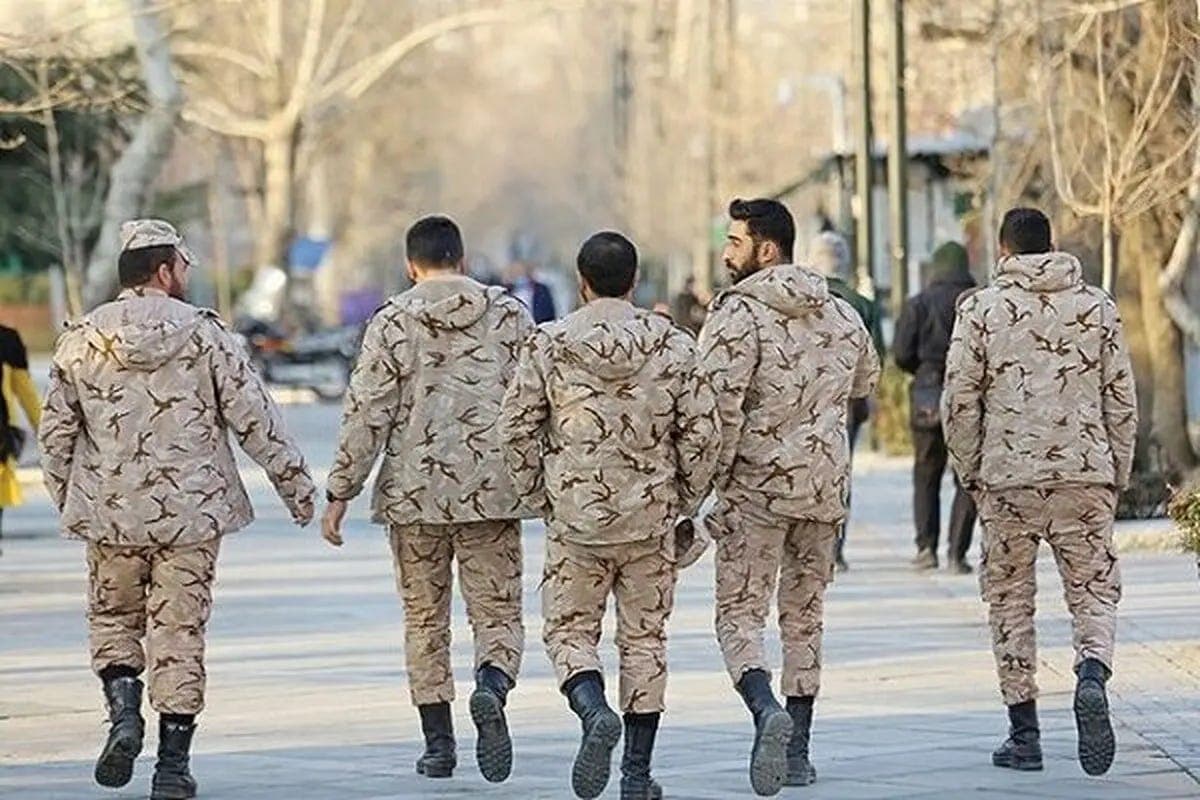
On January 29, 2026, the foreign ministers of the 27 member states of the European Union unanimously decided to place the Islamic Revolutionary Guard Corps (IRGC) on the EU list of terrorist organizations.
Kaja Kallas, the EU’s High Representative for Foreign Affairs and Security Policy, stated that this decision places the IRGC on the same level as jihadist groups such as al-Qaeda and the self-titled Islamic State (ISIS).
Previously, on January 22, 2026, the European Parliament adopted a resolution calling on the Council of the European Union to designate the IRGC as a terrorist organization. This resolution effectively served as the legal groundwork for the decision that was finalized on January 29. Article 6 of the resolution explicitly urges the Council to designate the IRGC in its entirety as a terrorist organization “without delay.”
The resolution cites the regime’s severe repression of protests in December 2025 and January 2026, along with reports of widespread human rights violations, as the primary grounds for its adoption. France and Italy, which had previously opposed such a measure, ultimately agreed to the decision.
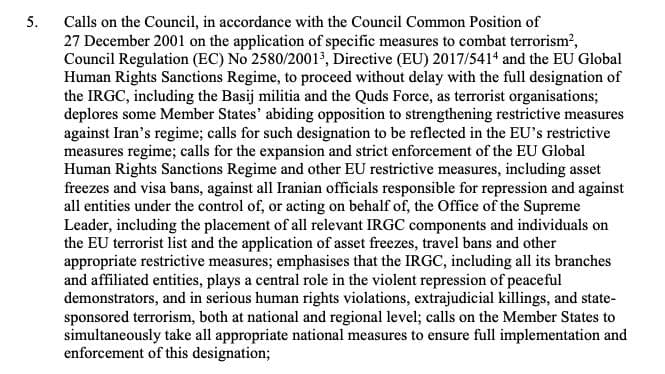
In Article 5, page 5 of the document, Parliament calls on the Council:
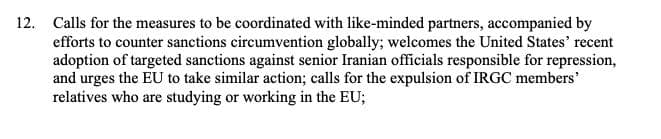
Additionally, Article 12 of the document states that the European Parliament:
Article 29 further states:

Accordingly, under this document, the Islamic Revolutionary Guard Corps — including the entire IRGC, the Basij Force, and the Quds Force — is recognized as a terrorist organization, explicitly encompassing all affiliated entities and individuals. The IRGC is brought under the EU’s restrictive measures framework, leading to asset freezes and visa bans targeting Iranian officials responsible for repression, including those within the IRGC. The expulsion of relatives of IRGC members studying or working in the European Union is also placed on the agenda as a potential measure.
Based on This Document, What Is the Status of Conscripts Who Served in the IRGC?
The document refers to those targeted by the sanctions in two separate instances. In one instance, it emphasizes that “all components and individuals affiliated with the IRGC” will be included on the EU terrorist list, and elsewhere it states that “the IRGC, including all its branches and affiliated entities,” is the target of these sanctions.
However, detailed implementation guidelines for this decision have not yet been published. As such, it does not appear possible, based solely on this text, to precisely determine who qualifies as “components and individuals affiliated with the IRGC.”
Nevertheless, as noted above, Article 29 of the document emphasizes that the relevant bodies must “ ensure that EU restrictive measures remain targeted, evidence-based and focused on individuals and entities responsible for serious human rights abuses.” This wording may suggest that distinctions should be made between individuals occupying different roles to avoid infringing the rights of persons such as mandatory conscripts. Therefore, a case-by-case assessment is likely to be applied in practice.
The European Commission’s Q&A section on restrictive measures (sanctions) explains how individuals may be targeted and outlines available review mechanisms for uninvolved individuals. It states:
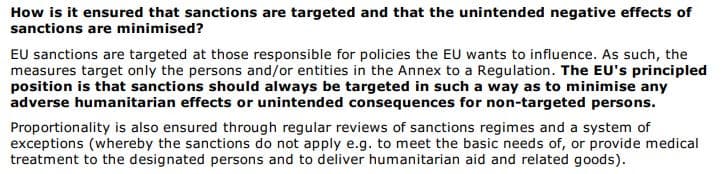
Overall, IRGC service, even if mandatory, may lead to increased screening during visa or asylum applications in Europe and additional questioning about an individual’s unit and activities by consular authorities. However, this does not automatically imply that sanctions will be applied to conscripts.
How Are Similar Cases Handled in Other Countries?
In comparable cases abroad, authorities typically attempt to differentiate between those who voluntarily joined such organizations and those present due to mandatory military service, unless the individual played a role in terrorist operations or acts of direct repression.
For example, the Government of Canada, on its official Canada Gazette website, provides guidance regarding the designation of the IRGC as a terrorist organization. The Regulations Amending the Regulations Establishing a List of Entities state:
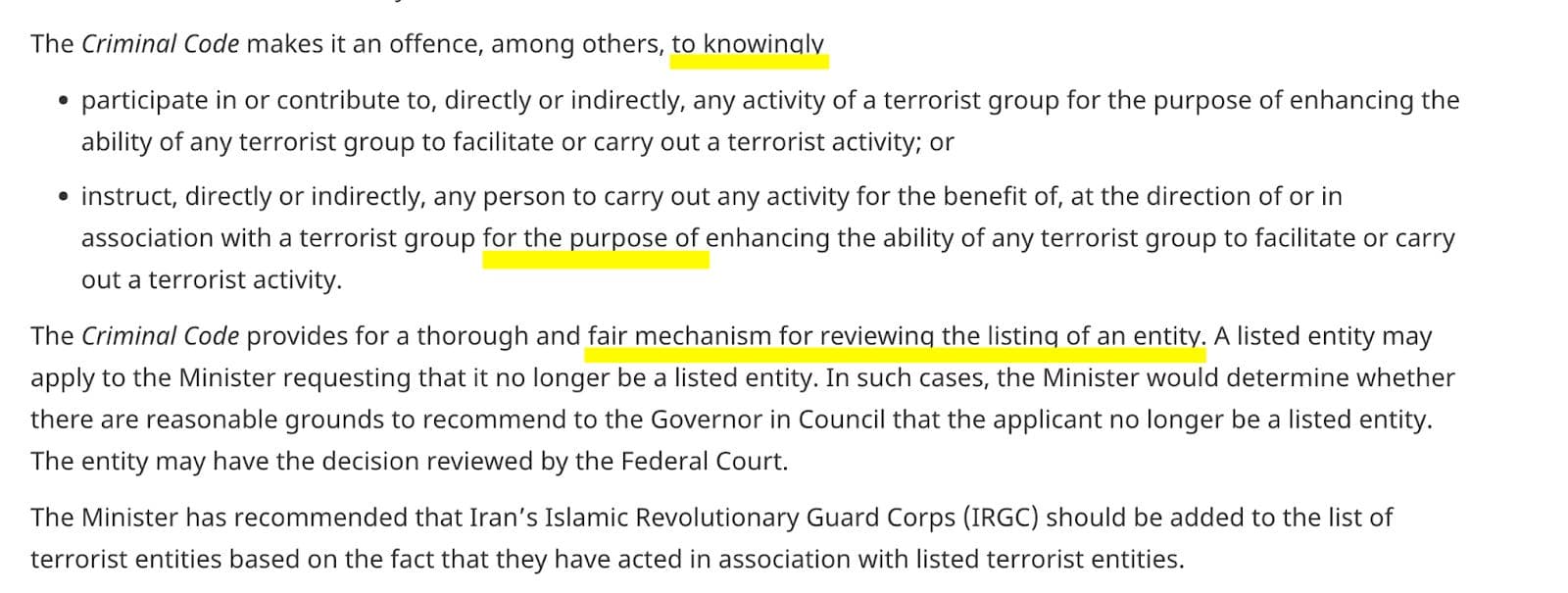
The Criminal Code provides a comprehensive review mechanism for listed entities. A listed entity may apply to the Minister to be removed from the list. The Minister then evaluates whether there are reasonable grounds to recommend to the Governor in Council that the entity be removed from the list. The Minister’s decision is subject to review by the Federal Court.
In the case of the IRGC, the Minister has recommended adding it to the list of terrorist entities based on its collaboration with other listed terrorist organizations.
The law’s use of terms such as “knowingly” and “for the purpose of” indicates that conscripts, who are compelled to serve, lack the intent to strengthen a terrorist organization and thus do not fall under this provision. By including intent and knowledge requirements, the law effectively distinguishes between IRGC commanders and ordinary conscripts.