Financial Times Report and the Exposure of Ali Ansari’s Financial Empire in Europe
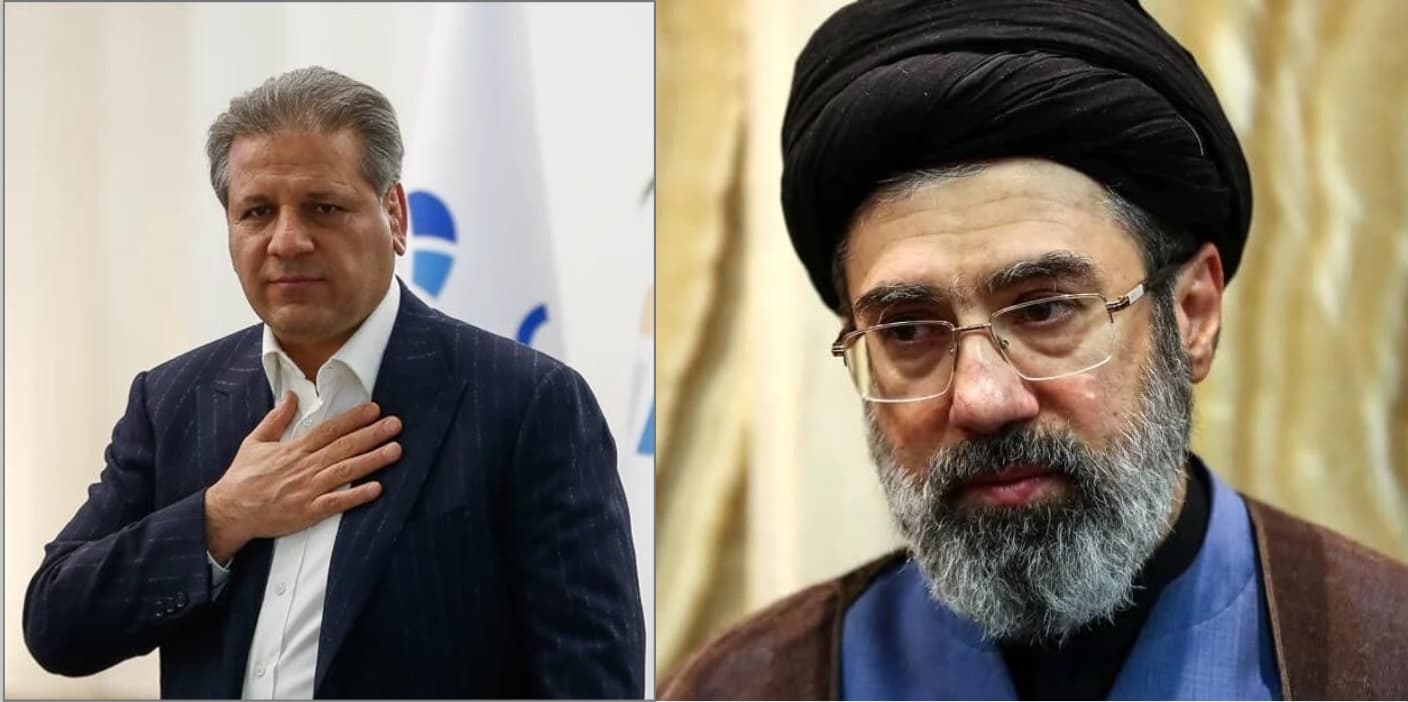
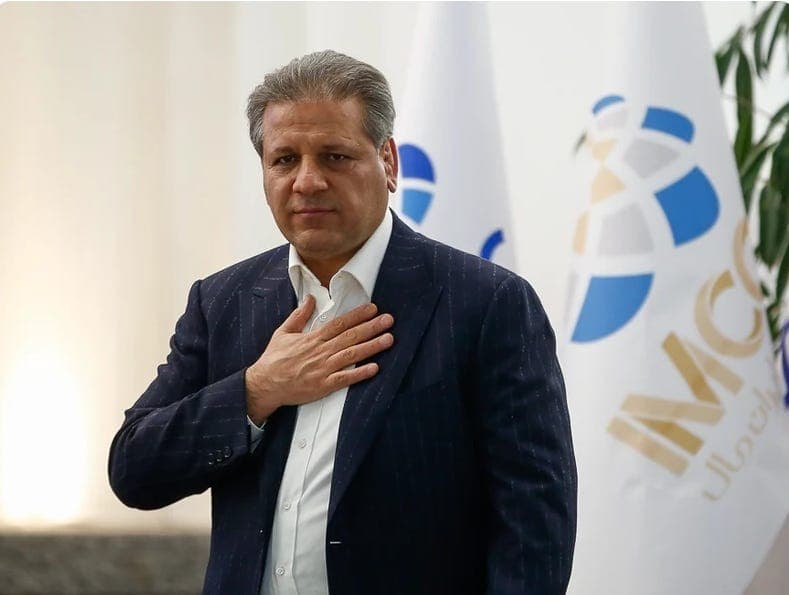
The publication of two reports by major Western media outlets in quick succession, both examining the European financial empire of Ali Ansari, the founder and principal shareholder of Ayandeh (Future) Bank, has renewed scrutiny of his business dealings. Interest in the story further intensified after one report highlighted his alleged ties to Mojtaba Khamenei, the son of the Supreme Leader of the Islamic Republic of Iran.
The first of the two reports appeared in the Financial Times, detailing Ansari’s investments and property holdings across European countries, their estimated value, and the structure of his investment network.
The report described Ali Ansari as “an Iranian tycoon” accused of “financing the Islamic Revolutionary Guard Corps (IRGC)” and noted that he has been sanctioned in the United Kingdom.
In October 2024, following Ayandeh Bank’s resolution process that suspended its operations and led to its merger with Bank Melli Iran, the UK government imposed sanctions on Ansari. He was accused of facilitating and financing hostile activities by the Islamic Republic of Iran against the United Kingdom, and his assets were frozen.
Around the same time, the Organized Crime and Corruption Reporting Project (OCCRP) identified the 56-year-old Ansari as the owner of a luxury building in one of London’s upscale neighbourhoods, purchased in 2014 for £33.7 million.
Shortly before that, Private Eye magazine (issue No. 1659) reported that Ansari owned 11 luxury mansions on Bishops Avenue in north London, an area known as “Billionaires’ Row.” Acquired in 2013, the publication estimated the combined value of Ansari’s properties to be £73 million.
A Network of Shell Companies and Layered Assets in Europe
According to these reports, the primary owner of the properties and mansions is Birch Ventures Ltd. The firm is registered in the Isle of Man, a small island in the Irish Sea widely known as a global tax haven. While the company’s previous owner was listed as being a Cypriot businessman, investigations revealed that the individual in question was in fact Ali Ansari, who holds a Cypriot passport.
Last week’s Financial Times report confirmed these findings and added that Ansari’s real estate investments across Europe are estimated to exceed €400 million. The newspaper exposed a complex web of companies and assets linked to Ansari, spanning Luxembourg, Saint Kitts and Nevis, Austria, Germany, and Spain.
Among the properties mentioned is a €22 million beachfront resort and luxury hotel with 164 rooms on the coast of Mallorca, Spain. German properties mentioned include two Hilton hotel branches in Frankfurt, with a combined estimated value of €80 million, and the Bero shopping center in Oberhausen, valued at €68 million. Ansari is further identified as a shareholder in a collection of hotels and ski resorts in the Austrian Alps.
According to the Financial Times, ownership of these assets largely traces back to Ali Ansari through a network of complex, layered, and nested corporate structures. These include companies such as Smart Global, previously operating under the name Ziba Leisure, registered in Saint Kitts and Nevis, which in turn owns Tidalwave Holding in Luxembourg and the Netherlands.
Bloomberg Report and the Alleged Link to Mojtaba Khamenei
The Bloomberg report not only reiterates many of the financial details about Ansari and his wealth but also adds an additional political dimension that highlights the broader implications of these investments.
Reflecting this political angle, Bloomberg’s headline asked: “How the Son of Iran’s Supreme Leader Built a Global Property Empire?”
Bloomberg writes:
“Behind the facades of these luxury homes on The Bishops Avenue lies a network stretching from Tehran to Dubai and Frankfurt. The ultimate ownership traces back, through layers of shell companies, to one of the most powerful men in the Middle East: Mojtaba Khamenei, the second-eldest son of Iran’s Supreme Leader.”
Bloomberg estimates that the assets ultimately linked to Mojtaba Khamenei through these layers of shell companies are worth more than £100 million.
According to the report, this investment empire spans Persian Gulf shipping operations, Swiss bank accounts, and luxury British real estate. At the same time, Bloomberg notes that none of the assets are directly registered under Mojtaba Khamenei’s name. The report instead refers to Ali Ansari as Mojtaba’s “money man,” effectively brokering and managing these assets. The report adds that the year-long investigation “reveals how the family’s financial reach has expanded beyond the borders of the Islamic Republic.”
Bloomberg’s findings are based on interviews with individuals directly familiar with Mojtaba Khamenei’s financial dealings, as well as reviews of property records and confidential commercial documents, including hotel management contracts, company ownership details, and banking transfers. Additional evidence stems from assessments by Western intelligence agencies, which reportedly highlight Ali Ansari’s “critical role” in these transactions.
Farzin Nadimi, a senior fellow at the Washington Institute for Near East Policy, is among those quoted by Bloomberg as someone who has “studied the Khamenei family’s financial empire.” Nadimi states:
“Mojtaba has major stakes or de facto control in various entities throughout Iran and abroad. When you analyze his financial network, Ali Ansari is the main account holder for him. This positions Ansari as one of the most influential oligarchs in the country today.”
In addition to the holding companies identified by the Financial Times, Bloomberg names further entities linked to Ansari, including:
- A&A Leisure Ltd., registered in Saint Kitts and Nevis
- Midas Oil Industries FZC, registered in the United Arab Emirates
- Midas Oil Trading DMCC, also registered in the UAE
Profits from oil exports are reportedly routed through this maze of companies.
The report adds that while the National Iranian Oil Company officially sells Iran’s crude oil, sanctions have pushed much of the business into opaque channels involving shell companies, intermediaries, and informal traders. Companies and individuals allegedly linked to the Supreme Leader and the IRGC, including Mojtaba Khamenei, are said to play central roles in controlling parts of these networks.
History of the Relationship, Longstanding Rumors, and Conflicting Narratives
The alleged connection between Ali Ansari and the office of Iran’s Supreme Leader, particularly his financial relationship with Mojtaba Khamenei, has circulated in media and political circles for years. Ansari’s rapid rise in Iran’s economic landscape and the continued controversial operations of Ayandeh Bank have often been attributed to these ties.
But what is actually known about this relationship?
Bloomberg, citing unnamed individuals familiar with Ansari’s family background, traces the acquaintance with Mojtaba Khamenei back to the late 1980s, near the end of the Iran-Iraq War. At that time, the young Ansari was called up for military service and reportedly first met Mojtaba Khamenei, whose father was then Iran’s president.
According to these sources, Ansari later secured lucrative government contracts and import licenses and rapidly expanded into construction, shipping, and petrochemicals, industries that some claim served as channels for moving state resources abroad.
Ansari first gained prominence in the 1990s through construction projects in Tehran’s Shadabad iron market and the Baharan commercial complexes. The construction of the Iran Furniture Market later became a major springboard for him.
During this period, Ansari’s ties with Iranian sports federation officials, including Amir Reza Vaezi Ashtiani, led to his appointment to the board of the Esteghlal Football Club. He also served for a time as head of Iran’s Cycling Federation. Another of Ansari’s major commercial construction projects was the Iran Mobile Market on Hafez Street in Tehran.
Beyond real estate, Ansari ventured into banking, initially launching Tat Bank, considered Iran’s eighth private bank, managed by a holding company of the same name chaired by his father and his brothers. Tat Bank itself was not without controversy, reportedly established with assistance from Mohammad Aliabadi, then deputy to President Mahmoud Ahmadinejad and head of Iran’s Physical Education Organization and sports federations.
Tat Bank’s operations were eventually halted due to what authorities described as violations related to deposits and shareholders. In 2012 (1391 in the Iranian calendar), Tat Bank merged with the financial institutions Salehin and Ati to form Ayandeh Bank, which in subsequent years became one of Iran’s most contentious economic cases.
At one point, Bloomberg, again citing “people familiar with the matter”, alleges that Mojtaba Khamenei played a central role in Ayandeh Bank’s operations and in its flagship and controversial project, the Iran Mall. Two of these sources maintained that Ansari would meet privately with Khamenei at a residence in Tehran’s upscale Zaferanieh district and repeatedly used the bank’s office for confidential talks.
Bloomberg’s report does not name the individuals speaking about Mojtaba Khamenei’s wealth or his financial relationship with Ali Ansari citing fears of retaliation.
Observers have pointed out several signs as evidence of the relationship between Ansari and Khamenei. One such example is their joint appearance at a July 2024 ceremony honoring Gholam-Ali Haddad Adel, Mojtaba Khamenei’s father-in-law and a member of Iran’s Expediency Council.
Another indicator given was the presence of several high-ranking political figures and influential individuals from the Supreme Leader’s office at the June 2025 memorial ceremony for Ali-Akbar Ansari, head of the Tat Holding and father of Ali Ansari.
However, Bloomberg notes that a lawyer for Ali Ansari, whose name was not disclosed, denied that his client has any business relationship with Mojtaba Khamenei.
Media Allegations, Denials, and Alternative Narratives from Government Supporters
Allegations about both ties between Ali Ansari and Mojtaba Khamenei and support for Ansari from powerful figures in the Supreme Leader’s office have circulated in informal spheres since the early 2000s. Ansari’s rapid and dramatic rise in Iran’s economic arena at the time seemed to substantiate such claims, with some observers arguing that such success would be unlikely without strong political backing.
Political developments in 2005, including the presidential election and the rise of Mahmoud Ahmadinejad, intensified speculation that Mojtaba Khamenei had influenced the outcome by supporting him as the preferred candidate. Around the same time, Mojtaba’s name increasingly circulated as a powerful figure within the Leader’s inner circle and a potential successor. This content fueled broader assumptions that influential figures like him may have supported Ansari’s business ventures.
The disputed 2009 presidential election further amplified narratives about Mojtaba Khamenei’s influence, coinciding with Ali Ansari’s expansion into banking. The continued operation of Ayandeh Bank despite major controversies, along with the highly debated Iran Mall project, led many observers to ask whether Ansari could have sustained such activities without backing from powerful political patrons.
At the same time, social media users frequently mentioned Ali Ansari, Mojtaba Khamenei, and Iran Mall together.
Over the past decade, reports published by London-based Al-Quds Al-Arabi and France’s Libération have offered estimates of Mojtaba Khamenei’s alleged wealth, though neither outlet presented documentary evidence to substantiate those figures.
According to the website Iran Global, Libération reported during a period of tension between Mahmoud Ahmadinejad and Iran’s Supreme Leader over Esfandiar Rahim Mashaei that Ahmadinejad had told representatives of Ayatollah Khamenei he possessed documents indicating Mojtaba Khamenei had embezzled €1.6 billion from public funds. The Arabic-language news outlet Al Arabiya republished the substance of that report.
In July 2015, Al-Quds Al-Arabi ran a front-page report estimating Mojtaba Khamenei’s wealth at more than $3 billion, claiming that most of it was held in banks in the United Arab Emirates, Syria, Venezuela, and several African countries. The newspaper further claimed that Mojtaba held approximately $300 million of his assets in gold and diamonds and alleged that roughly $1 billion of his wealth derived from a special tax on oil sales.
In August 2015, a Twitter account attributed to Mehdi Hashemi, the son of former Iranian president Akbar Hashemi Rafsanjani, called on Iran’s judiciary to investigate Mojtaba’s business activities.
That post listed alleged economic misconduct, including:
- The Irancell license
- Discounted oil sales to the British royal family
- Accumulation of more than £6 billion in British banks
- Large sums in Asian and European banks, including Switzerland
- Smuggling of 5.8 tons of gold bullion to Turkey
The tweet also claimed Mojtaba owned nearly $2.4 million in cash in Russia, Armenia, and Georgia, along with numerous properties, including five-star hotels and luxury homes in Moscow, Yerevan, Ashgabat, and Dubai. It further alleged that he controlled a food factory in Moscow and an industrial plant in Yerevan.
However, Mehdi Hashemi later denied authoring the tweet, calling it a rumor spread by “agents” seeking to fabricate cases against him and drive a wedge between Akbar Hashemi Rafsanjani and Ayatollah Ali Khamenei.
As these reports and allegations about Mojtaba Khamenei’s economic activities and Ali Ansari’s alleged role as his financial operator circulated, supporters of the Iranian government issued official denials. In parallel, some defenders in blogs and informal forums advanced alternative explanations.
One such claim, promoted in the mid-2010s, suggested the existence of an Iranian-Emirati businessman named Mojtaba Khamaneh, whose similar name to the Supreme Leader’s son led to the misattribution of his economic activities to Khamenei.
This argument was later repeated in speeches by Ali-Akbar Raefipour, who in subsequent years built a following and established an organization called Masaf, gaining funding and influence within Iran’s political space. In recent months, and again following Bloomberg’s report, Raefipour’s claims have been widely recirculated on social media and cited by government supporters in response to critics. However, efforts to locate documentary evidence of the alleged businessman “Mojtaba Khamaneh” or to trace verifiable records of his economic activities have yielded no results.
It appears highly unlikely that a dual Iranian-Emirati trader with the substantial financial turnover described in these claims, allegedly among Dubai’s top ten traders, with transactions reaching into the millions and billions of dollars and euros, would leave no trace in publicly accessible databases, corporate registries, or financial records online.
Raefipour and the network that promoted this explanation in defence of the Supreme Leader’s son have likewise presented no documentary evidence to support their claim.