The First Fact-Check of Mojtaba Khamenei: Did Iran Target Only Military Bases?
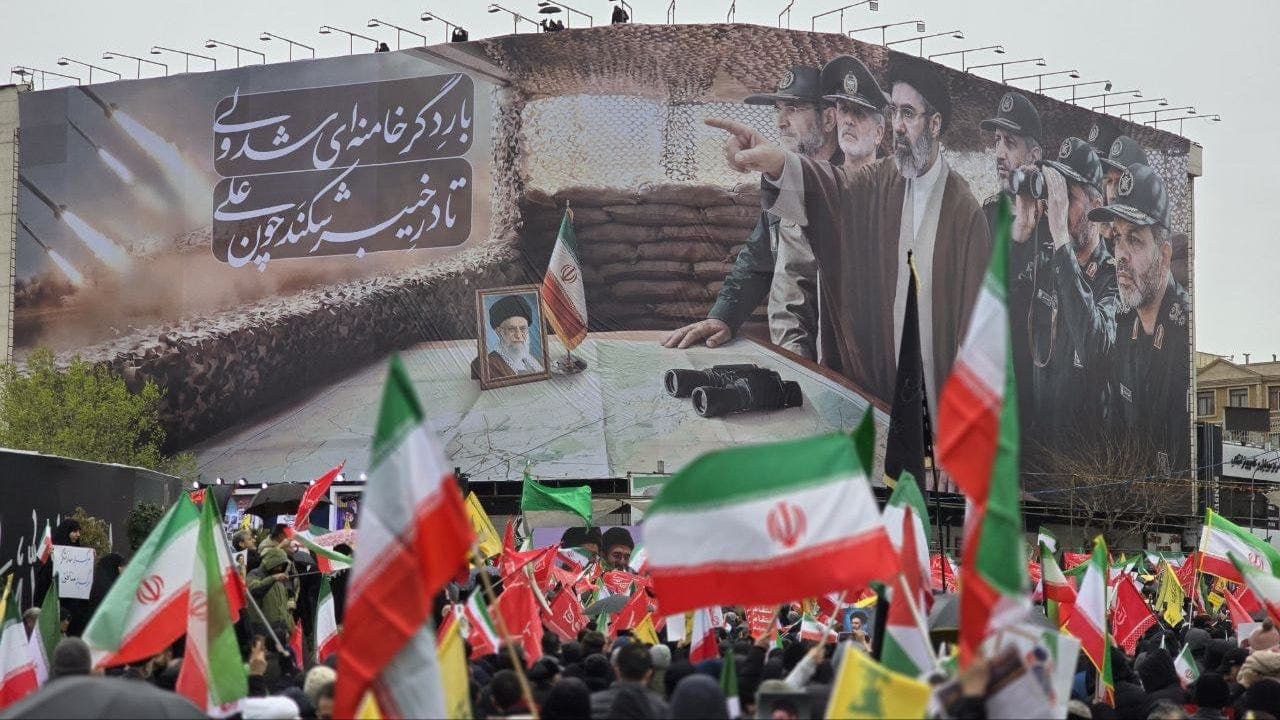
In his first message after being selected as Supreme Leader, Mojtaba Khamenei wrote that Iran’s recent attacks in the region targeted only military bases.
He wrote:
“We share land or maritime borders with fifteen neighboring countries, and we have always wanted, and still want, warm and constructive relations with all of them. However, for years the enemy has gradually established bases, both military and financial, in some of these countries in order to secure its dominance in the region. In the recent assault, some of these bases were used. As we had clearly warned before, and without committing any aggression against those countries, we targeted only those bases. From now on we will also be forced to continue doing so, although we still believe in the importance of friendship between ourselves and those neighbors.”
To check this claim, we reviewed reports from the Institute for the Study of War (ISW). Since the first day of the US and Israeli attack on the Islamic Republic, this institute has published daily reports on developments in the conflict. Links to 13 daily reports published between February 28 and March 12, 2026 are listed below.
- Iran Update Evening Special Report, February 28, 2026 | ISW
- Iran Update Evening Special Report, March 1, 2026 | ISW
- Iran Update Evening Special Report, March 2, 2026 | ISW
- Iran Update Evening Special Report, March 3, 2026 | ISW
- Iran Update Evening Special Report, March 4, 2026 | ISW
- Iran Update Evening Special Report, March 5, 2026 | ISW
- Iran Update Evening Special Report, March 6, 2026 | ISW
- Iran Update Evening Special Report, March 7, 2026 | ISW
- Iran Update Evening Special Report, March 8, 2026 | ISW
- Iran Update Evening Special Report, March 9, 2026 | ISW
- Iran Update Evening Special Report, March 10, 2026 | ISW
- Iran Update Evening Special Report, March 11, 2026 | ISW
- Iran Update Evening Special Report, March 12, 2026 | ISW
These reports review the most important events and developments in the war over the previous 24 hours. They examine the targets of attacks by both sides using publicly available sources and open source information. In other words, the information in these reports is based on data that has already been reported and published in the public domain, including sources connected to the Islamic Republic.
To make the analysis easier, we collected all available data related to Iran’s attacks on countries in the region in the link below:
https://infogram.com/fc-isw-iranattacks-febmar2026-1h0n25o0dk5wz4p
How many countries or regions were targeted?
From the start of the war until the day Mojtaba Khamenei’s message was published, a total of 10 countries, along with international waters, were directly targeted. These countries were Bahrain, the United Arab Emirates, Kuwait, Qatar, Jordan, Iraq, Oman, Cyprus, Saudi Arabia, and Israel.
Iran also carried out attacks in international waters, especially in the Strait of Hormuz, the Persian Gulf, and the Gulf of Oman.
How many specific locations were targeted?
According to the daily reports we reviewed, more than 75 specific locations, facilities, or ships were mentioned as targets. These can be grouped into several categories.
1. Air bases and military camps:
Ali Al-Salem Air Base (Kuwait)
Camp Arifjan (Kuwait)
Al Udeid Air Base (Qatar)
Muwaffaq Al Salti Air Base (Jordan)
Harir Air Base (Iraq)
Prince Sultan Air Base (Saudi Arabia)
RAF Akrotiri Air Base (Cyprus)
2. Naval bases and dual-use ports:
US Fifth Fleet headquarters (Bahrain)
Jebel Ali Port (United Arab Emirates)
Salman Port (Bahrain)
Duqm Port (Oman)
3. Diplomatic sites: US embassies in Kuwait and Riyadh, the US consulate in Dubai and the Israeli embassy in Abu Dhabi
4. Cities and open areas: Tel Aviv, Bnei Brak, Beit Shemesh, Moshav Bareket, and Jerusalem in Israel, Doha in Qatar and Al-Kharj in Saudi Arabia
5. Civilian infrastructure and commercial assets: These are explained in more detail in the next section.
6. Unspecified locations: Many attacks were also directed at “unspecified military and security sites” across Israel, Cyprus, Iraq, and the United Arab Emirates.
How many of them were civilian targets?
Thirty-five of the listed targets were civilian or commercial locations. This means that large civilian populations, commercial infrastructure, and private industries were exposed to risk.
1. Hotels and residential areas:
Fairmont Hotel in Dubai
Hyatt Palace Hotel in Manama
Residential buildings in Dubai
Residential buildings in Manama
A residential neighbourhood in Al Kharj in Saudi Arabia
2. Civilian airports:
Kuwait International Airport
Areas near Dubai International Airport
3. Energy and water infrastructure:
Ras Tanura refinery in Saudi ArabiaThe
The Berri oil field in Saudi Arabia
Shaybah oil field in Saudi Arabia
Sarsang oil field in Iraq
BAPCO refinery in Bahrain
A desalination plant in Bahrain
4. Commercial shipping and vessels: At least 13 commercial ships in international waters were hit or targeted. These included the Honduras-flagged tanker Athe Nova, the Panama-flagged vessel Gold Oak, the Malta-flagged Safeen Prestige, the Bahamas-flagged tanker Sonangol Namibe, and the Liberia-flagged SOURCE BLESSING, which belongs to the Chinese government. Several other ships and a civilian tugboat were also targeted.
5. Cities and urban centers: Multiple impacts and direct strikes were recorded in densely populated civilian areas across Israel, including Tel Aviv, Bnei Brak, Beit Shemesh, and Jerusalem. These strikes caused several civilian casualties. One impact was also reported in Doha, Qatar.
Is the claim that civilian sites were used for military purposes credible?
Some Islamic Republic officials argue that attacks on civilian locations were justified because those places were being used for military purposes. For example, Iran’s foreign minister Abbas Araghchi said:
“If US bases in the region are evacuated and their forces are, for example, stationed in hotels, that itself becomes relevant. From our perspective, these locations are considered legitimate targets.”
Some may also argue that attacks on desalination plants, commercial ships, oil tankers, or oil refineries were retaliation for strikes on Iran’s oil depots. Others may say that attacks on cities and public areas were a response to US and Israeli strikes that killed hundreds of civilians, including children.
Even with these explanations and caveats, they do not change the fact that Mojtaba Khamenei’s claim is not factual. He did not refer to any such justifications. Instead, he said that Iran “only targeted military bases,” which the available evidence does not support.