How Whitelisted Accounts Shape the Narrative During Iran’s Internet Blackout
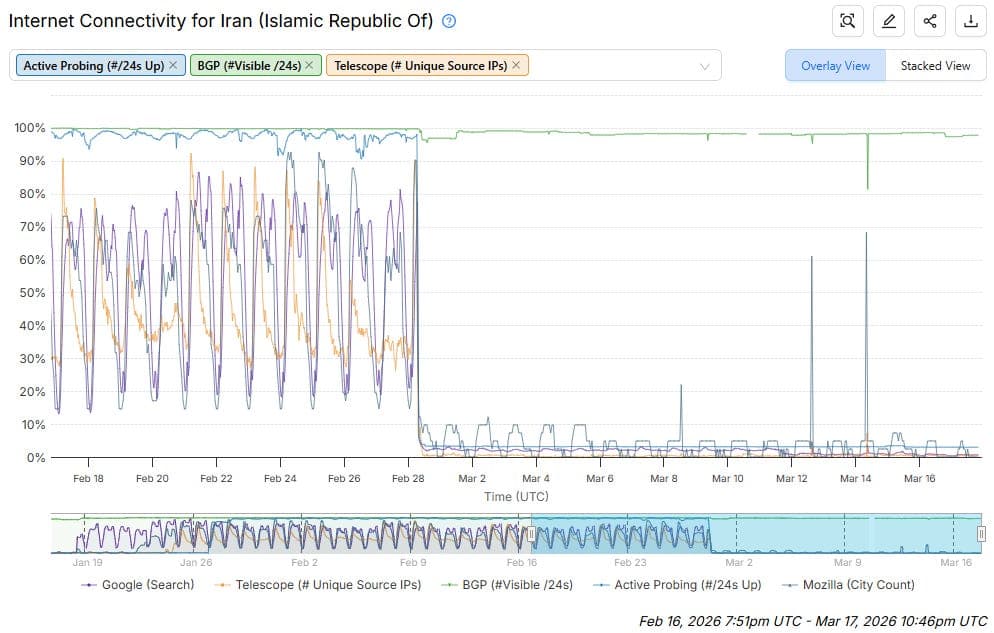
Since the war between the Islamic Republic, Israel, and the United States began on 28 February 2026, internet access across Iran has been reduced to a fraction of its normal level. Data from the Internet Outage Detection and Analysis (IODA) project confirmed a sharp drop in the country’s connectivity to the global internet. For most people in Iran, this means they can no longer communicate with the outside world.
The shutdown, however, does not affect everyone equally. Authorities have implemented a whitelisting system that grants access to the global internet only to a limited group of approved users and institutions. Government spokesperson Fatemeh Mohajerani confirmed this policy, stating that international access is granted only to individuals who “share the government’s voice” online.
This arrangement directly determines what information can leave the country during the shutdown. Because only a narrow group of approved accounts retains access to the global internet, much of the content that continues to circulate online originates from this limited set of actors, while most other voices inside Iran remain effectively cut off from the outside world.
#AnotherKhamenei: Praising Mojtaba Khamenei as Opposing Voices Were Absent
Following the death of Ali Khamenei on 28 February 2026, after he was killed in the opening wave of U.S.- and Israeli-led airstrikes targeting senior Iranian leadership at the start of the war, a rapid and tightly controlled succession process was set in motion by the Assembly of Experts.
As this process unfolded, it was reflected on Persian-language social media under conditions shaped by the shutdown, where alternative views from inside the country were largely missing. One of the hashtags that circulated widely during this period was #خامنه_ای_دیگر (“another Khamenei”), following reporting by Iran International on March 3. The report, which cited insider sources, revealed that the Assembly of Experts had selected Mojtaba Khamenei as the next supreme leader.
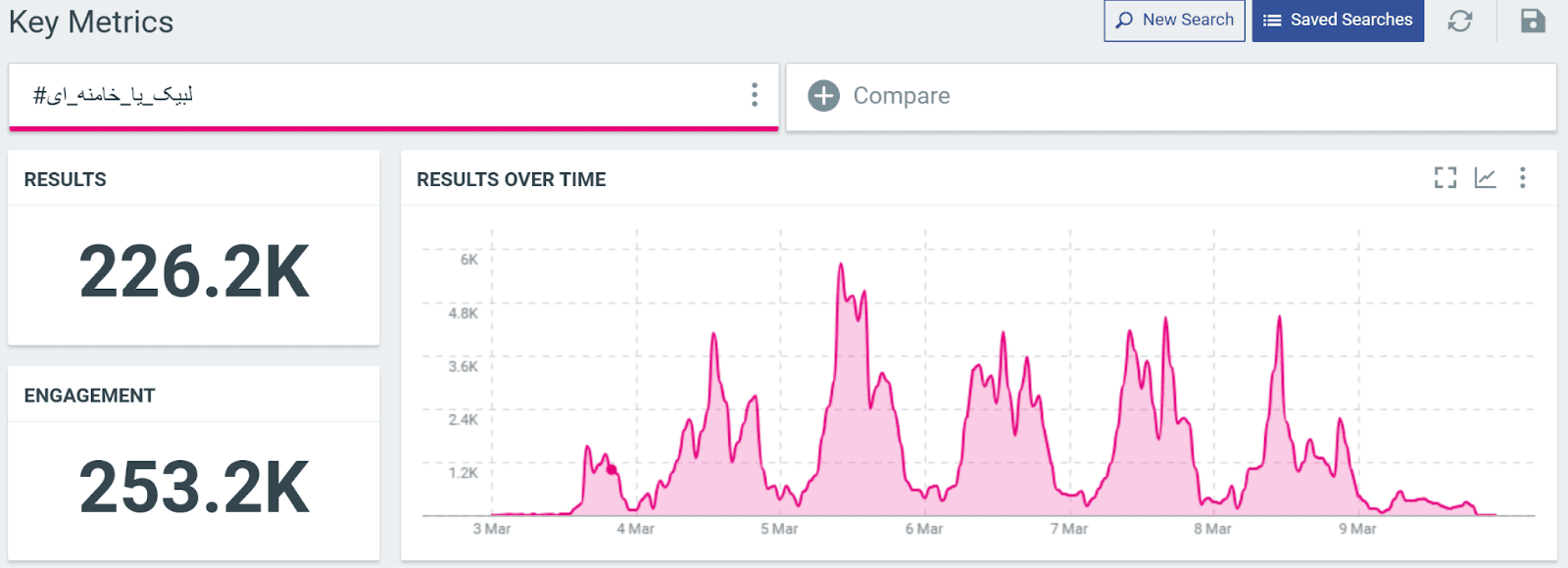
The official announcement, however, came five days later, on March 8, while posts using the hashtag had already been building in the days before that confirmation. According to data from the social media analytics platform Talkwalker, the hashtag generated more than 226,000 posts and over 253,000 engagements on X between 3 and 9 March.
To explore how the conversation around Mojtaba Khamenei’s succession unfolded online, a sample dataset of posts containing #خامنه_ای_دیگر was compiled using NodeXL Pro. The dataset covers activity on 9 and 10 March 2026, immediately following the public announcement of Mojtaba Khamenei as the supreme leader on 8 March. These two days capture the immediate online reaction when the discussion shifted from speculation to confirmation. The dataset includes 3,608 tweets posted by 1,256 users, which generated more than 4,000 interactions through replies, mentions, retweets, and quote tweets. The dataset was then analyzed to identify patterns in how the conversation circulated on X.
Themes and Messaging
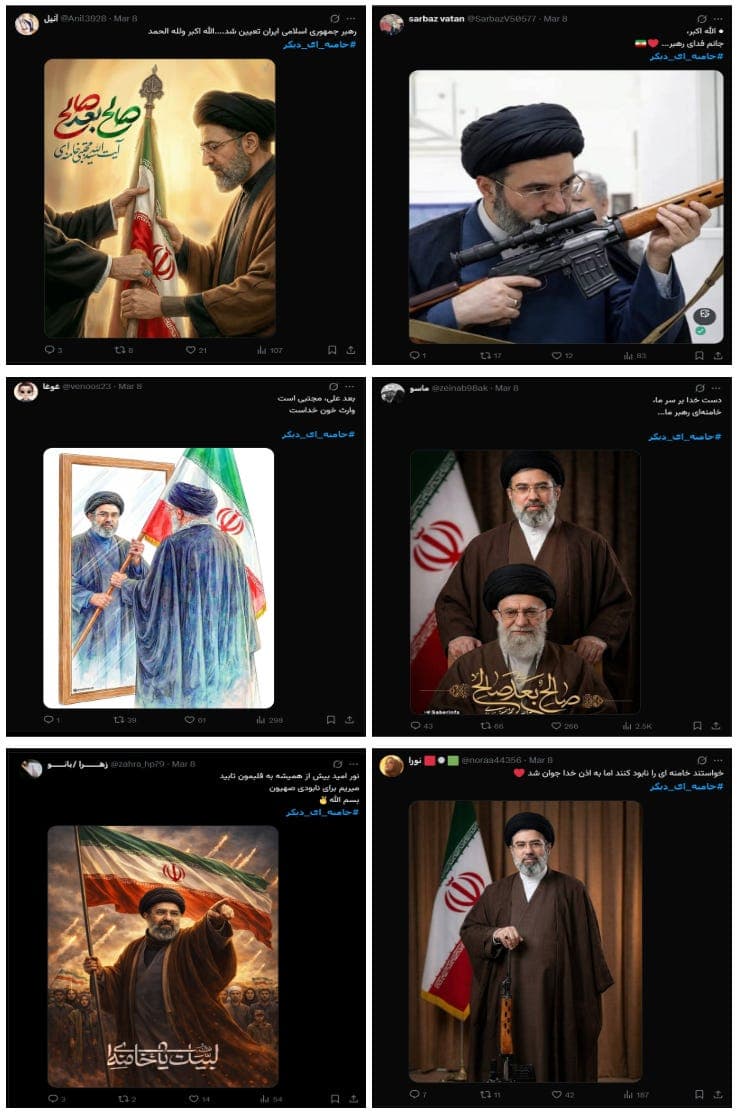
Translation of posts: Post 1: “The leader of the Islamic Republic of Iran has been appointed… God is greatest… God is greatest, praise be to God.” Post 2: “God is the greatest. My life for the leader.” Post 3: “After Ali, Mojtaba is the chosen one, the heir to the sacred blood.” Post 4: “More hopeful than ever that Zion will be destroyed. In the name of God.” Post 5: “God protects us. Khamenei is our leader.” Post 6: “They wanted to destroy Khamenei, but God made him young again.”
The full content is available here.
The hashtags used across the network usually provide insight into the themes through which participants framed the discussion. The most frequently used hashtags in the dataset include:
- (Another Khamenei): #خامنه_ای_دیگر ,
- (Until Death for Iran): #تا_پای_جان_برای_ایران ,
- (We Are the Men of War): #مرد_نبردیم ,
- (Khuzestan United): #لبیک_یا_خامنه_ای / #لبيك_يا_خامنه_ای ,
- (Dear Iran): #ایران_جان ,
- (Avenger): #منتقم , and
- (For Iran): #برای_ایران
This framing mirrors messaging used by the Islamic Republic during the twelve-day war with Israel, when official discourse frequently emphasized national unity and the defense of Iran to mobilize patriotic sentiment. During the twelve-day war, officials, including the former Supreme Leader, leaned heavily on nationalist rhetoric, sometimes invoking Iran’s cultural and historical identity to rally support among a population whose attachment to the regime’s religious ideology has weakened over time.
Where Most Accounts Were Based
Because Iran was under a nationwide internet shutdown during this period, one would expect little or no activity from accounts identified by X as operating from inside Iran. If such accounts appear active in the dataset, this may indicate that they had access to the global internet despite the broader restrictions, for example, through whitelisted connections.
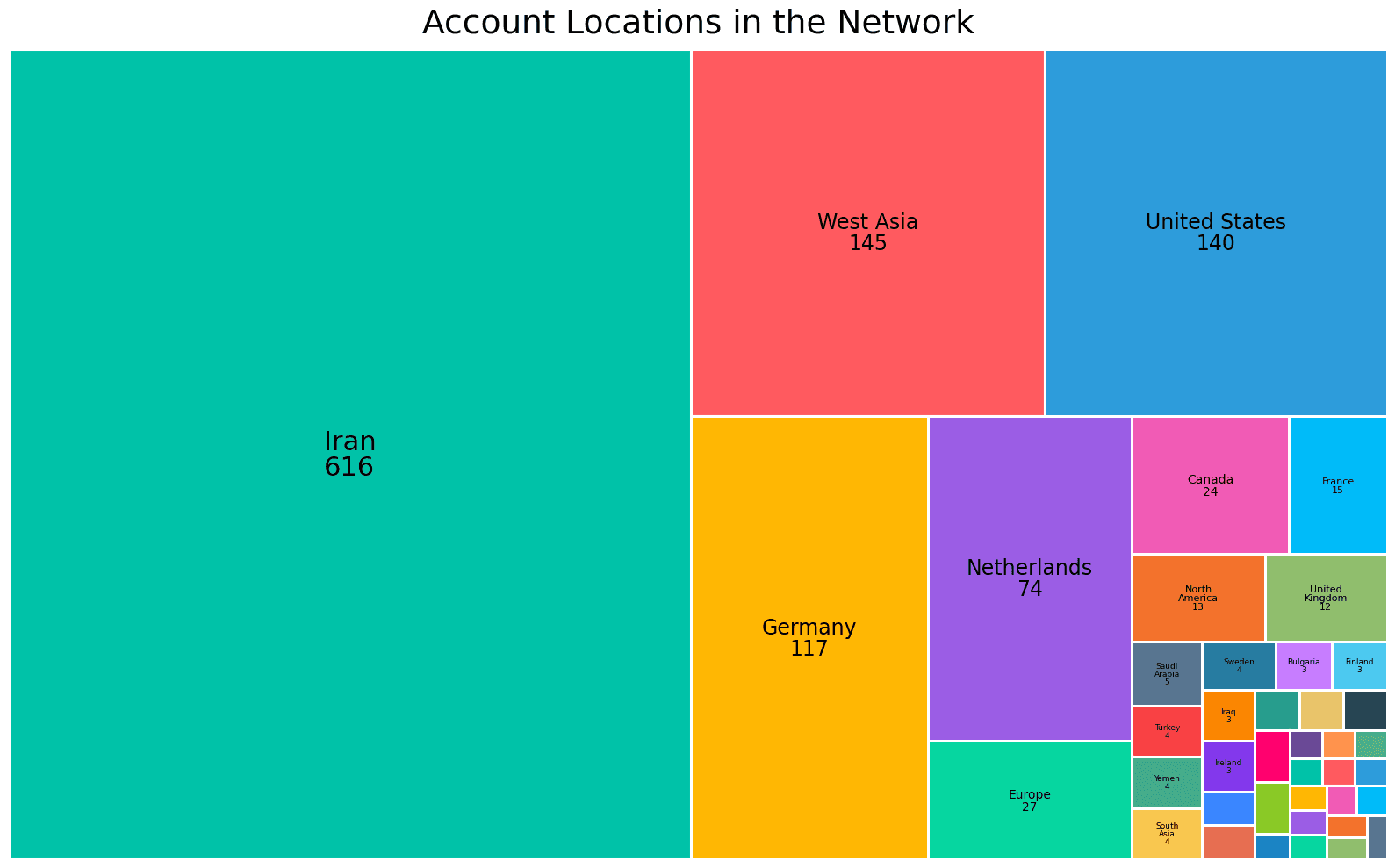
To identify where most accounts in the dataset were based, the “account based in” information displayed in X’s “About this account” panel was collected and compiled for analysis. Nearly 48% of the accounts in the network were labelled by X as being based in Iran, while the second largest category was West Asia at 11%. The presence of the “West Asia” label reflects how some accounts are displayed at a regional level rather than by country, depending on how users choose to define or present their location. In past observations, a number of accounts operating from Iran have appeared under this broader regional label instead of being identified specifically as Iran.
Creation Timeline of Accounts in the Dataset
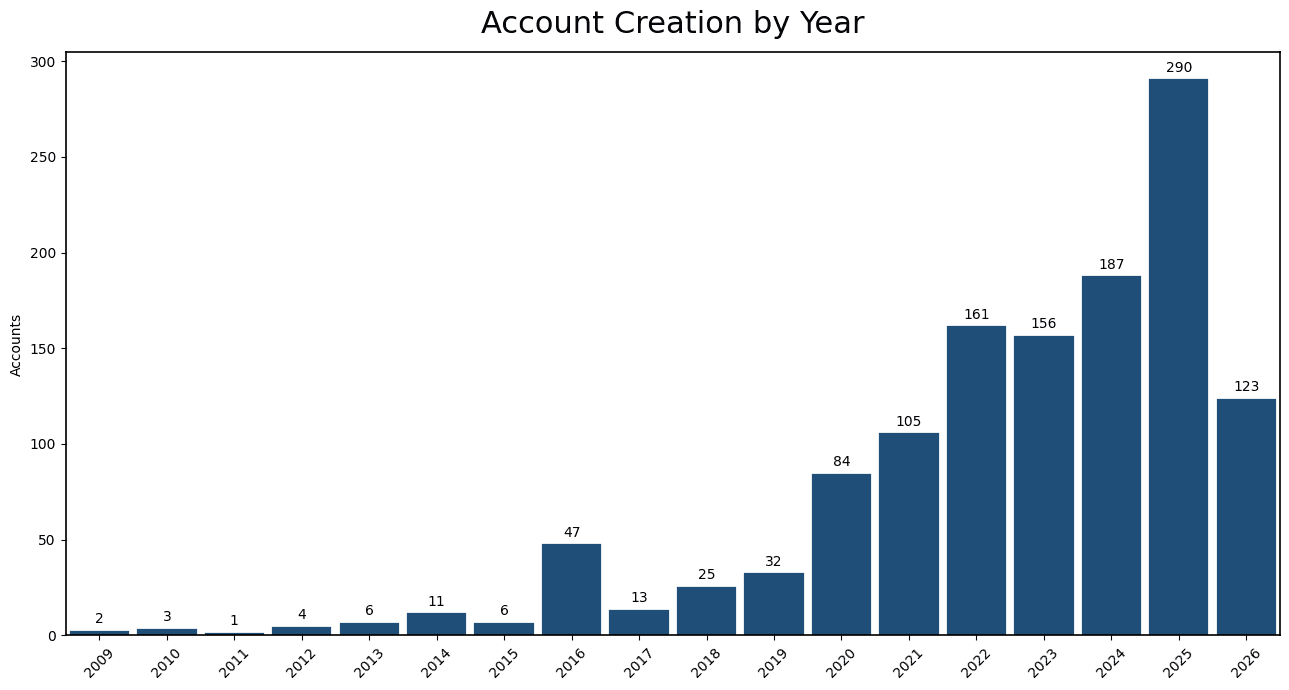
Account creation dates can provide context about whether the accounts participating in the conversation are long-established profiles or relatively recent ones. The distribution of account creation dates shows a noticeable spike in 2025. In that year alone, 290 of the 1,256 accounts in the dataset were created, representing 23% of the sample. Additionally, the most active three-month period of account creation occurred between 10 December 2025 and 10 March 2026, during which 138 accounts were created. This pattern indicates that a substantial share of the profiles involved in the activity were created in the year and months leading up to the online discussion examined in this analysis.
Accounts with Identical Bios and Near-Simultaneous Creation:

Who Do These Accounts Claim to Be
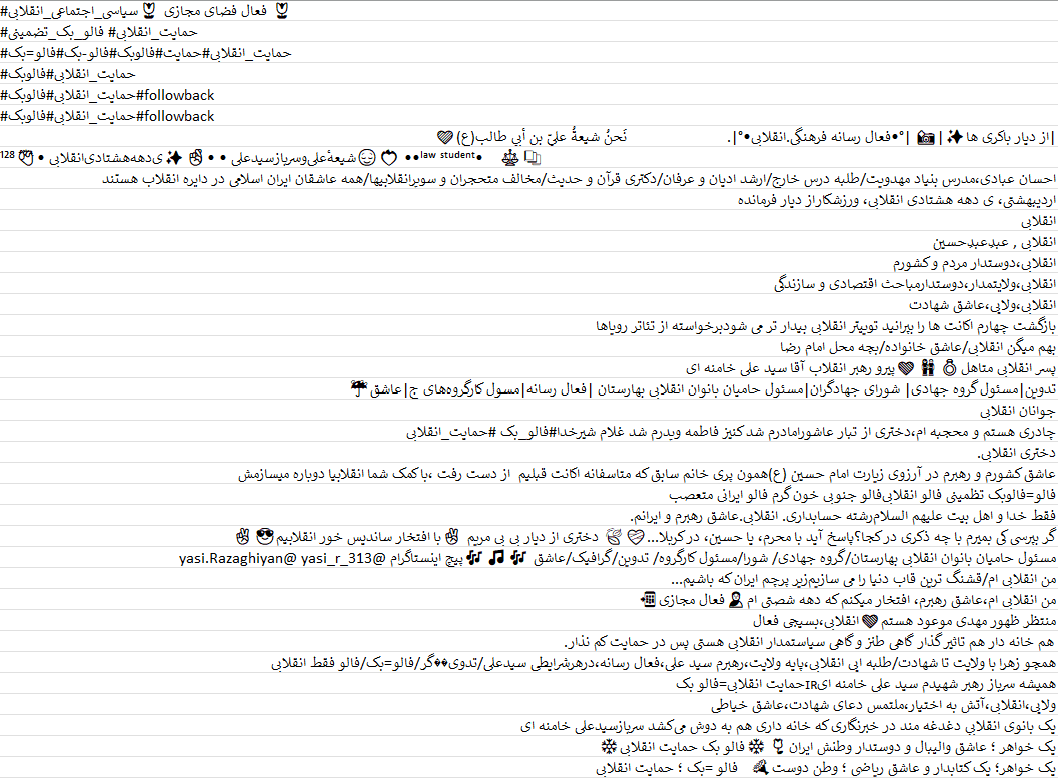
Pro–Islamic Republic accounts often signal ideological or religious affiliation through the language used in their profile bios. To identify how frequently this language appeared, the compiled bios of the accounts in the dataset were searched for several keywords commonly associated with the ideological and religious vocabulary used by supporters of the Islamic Republic. These included انقلابی (revolutionary), a term often used to signal loyalty to the ideals of the 1979 Islamic Revolution; جهاد (jihad), which in this context typically refers to religious or ideological struggle; خامنهای (Khamenei), the surname of Iran’s supreme leaders; رهبر (leader), often used in reference to the supreme leader; and سرباز (soldier), frequently appearing in phrases such as “soldier of the leader,” a formulation used by individuals who present themselves as loyal supporters of the political system.
Bios with the term “انقلابی” (revolutionary):
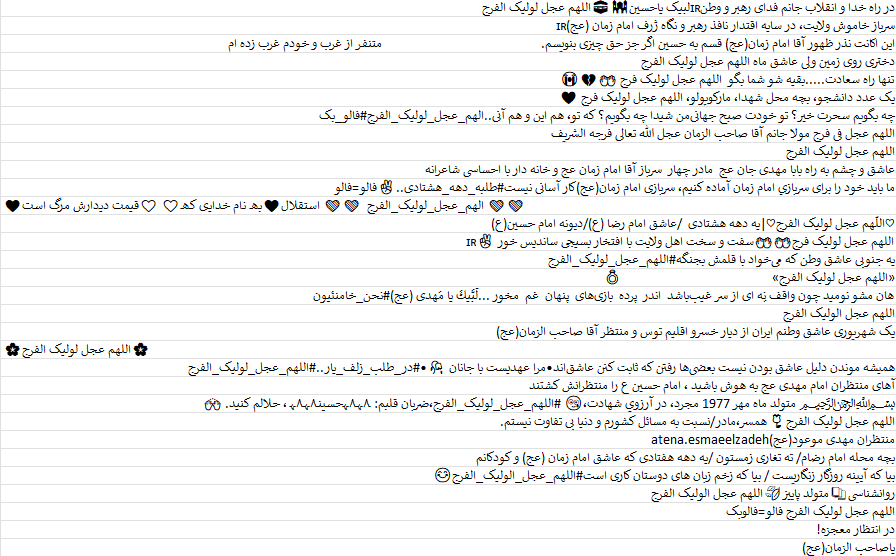
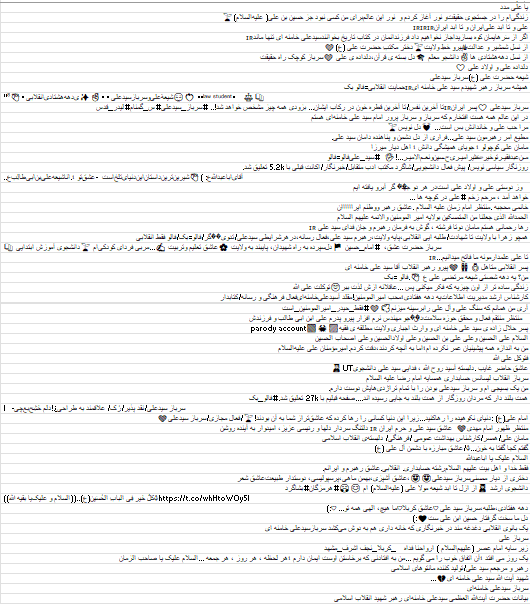
Additional terms included ظهور (appearance), commonly referring to the anticipated reappearance of Imam Mahdi in Twelver Shiite belief; علی (Ali), referring to Imam Ali, the first Imam in Shiite Islam; شیعه (Shiite), referring explicitly to Shiite identity; عج, a short devotional marker commonly written after the name of Imam Mahdi and derived from the phrase اللهم عجل لولیک الفرج, a supplication asking God to hasten the Imam’s reappearance; and ولایت (guardianship), often used in reference to Velayat-e Faqih, the doctrine that grants political authority to the supreme jurist in the Islamic Republic’s system of governance.
Bios with the term “عج,” a Shia expression related to Imam Mahdi:
Bios with the term “علی,” referring to Imam Ali:
While reviewing the biographies, another pattern emerged that had not been part of the original keyword search. The word “follow” appeared very frequently in the bios, typically in forms such as “Follow = Follow” or “Follow = Back.” These phrases are commonly used by accounts participating in follow-exchange networks, where users promise to follow back anyone who follows them in order to quickly increase their follower counts.
Bios with the term “فالو” (follow):
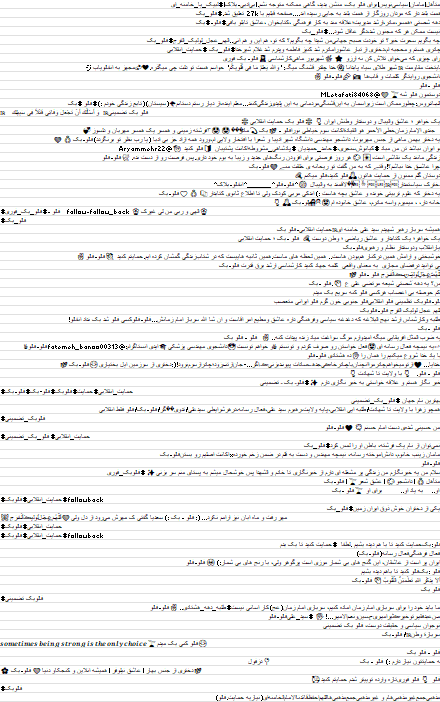
Across the bios reviewed above, many accounts included at least one of these terms, and some included several of them. The repeated presence of this vocabulary across different profiles indicates that similar ideological and religious references were commonly used when accounts described themselves.
The analysis investigated how restricted access and selective connectivity shaped Persian-language content during the war in late February and early March 2026, when a nationwide internet shutdown was in place. This is reflected in posts about Mojtaba Khamenei’s appointment as supreme leader, examined through the hashtag #خامنه_ای_دیگر (“Another Khamenei”). Across the network, the messaging centered on loyalty to the leader, religious slogans, and wartime themes such as unity, sacrifice, revenge, and nationalist framing, while other perspectives from inside Iran were largely absent. As a result, what circulated internationally presented a partial and unbalanced view of how this moment was being discussed.