Iran's Information War: Patterns and Trends in Information and Narrative Manipulation
Factnamh’s analysis of Iranian state media and Persian language social media narratives continue to reveal a highly structured effort to manipulate the public perception of the war both in Iran and outside. The overarching goal of these manipulation campaigns is to project military dominance, mask systemic domestic failures, and cast doubt on enemy successes. There is also an active trend on Persian-language social media to downplay the human cost of the war through spreading conspiracy theories, including the use of “crisis actors” by the Islamic Republic in response to viral images in the aftermath of attacks on residential areas and civilian casualties.
Information manipulation by Islamic Republic consistently utilizes specific patterns to shape narratives during conflicts and deflect from domestic crises. A primary trend is recycling old or unrelated media, such as passing off a past gas explosion as a recent rescue from war rubble, an Indian jet crash from 2025 as a downed US F-16, and old protest footage from 2022 as a live hack of BBC Persian. We continue to see the use of AI-generated content to fabricate events, including massive fires on the USS Gerald R. Ford, while paradoxically dismissing authentic broadcasts that go against their narrative as AI fakes to delegitimize them.
To project military dominance, state media in Iran frequently misidentifies military and strategic assets. This includes falsely celebrating failed missile intercepts as downed US F/A-18 jets, passing off a Russian-made Geran-2 drone as a captured advanced US LUCAS drone, and presenting an empty Iranian tanker as proof of a blockade of foreign ships in the Strait of Hormuz. Furthermore, manipulation involves distorting foreign media reports such as fabricating quotes from The New York Times to claim domestic protests were a foreign conspiracy. Domestically, state propaganda deflects government failures by continuously highlighting the leadership’s “simple lifestyle” to deliberately mask their control over massive, untaxed, and non-transparent economic empires.
Here is a look at the patterns and trends of information manipulation during the past week to shape the narrative and public opinion about the ongoing war in Iran.
Recycling and re-contextualizing old media is a common tactic employed by the Islamic Republic. They take authentic footage of unrelated past events and falsely present them as current news. Because the footage itself is real, it easily bypasses the initial skepticism of its target audience.
- Fabricated rescues and casualties: A video claiming to show a child being rescued from war rubble and waving to onlookers was actually old footage of a gas explosion rescue in Ahvaz from weeks before the conflict.
- Staged military triumphs: A video of an Indian Tejas fighter jet crashing during the Dubai AirShow in November 2025 was widely circulated with the false claim that it showed a US F-16 shot down over the UAE.
- Political disinformation: Footage from 2022 protests was digitally altered and circulated to falsely claim that Iranian agents had successfully hacked BBC Persian during a live broadcast.
The weaponization of artificial intelligence and deepfakes. The deployment of AI has created a dual-pronged strategy: generating fake footage to fabricate events, and falsely labeling real footage as AI to delegitimize it.
- Simulating enemy disasters: To exaggerate a minor, contained laundry room fire on the USS Gerald R. Ford, an AI-generated video showing massive, catastrophic fires on the carrier’s deck was distributed widely on Instagram.
- The “AI Defense”: Conversely, when authentic footage is inconvenient, it is dismissed as fake. Social media accounts falsely claimed that a genuine press conference broadcast by Israeli Prime Minister Benjamin Netanyahu was an AI-generated deepfake.
Misidentifying assets to fabricate military victories to project power and control without actual military success, state-aligned media frequently mislabels domestic or allied assets to claim they are captured or blockaded enemy equipment.
- False drone trophies: State media claimed to have shot down an advanced US “LUCAS” drone; however, visual analysis of the wreckage confirmed it was actually a black-painted, Russian-made Geran-2 (Shahed-136) drone.
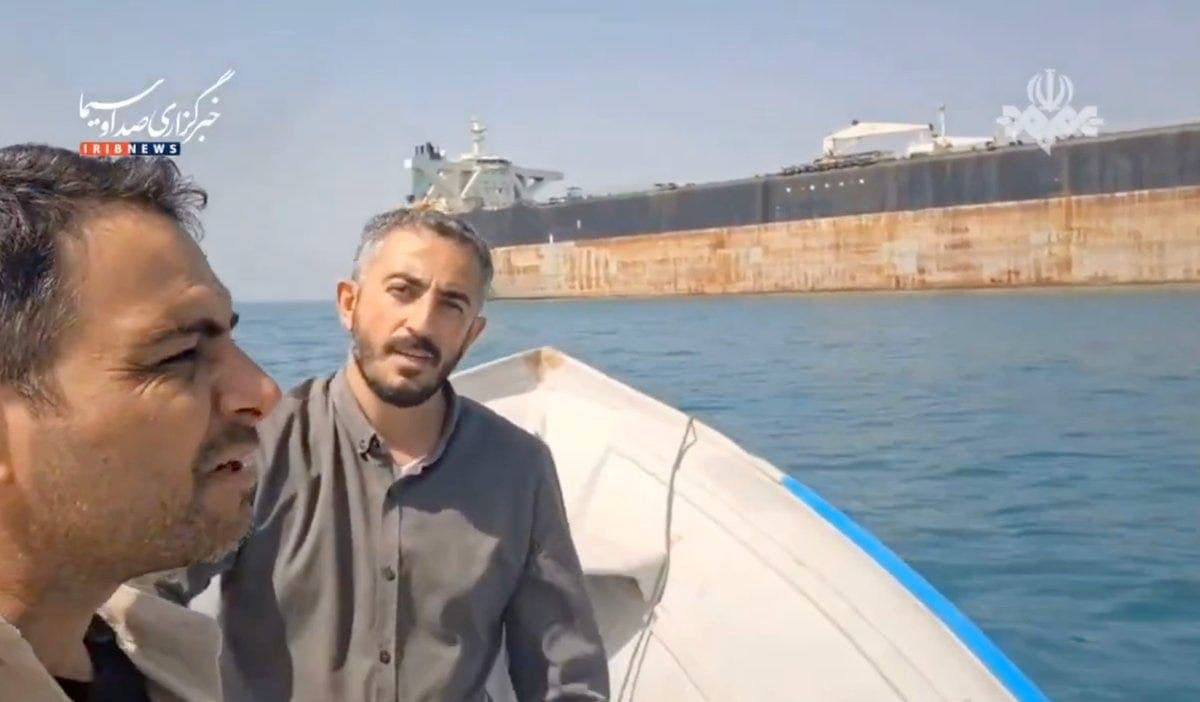
- Staged blockades: An official broadcast claimed that a video showed over 40 foreign tankers waiting for Iran’s permission to cross the Strait of Hormuz. Tracking data proved the vessel in the video was actually the NAVARZ, an empty Iranian tanker that had simply been anchored in the area. A separate video claiming to show a Thai ship burning from an Iranian strike actually depicted a different vessel.
- Exaggerated intercepts: State media celebrated the downing of a US F/A-18 fighter jet over Chabahar, but the provided video evidence actually showed the interceptor missile failing to detonate properly, allowing the jet to escape unharmed.
An official broadcast claimed that a video showed over 40 foreign tankers waiting for Iran’s permission to cross the Strait of Hormuz.
Distorting foreign media is a common tactic by Iran’s state media, frequently relying on fabricating quotes from prestigious international outlets to give domestic conspiracy theories a veneer of global legitimacy. An expert on state television falsely claimed The New York Times reported that domestic protests in January were a “Mossad project” designed to pull the US into a war. In reality, the article explicitly stated that Mossad had hoped early strikes would spark an uprising, but noted the plan failed because the public was terrified of the regime’s brutal crackdowns seen during the January protests.
Deflecting domestic crises and masking financial realities. Information manipulation is not strictly reserved for warfare; it is heavily utilized to deflect blame for systemic domestic failures. State media actively promotes unverifiable stories of the previous Supreme Leader’s “simple lifestyle”, such as claims that his house lacks carpets or that he refuses to eat kebabs, to build a specific ascetic image. This narrative deliberately distracts from the reality that the Islamic Republic leadership controls massive, non-transparent economic empires (like the Execution of Imam Khomeini’s Order and the Mostazafan Foundation) worth tens of billions of dollars, which are legally shielded from public audits and used to secretly fund state operations.
One of the most concerning trends is the ongoing debate taking root on Persian-language social media to delegitimize casualties and to dismiss the impact of strikes and civilian casualties. The online controversy sparked by photographs of civilian casualties from strikes in Iranian cities last week has revealed two major issues: the profound distrust many Iranians harbor toward official narratives and the growing public disagreement over how to interpret the visual evidence emerging from the conflict.
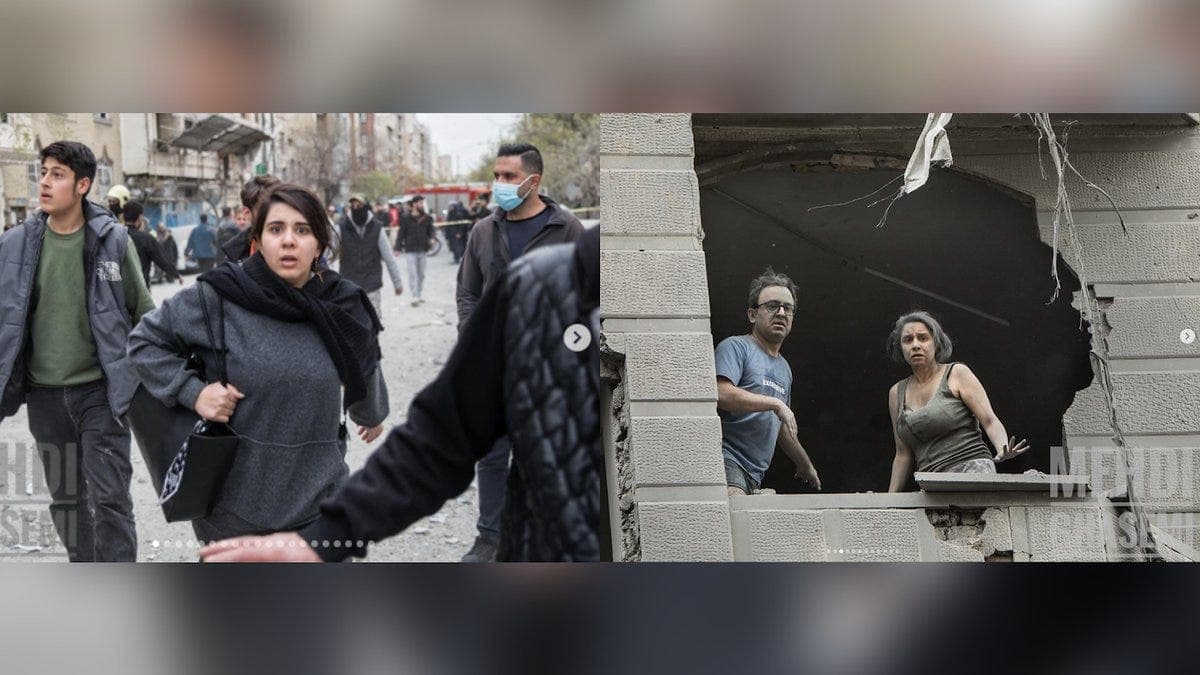
Widely shared photos of injured civilians on social media prompted accusations from social media users that both photographers and authorities were staging these scenes for propaganda. People alleged that the individuals shown in the images were actors, and that any visible injuries, dust, and signs of distress were artificially created using makeup and staged settings. Factnameh’s research found no evidence supporting claims that these photos were staged or the people in them were “crisis actors”.
One of the root causes of why such conspiracy theories are gaining traction is the Iranian government’s documented history of fabricating narratives and staging media surrounding the deaths of citizens (such as Kian Pirfalak and Nika Shakarami). This has created a deep-seated public mistrust of official media reports. This is further amplified by the fact that Iranian authorities have strictly forbidden the taking of photographs, filming, or sharing images of military strikes, the aftermath of attacks, or military installations during the ongoing conflict. Therefore, amplifying distrust in photos or videos published by photographers with special licenses to cover the war in Iran.
This sprawling ecosystem of information manipulation and competing narratives is heavily reinforced by the Iranian government's internet shutdown, now lasting for over a month. The blackout of international internet access severely limits the public's access to independent and verifiable information. By deliberately cutting off connectivity, the Islamic Republic is isolating the population, making it significantly easier to monopolize the narrative around the war in order to shape public opinion and silence any dissent.