The Myth of 'Domestic Internet' in Iran
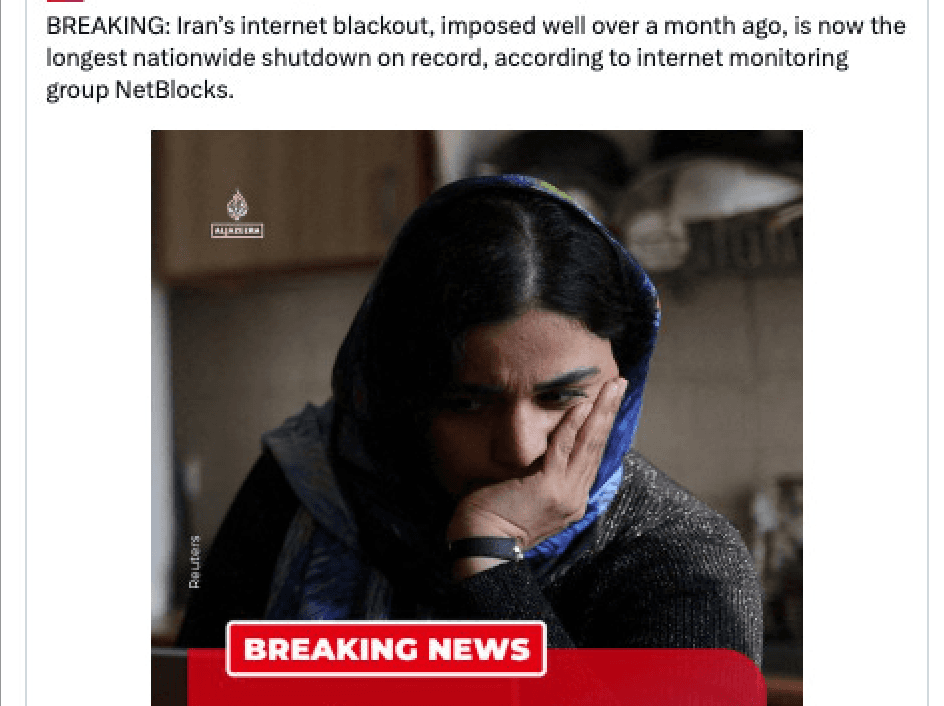
People in Iran have been experiencing an internet shutdown for 39 consecutive days now. The longest in Iran’s history. Iran has spent more than half of 2026 under an internet and communications blackout.
Following the US-Israeli military strikes on February 28, 2026, Iranian authorities immediately implemented a near-total blackout of international internet access. While domestic services remain operational through the active National Information Network, global connectivity has been systematically dismantled. This analysis, a joint effort by Miaan, ASL19, Kentik, IODA, Cloudflare, Holistic Resilience, and DeltaChat, examines the technical specifics of this wartime shutdown and the strategic significance of the state’s digital whitelisting model.
Wartime Digital Isolation: Iran’s Strategic Internet Shutdown.
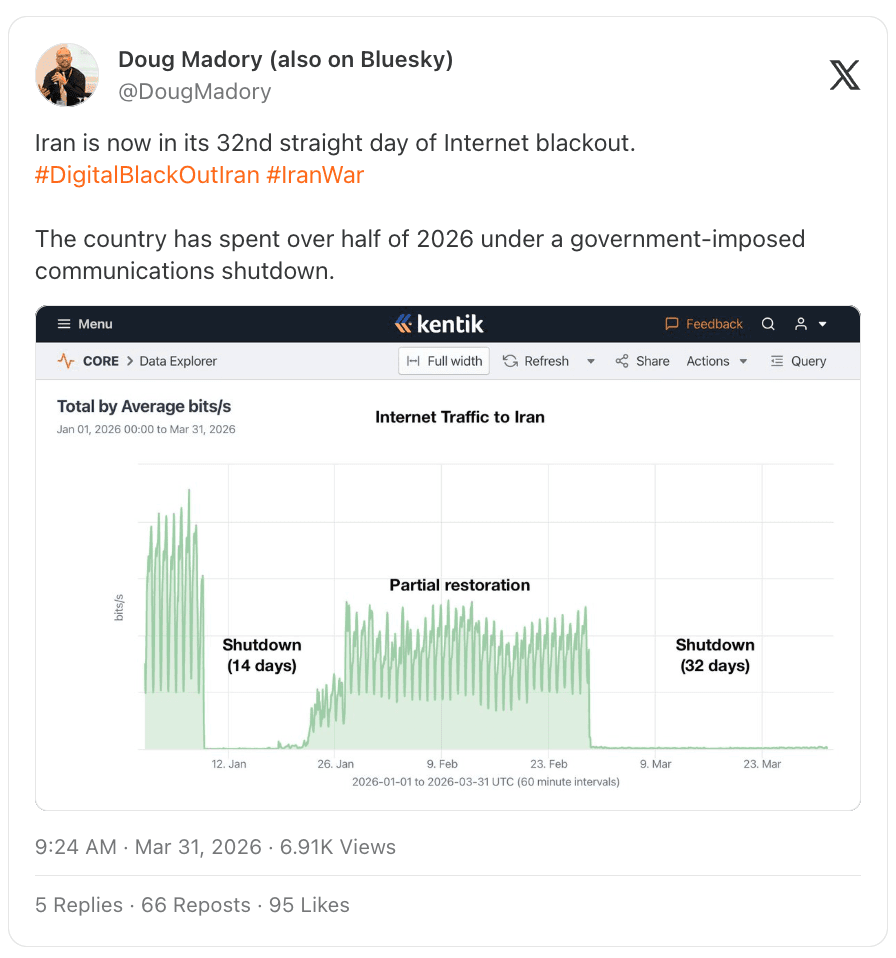
On Sunday, as Al Jazeera reported on this record-breaking nationwide blackout, a network of pro-government accounts mobilized on social media to deny the truth. A key figure pushing this false narrative is Mohammad Marandi, an English-language advocate for the Islamic Republic, who claimed on the social network X that Iranians “have access to the internet, but only to domestic sites and applications.”
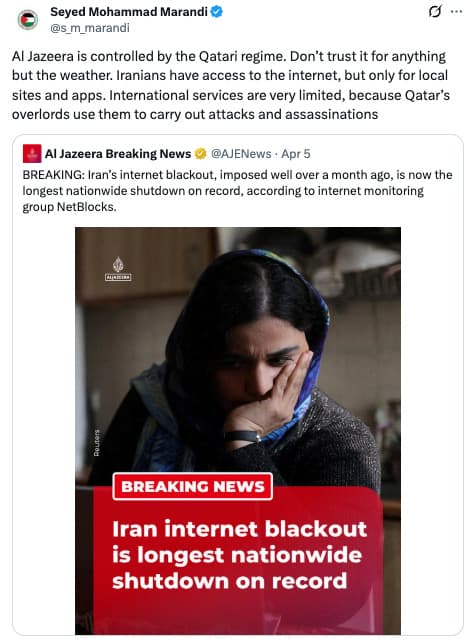
Marandi’s post is one of the reactions from pro-regime accounts that have amplified this false narrative, claiming that people can fulfill much of their daily online tasks, “Banking, video streaming, research, ride share apps, etc. are all working” and claims that others are able to easily bypass restrictions using VPNs. In reality, desperate to reconnect, Iranians are forced into a chaotic underground market for specialized VPN “configs”, paying as high as 20 USD per gigabyte in some cases, which is very high considering the average monthly salary is estimated between $200 and $300.
What is the National Information Network?
The National Information Network (NIN), frequently and misleadingly referred to as the “National Internet,” is a comprehensive, state-controlled domestic digital infrastructure project in Iran. It is fundamentally designed to segment and isolate domestic internet traffic from the global World Wide Web. This ambitious project, started close to 20 years ago, serves as a cornerstone of the Islamic Republic’s strategy to achieve what it terms “digital sovereignty” but in reality aims to make surveillance easier, and to shut down access to international websites while maintaining local services, serving as a primary tool for censorship and control.
The implementation of the NIN involves building substantial domestic data centers, developing state-sanctioned search engines (unsuccessful so far), promoting locally-developed applications, and mandating that high-traffic domestic services migrate their data onto this national infrastructure. While often framed by the government as an effort to improve domestic service quality, reduce latency, and lower the costs of foreign-exchange spending on international bandwidth, its overriding purpose remains a mechanism of political control, making it the central pillar of Iran’s digital authoritarianism.
Definition of the Internet
According to the official definition of the Federal Networking Council (FNC), the internet is “a global information system” that uses a unique address space based on the Internet Protocol (IP), supports a set of protocols such as TCP/IP, and provides communication services on a global scale. The Internet Society (ISOC) also considers the internet a global infrastructure consisting of interconnected networks that enable communication and information exchange worldwide.
The Britannica encyclopedia’s definition of the internet is: “a global system of interconnected computer networks that uses the Internet Protocol suite to communicate between networks and devices across the world.” The Merriam-Webster dictionary defines the internet as “an electronic global network of computer networks that are connected to one another using standard protocols.”
With these definitions, it is clear that the internet is precisely a global collection of interconnected networks that, relying on common standards, provide a unified platform for communication and information exchange across the world.
This connection has been severed in the latest round of internet shutdown that started on February 28th, 2026.
Life under Internet shutdown
In truth, ordinary people living in Iran have lost access to the internet. Most foundational global services, including Google Search, Wikipedia, Microsoft, GitHub, and social media platforms like Instagram, Telegram, WhatsApp and X. At the same time, people like Marandi enjoy unfettered access to the internet through a whitelist model implemented by the Islamic Republic, whereby select individuals and entities have access to the internet. In contrast, the rest of the population has access only to the National Information Network, or, in other words, Iran’s “Intranet”.
Earlier in March, the Islamic Republic government officially admitted to shutting down the internet in Iran. Fatemeh Mohajerani, the government spokesperson, speaking about the nation-wide internet shutdown, confirmed the whitelist model and admitted to providing connectivity by “those who can better deliver the message.”
Currently, the propaganda and media network affiliated with the IRGC and governmental bodies, some media outlets, journalists, and individuals trusted by the government have access to the internet. Factnameh previously examined the performance of media Telegram channels in a detailed report. The results of this report show that during the fatal suppression of popular protests in January 2026, while the connection of the country’s largest official media outlets to the internet was cut, only a limited group of official and unofficial media networks affiliated with the IRGC and a few limited media outlets were active.
Which channels were online during the internet shutdown in January?
Abbas Araghchi, Iran’s foreign minister, was also confronted with a question in a CBS interview about his internet access: “The Iranian people don’t have open Internet access, but you do. Why?” and provided a misleading answer.
Below is a screenshot of Mr. Marani’s X account, taken on April 6th, 2026, showing that despite the internet shutdown, he is able to connect to X from inside Iran. He is among the few privileged individuals with access to the internet and tasked to push the Islamic Republic’s narrative to English-speaking audiences globally. Or in Mohajerani’s words, deliver the Islamic Republic’s message.
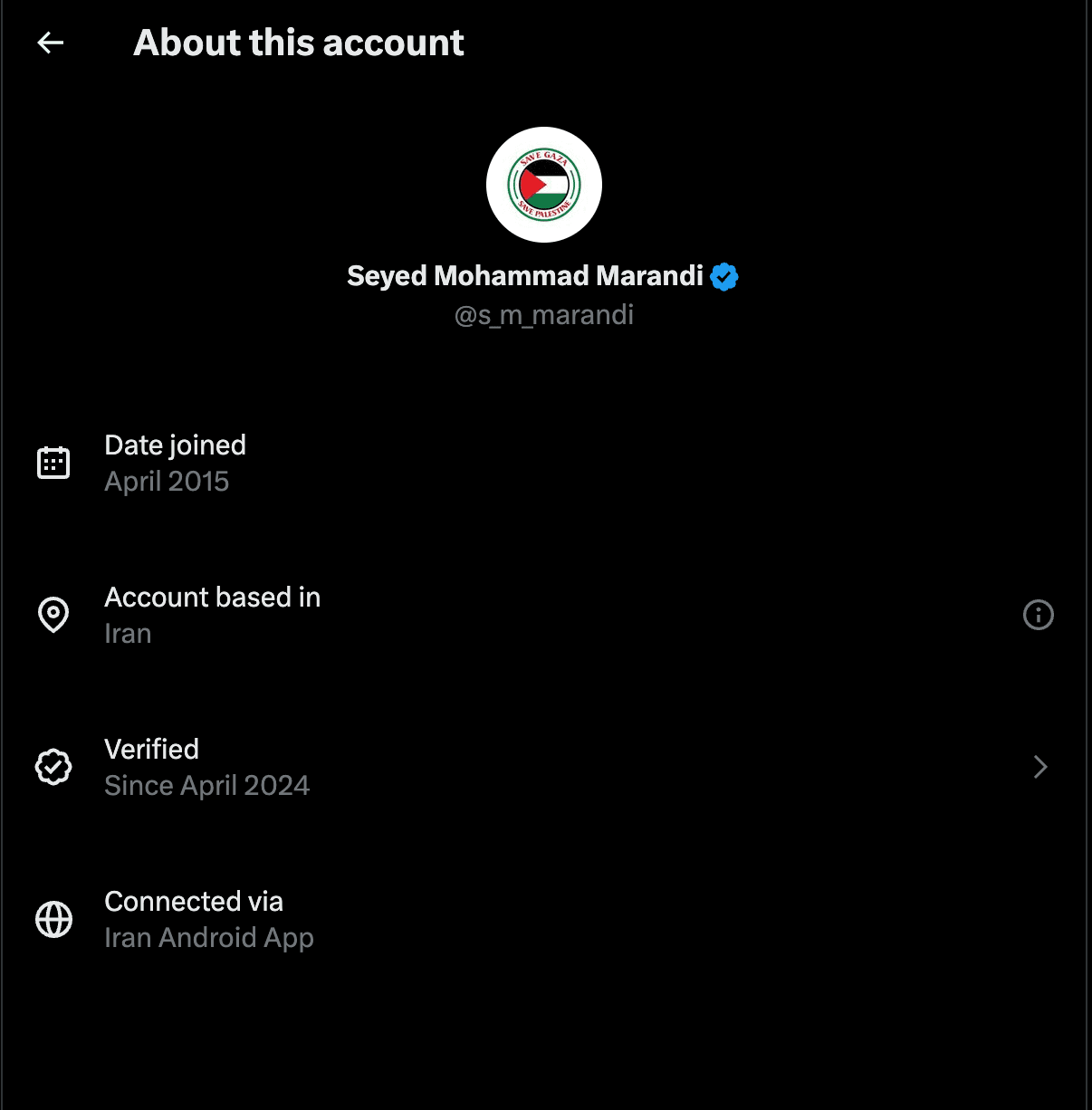
Screenshot of Mr. Marani’s X account, taken on April 6th, 2026, showing that despite the internet shutdown, he is able to connect to X from inside Iran.
You can read more about how X’s update to reveal the location of accounts unveiled Iran’s whitelist model and the “white SIM card” system in Filterwatch’s report.
Given the repetition of this claim in the English-language accounts promoting the Iranian government, this claim is likely part of a coordinated campaign to shape the narrative around the internet shutdown in Iran.
Despite these false claims, the ongoing internet shutdown in Iran marks the longest period of communication blackout in the country’s history. This current, sustained disruption has now exceeded the duration of the widespread shutdown experienced in January, considered to be one of the most severe and extensive communication blackouts ever imposed, illustrating the drastic measures authorities have employed to restrict access to information. The current, extended nature of the blackout underscores a significant escalation in the government’s strategy to control the flow of information and digital communication in Iran.
Leading to a sprawling ecosystem of information manipulation and competing narratives is heavily reinforced by the Iranian government’s internet shutdown. The blackout of international internet access severely limits the public’s access to independent and verifiable information. By deliberately cutting off connectivity, the Islamic Republic is isolating the population, making it significantly easier to monopolize the narrative around the war to shape public opinion and silence any dissent.