Civilian Safety and State Priorities in Iran During the February 2026 War
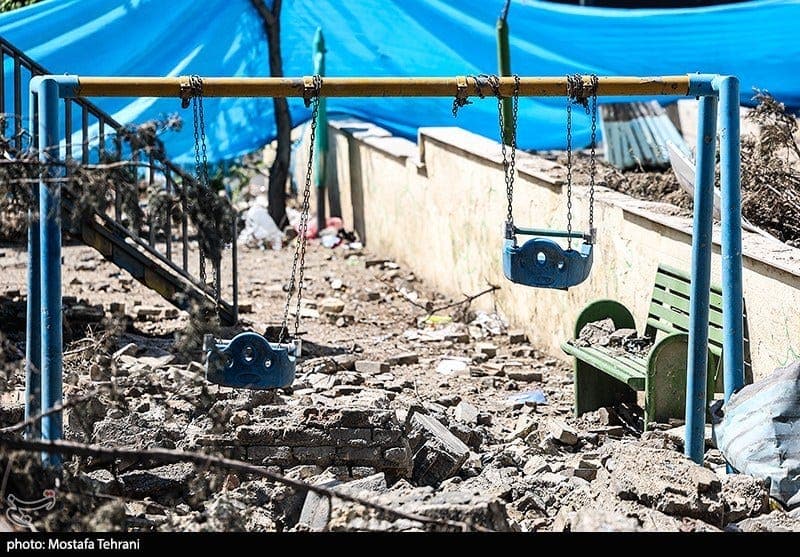
It has now been 19 days since Iran and the US reached a ceasefire on April 8th, 2026. Factnameh’s analysis of the available evidence starting from February 28, 2026, suggests that civilian safety was not the primary priority of the Islamic Republic during the war.
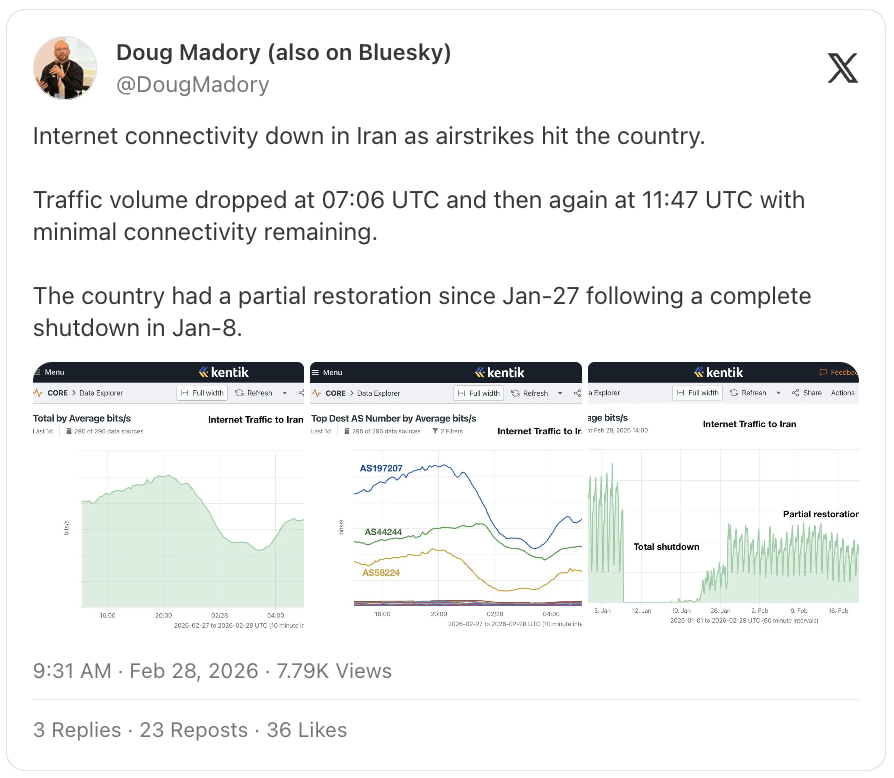
For 40 days, civilians received minimal state support and were largely left to navigate ongoing attacks on their own. There was no functioning system to alert them to incoming attacks, no sirens to warn of imminent attacks, and no shelters for protection. Instead, authorities focused on tightening control over the population. Hours after the first airstrikes began on February 28th, the internet was shut down, and people faced a communication blackout, limiting their access to real-time information. The internet shutdown has persisted to date. The longest in Iran’s history, so far.
At the same time, arbitrary arrests and executions of civilians have continued, carried out by the Islamic Revolutionary Guard Corps (IRGC) and judicial authorities on charges of espionage and “corruption on earth.”
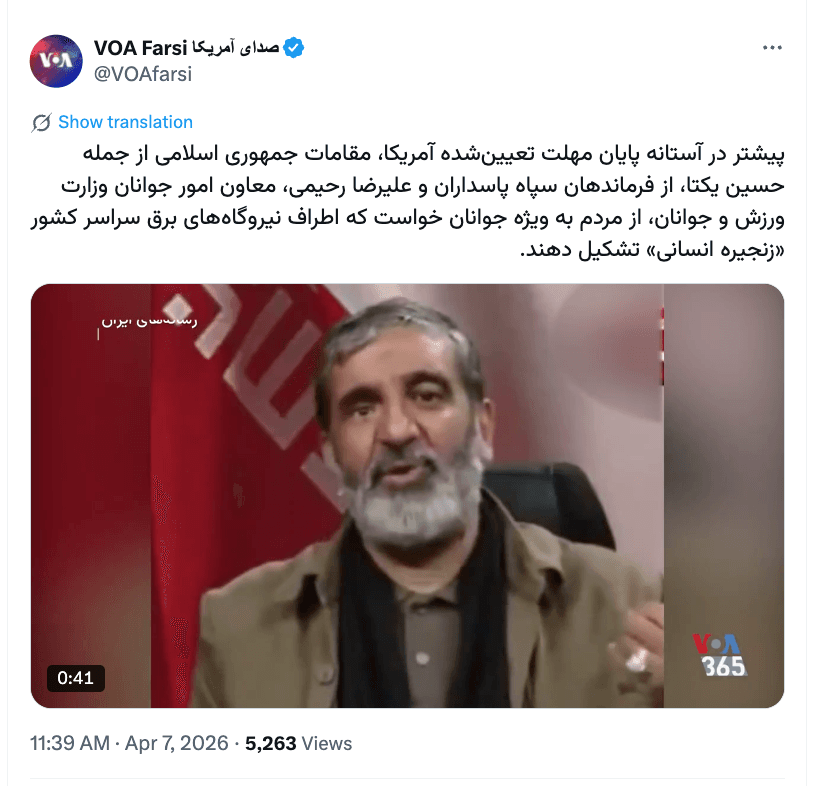
Official messaging from authorities reinforced these conditions. IRGC commanders repeatedly appeared on state media, warning that dissent could be treated as collaboration with the enemy. Parents were told to keep their children off the streets if they did not support the Islamic Republic or risk them being shot. At the same time, civilians were encouraged to gather in high-risk areas near critical infrastructure under the pretext of solidarity, effectively using them as “human shields.” Parents were also urged to send their children to military checkpoints to assist in patrol duties. At least one reported case confirms that a minor, brought to such a checkpoint by his father (a member of the security forces) was killed during an aerial strike on the site.
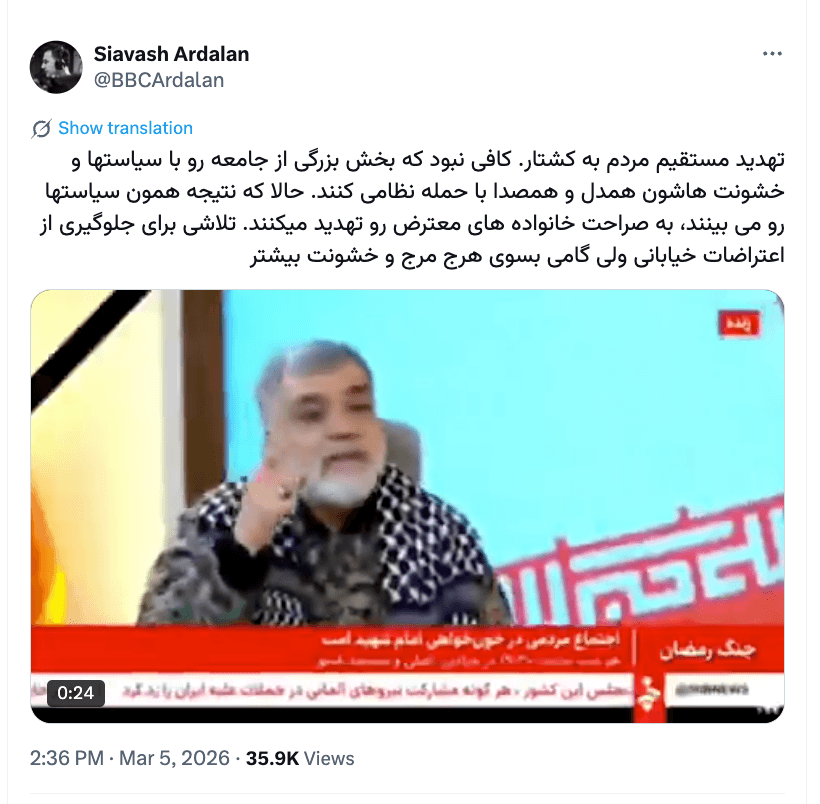
Translation: Those who listen to Iran International. Those who for whatever reason don’t listen to our media. Parents, it is not your fault if your son or daughter doesn’t listen. Today, on Iranian soil, anyone who voices a sentiment that sympathizes with the enemy, they are standing on Tel Aviv and their head is Netanyahu. An order to shoot them in the head has been issued. No one has spoken to you this bluntly before. We don’t want your children to die, because your child is unaware, your child is ignorant.
This report first outlines the institutional structure of responsibility for civilian safety during the war. Drawing on publicly available information and official statements, it then analyses how this structure operated in practice to assess the priorities shaping the state’s approach to civilian safety.
Who Is Responsible for Civilian Protection in Wartime?
The Passive Defense Organization of Iran, operating under the Armed Forces General Staff, is the main body responsible for planning and coordinating non-military protection measures during crises. Its mandate includes setting policies, issuing guidelines, and overseeing efforts to reduce exposure to threats. In Iran, “passive defense” refers to non-military measures aimed at reducing vulnerability, including the protection of civilians, critical infrastructure, and essential services during conflict. However, responsibility for implementing these measures is fragmented across multiple institutions.
Operationally, the Ministry of Interior, primarily through the National Disaster Management Organization, is tasked with implementing response measures such as public communication, evacuation planning, and coordination across provinces. At the local level, municipalities, particularly in major cities, are responsible for carrying out practical measures such as identifying shelter locations, securing public spaces, and maintaining essential urban services. Despite this multi-layered structure and the allocation of significant annual budgets, there is no coherent, integrated system capable of functioning effectively under wartime conditions.
The four public warnings issued by the Passive Defense Organization during the war mainly focused on behavioral guidance, urging calm, reliance on official information, and household preparedness, without providing information on shelters, evacuation routes, or coordinated protection measures. Even where risks such as toxic exposure were acknowledged, there was no indication of measures such as distributing protective equipment, designating shelters, or planning evacuations. Responsibility was instead shifted to individuals and local communities.
Internet Blackout and Information Manipulation
Access to the internet in Iran has been cut off for almost two months, starting on February 28, 2026. Although authorities framed the shutdown as necessary for civilian protection, in practice, it has deprived the population of reliable information and stable communication channels. With infrastructure and populated areas under threat, this loss of connectivity means that even externally issued evacuation notices, including those released by the Israel Defense Forces (IDF) ahead of strikes on specific areas, often did not reach affected civilians.
With alternative information sources restricted, state media became the main source of information. Its coverage, however, is curated and aligns with official state messaging, while independent and verifiable reporting remains limited. These channels also circulate disinformation and unreliable reports, shaping public perception without offering clear,actionable guidance on how to respond to the attacks or protect themselves.
The internet shutdown is not applied uniformly. While the broader population remains offline, a limited number of approved accounts continue to operate on international social media platforms. These accounts stayed active throughout the blackout, maintaining a steady flow of messaging and producing large volumes of AI-generated content aligned with state messaging, even as domestic access was largely cut off.
Government officials and state advocates have continually justified their own privileged online access while defending the nationwide shutdown. Foreign Minister Abbas Araghchi defended his unrestricted access by claiming he must be the “voice of Iranians” to the international community, while also arguing that shutting down the internet is a normal, “urgent measure” that any country would take for security reasons during wartime. Similarly, government spokeswoman Fatemeh Mohajerani confirmed the state’s whitelist model, explicitly admitting that Tehran provides special internet connectivity to “those who can better deliver the message” amidst the broader public blackout.
Meanwhile, English-language state advocate Mohammad Marandi, who enjoys unfettered access to global platforms like X to push the government’s narrative, has falsely claimed that ordinary Iranians still have sufficient internet access through domestic sites, dismissing the blackout of international services as a necessary restriction against adversaries.
https://www.youtube.com/watch?v=YJcTkVTqybQ
Militarization of Religious and Civilian Spaces
In Iran, mosques and other religious sites function not only as places of worship but also as components of the country’s security infrastructure. Many host local bases of the Basij, a paramilitary force operating under the IRGC, with numerous neighbourhood units co-located in or around these mosques. This overlap embeds security and military activity within civilian neighbourhoods, effectively extending the battlefield into residential areas. As a result, when aerial strikes target elements of the country’s security apparatus, they often occur in densely populated areas, increasing the risk to surrounding civilians.
Public Threats and Climate of Fear
Throughout the war, executions of young political prisoners arrested during the January unrest continued. Based on official sources, at least 19 individuals were executed on charges such as “corruption on earth,” alongside others accused of espionage for Israel. At the same time, the country remained under active military attack. Thousands of arrests also took place during this period on broadly defined national security charges, including accusations of collaboration with the enemy, espionage, and actions against national security. These arrests targeted civilians, including members of religious minorities. Individuals were detained without clear evidence and, in some cases, without information about their whereabouts.
Security forces set up military checkpoints across the country, stopping vehicles and searching personal devices. In some cases, civilians were accidentally killed by security forces at these checkpoints. At the same time, pro-government supporters conducted nighttime patrols, intimidating residents. Armed patrols, loudspeaker convoys, and the presence of heavy weapons in residential areas created a sustained atmosphere of fear, with many perceiving these measures as mechanisms of control rather than protection.
Conflicting Reports on Casualties
Civilian casualty figures reported by official institutions vary and cannot be independently verified. The Iranian Legal Medicine Organization reported more than 3,000 total deaths, including both military and civilian casualties. The Ministry of Health reported approximately 210 children killed and more than 1,510 individuals under 18 injured, along with damage to 300 medical centers and the loss of around 30 ambulances. The Red Crescent stated that more than 81,000 civilian units were targeted, including 498 schools and 17 of its own centers, and reported 21 medical personnel killed and 103 injured. In this context, the repeated use of these figures in official communications suggests a deliberate effort to use civilian harm as a means of exerting pressure on the opposing side.
The Islamic Republic’s response to the recent conflict did not prioritize the safety and protection of its civilian population. For 40 days, the state failed to implement essential non-military protection measures. Despite the existence of a multi-layered institutional structure, including the Passive Defense Organization, no functional, integrated system for public warning, coordinated shelter provision, or evacuation was established or utilized.
Instead of protection, the state’s actions were characterized by controlling and manipulating information. The sustained internet blackout deprived civilians of critical, real-time information, including external warnings, while state media disseminated curated messaging. Simultaneously, the continued presence of military and security infrastructure in civilian and religious spaces, coupled with a climate of public threats, arbitrary arrests, executions, and the encouragement of gathering in high-risk areas, effectively extended the battlefield into residential life and utilized civilians as involuntary shields.
This pattern indicates that, in the critical calculation of priorities during the war, the imperative to protect and ensure the survival of its civilian population was not the Islamic Republic’s priority. By shutting down the internet, much like during the 12-day war in June of 2025, the state cut off an essential utility and lifeline for the population to access real-time information, communicate with loved ones and search for lifesaving resources. At the same time, state media and affiliated entities with internet access leverage social media to create emotionally charged narratives and share fabricated content, often generated by artificial intelligence, to rally support around the flag and disseminate ideological messages both domestically and internationally.
The Iranian government’s ongoing internet shutdown, which has now been ongoing for nearly 60 days, is a key element of its broader strategy of information manipulation designed to control the public narrative. This deliberate blackout of international internet access severely restricts the public’s ability to obtain independent and verifiable information. By isolating the population through this cutting off of connectivity, the Islamic Republic makes it much easier to monopolize the narrative surrounding the war, thereby shaping public opinion and perception of war domestically, while suppressing dissenting voices. Instead of safeguarding civilian lives, the state’s primary strategic focus appears to have been the preservation of its own political authority and the elimination of challenges to its power structure.