Inside the Influence Network of Iran’s Diplomatic Missions on X

When war broke out in Iran in late February 2026, the Islamic Republic deployed a highly coordinated digital weapon: its diplomatic missions. Across the globe, 98 official embassy and consulate accounts transformed into a wartime influence network, flooding X with over 42,600 posts and generating nearly 600 million views between February 28 and May 10.
Utilizing aggressive “Wolf Warrior” tactics, meme-driven campaigns, and coordinated amplification, these diplomatic channels aggressively pushed state narratives and anti-Western rhetoric to a global audience. This network, averaging 591 posts per day, saw its activity increase more than fourfold compared to the pre-war period. Reposts and amplification played a central role, accounting for 44.0% of total activity as missions frequently circulated content from senior officials like Foreign Minister Abbas Araghchi.
Yet, this massive outward projection of state propaganda stands in stark contrast to the reality within Iran’s borders, where millions of citizens have been silenced by government-imposed internet shutdown since February 28th, rendering them unable to freely share their own stories while the state projects its narratives internationally in multiple languages, including English, Spanish, and Arabic.
Key Findings
- Following the start of the war on February 28, 2026, Iranian diplomatic missions transformed their official accounts into a wartime messaging network spanning 98 embassy and consulate accounts across multiple countries.
- Between February 28 and May 10, these accounts published more than 42,600 posts on X, averaging 591 posts per day, more than four times higher than before the war.
- The most active diplomatic accounts during the observation period were linked to Iranian missions in South Africa (2,288 posts), Japan (2,155 posts), Australia (1,461 posts), India–Hyderabad (1,332 posts), and Hungary (1,281 posts).
- Reposts accounted for the largest share of activity (44.0%), followed by original posts (29.1%), replies (18.0%), and quote posts (8.9%), highlighting the central role of amplification within the network’s activity.
- The accounts most frequently amplified by the network included Iran’s foreign minister, the Foreign Ministry spokesperson, state media outlets, senior political officials, and state-affiliated institutional accounts.
- More than 55.6% of all posts published by Iranian diplomatic accounts were in English, followed by Spanish (9.9%), Arabic (7.4%), French (4.9%), and Turkish (3.7%).
- The network generated more than 597 million views and 23.2 million engagements on X during the observation period.
- Engagement with content published by Iranian diplomatic accounts increased approximately 80 times compared to the 72-day pre-war period.
- The largest spikes in engagement occurred during periods of heightened military escalation and threats against Iranian infrastructure in early April 2026.
- Embassy accounts across countries regularly amplified one another’s messaging through coordinated posting, cross-referencing, and shared wartime narratives.
- Messaging frequently relied on memes, sarcasm, satire, and AI-generated multimedia content to maximize engagement and visibility online.
- Anti-U.S. and anti-Trump rhetoric represented one of the network’s most dominant messaging themes during the war.
- Embassy accounts consistently portrayed Israel and the United States as jointly responsible for regional violence, destruction, and civilian suffering.
- Messaging repeatedly emphasized missile retaliation, military deterrence, and the Strait of Hormuz as symbols of Iranian strategic leverage and regional control.
- Wartime narratives frequently invoked martyrdom, civilian casualties, historical trauma, and national endurance to shape emotional engagement with the conflict.
- The online behaviour of Iranian diplomatic accounts showed similarities to Russian and Chinese state-linked digital influence and “Wolf Warrior” diplomacy strategies.
- Iranian diplomatic missions expanded their international online influence during a period when millions of Iranians remained affected by government-imposed internet shutdowns and restrictions.
On April 28, 2026, the UK government summoned Iran’s ambassador to the Foreign, Commonwealth & Development Office (FCDO), following a post by the Iranian Embassy in London that allegedly encouraged violence among Iranians living in the UK. In an official statement, the FCDO described the content as “completely unacceptable” and warned that any messaging that “could be interpreted as encouraging violence in the UK or internationally” must cease. The post, shared on the embassy’s Telegram channel, called on Iranians in the UK to join the “Jan-Fada” (The Devoted) campaign, which invites Iranians to register their support for the Islamic Republic and its Supreme Leader. Yet the incident involving the Iranian Embassy in London also reflects a broader pattern that has emerged in recent months.
Statistical Analysis of Iranian Diplomatic Missions Accounts on X
Since the start of the conflict in the Middle East on February 28, Iranian diplomatic missions have transformed their official accounts on social media platforms, particularly X and Telegram, into a coordinated influence network amplifying the Islamic Republic’s message worldwide. Between February 28 and May 10, 98 official Iranian embassy and consulate accounts published more than 42,600 posts on X, averaging 591 posts per day. Compared to the earlier 72-day period preceding the war, the network’s daily posting activity increased more than fourfold. The content appeared in multiple languages and heavily relied on memes, satire, and AI-generated multimedia materials.
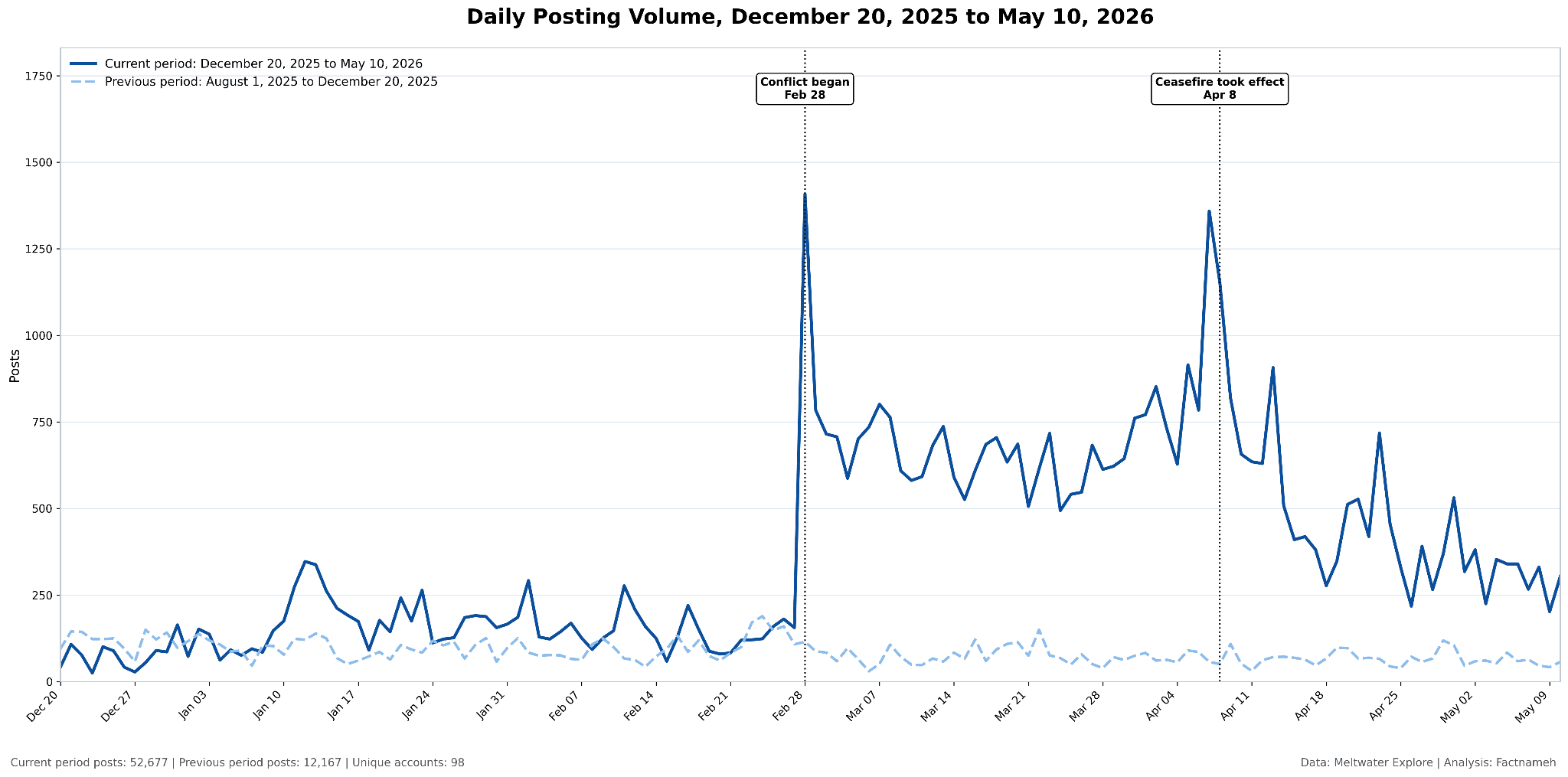
Figure 1. Daily posting activity of 98 Iranian diplomatic accounts on X between December 20, 2025 and May 10, 2026, compared to the previous period (August 1, 2025, to December 20, 2025). Posting activity increased sharply following the start of the war on February 28, 2026, with additional spikes observed around major military escalations and the April 8 ceasefire.
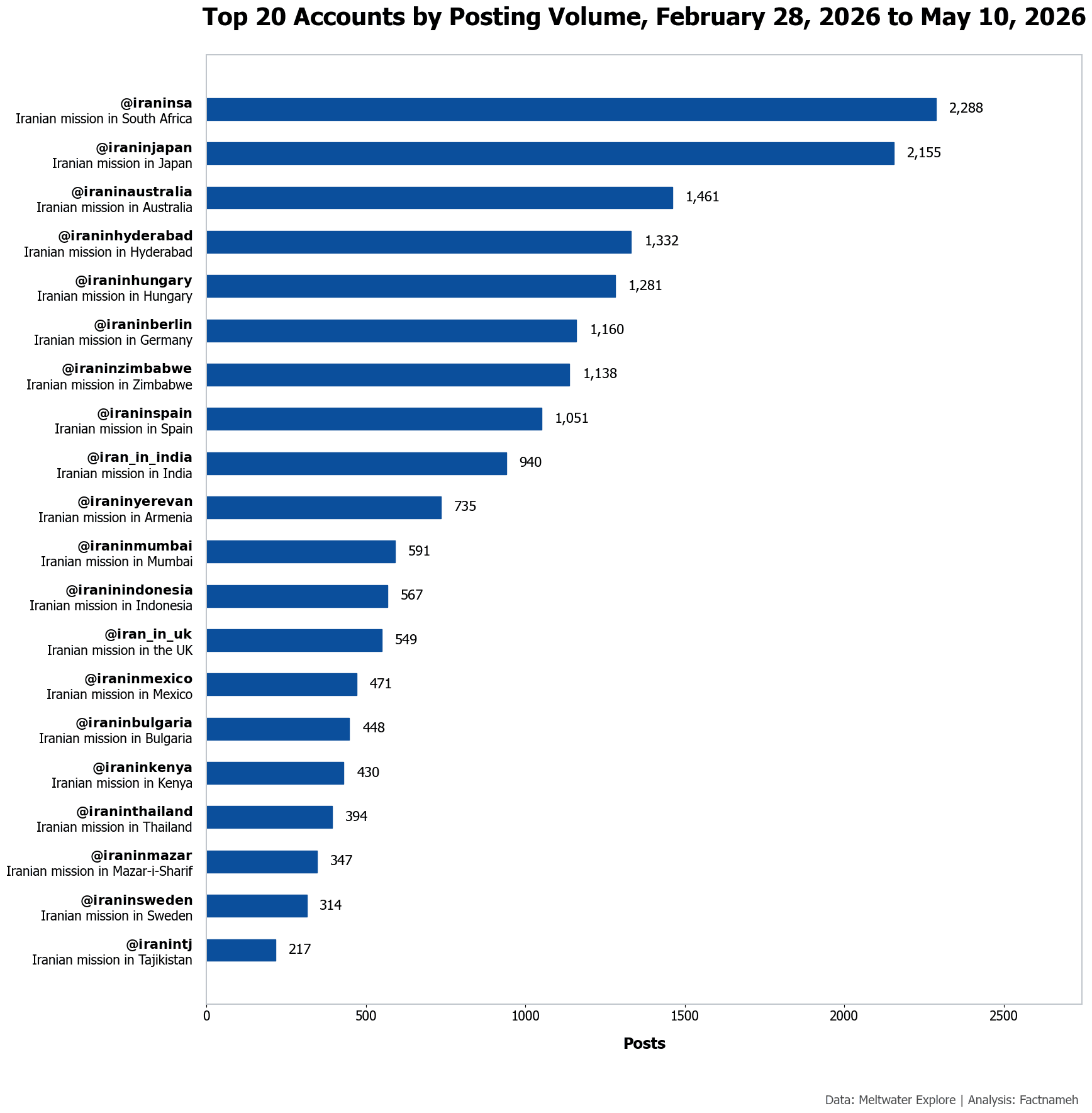
Figure 2. Top 20 Iranian diplomatic accounts on X by posting volume between February 28 and May 10, 2026. The most active accounts were associated with Iranian missions in South Africa, Japan, Australia, Hyderabad, and Hungary.
The distribution of post types and reposting behaviour suggests that amplification played a major role in the online activity of Iranian diplomatic accounts during the observation period. Reposts accounted for 44.0% of all published content, followed by original posts with 29.1%, replies with 18.0%, and quote posts with 8.9%, highlighting the central role of amplification within the network’s activity. The accounts most frequently amplified by the network included Iranian Foreign Minister Abbas Araghchi, Foreign Ministry spokesperson Esmail Baghaei, state media outlets, senior political officials, and state-affiliated institutional accounts. The reposting patterns indicate that embassy and consulate accounts regularly circulated and reinforced messaging originating from a relatively concentrated group of official and state-aligned actors across multiple countries and languages.
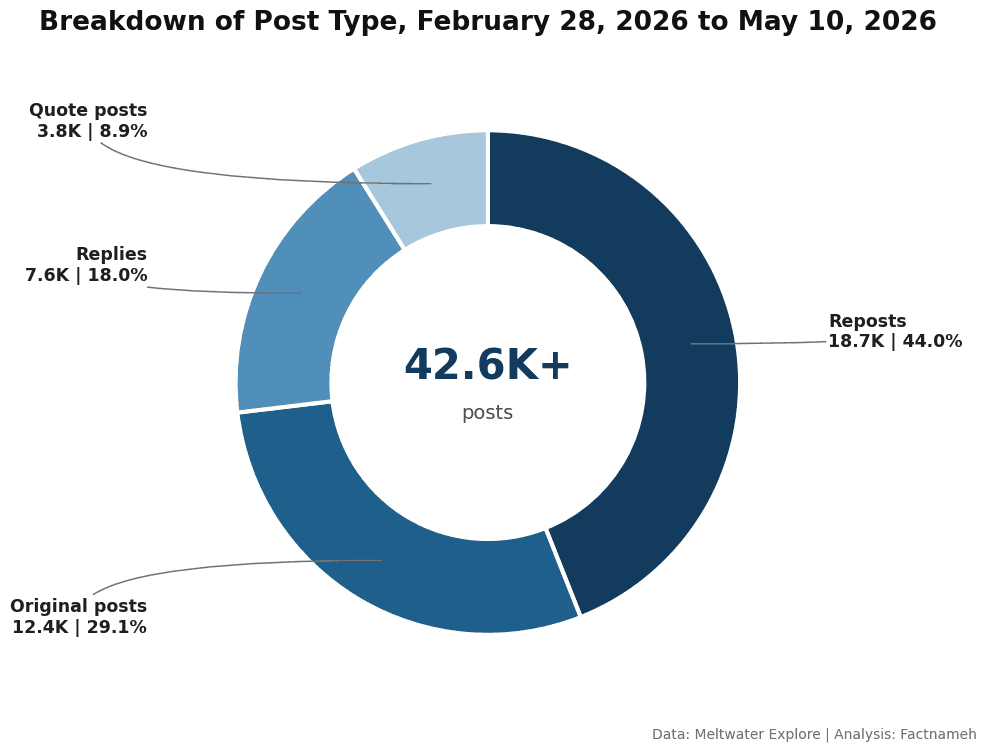
Figure 3. Breakdown of post types published by Iranian diplomatic accounts on X between February 28 and May 10, 2026. Reposts accounted for the largest share of activity (44.0%), followed by original posts (29.1%), replies (18.0%), and quote posts (8.9%).
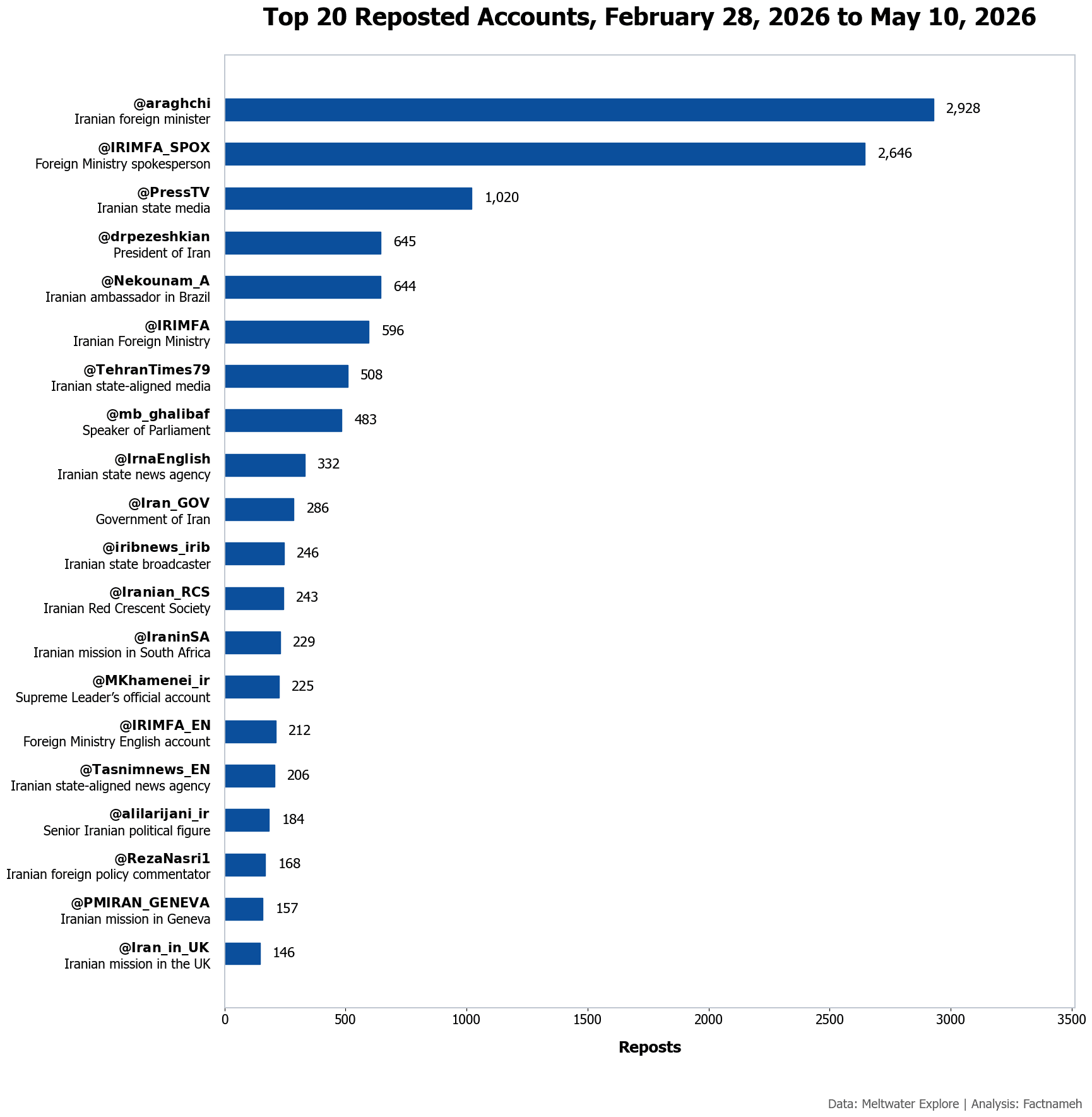
Figure 4. Top 20 reposted accounts amplified by Iranian diplomatic accounts on X between February 28 and May 10, 2026. The most frequently reposted accounts included Iranian Foreign Minister Abbas Araghchi, Foreign Ministry spokesperson Esmaeil Baghaei, Iranian state media outlets, senior government officials, and state-affiliated institutional accounts.
The diplomatic network also generated substantial international visibility and engagement during the war. Between February 28 and May 10, content published by Iranian diplomatic accounts on X generated more than 597 million views and 23.2 million engagements (likes, comments, reposts, quotes, clicks, and other interactions). Compared to the 72 days preceding the outbreak of war on February 28, engagement with content published by these accounts was 80 times higher. The largest spikes in engagement coincided with periods of heightened military escalation and threats against Iranian infrastructure, particularly during early April.
Top 3 Most engaged posts:
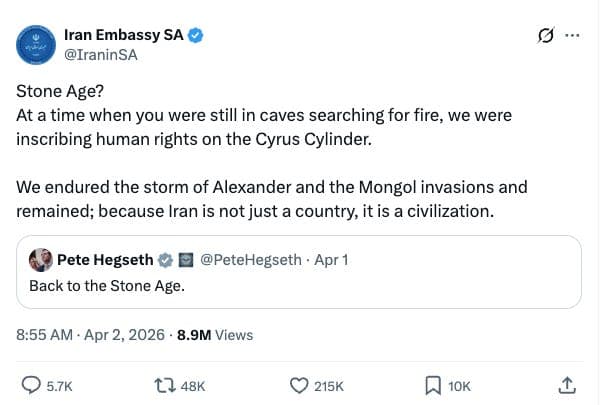
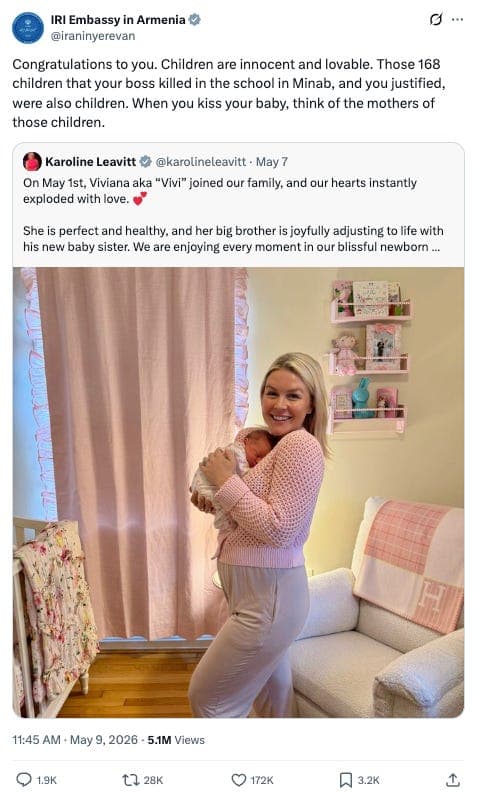
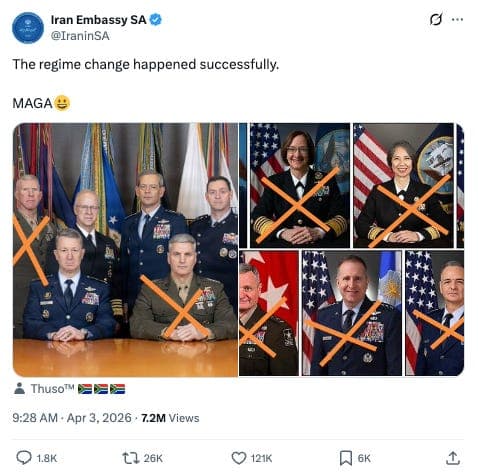
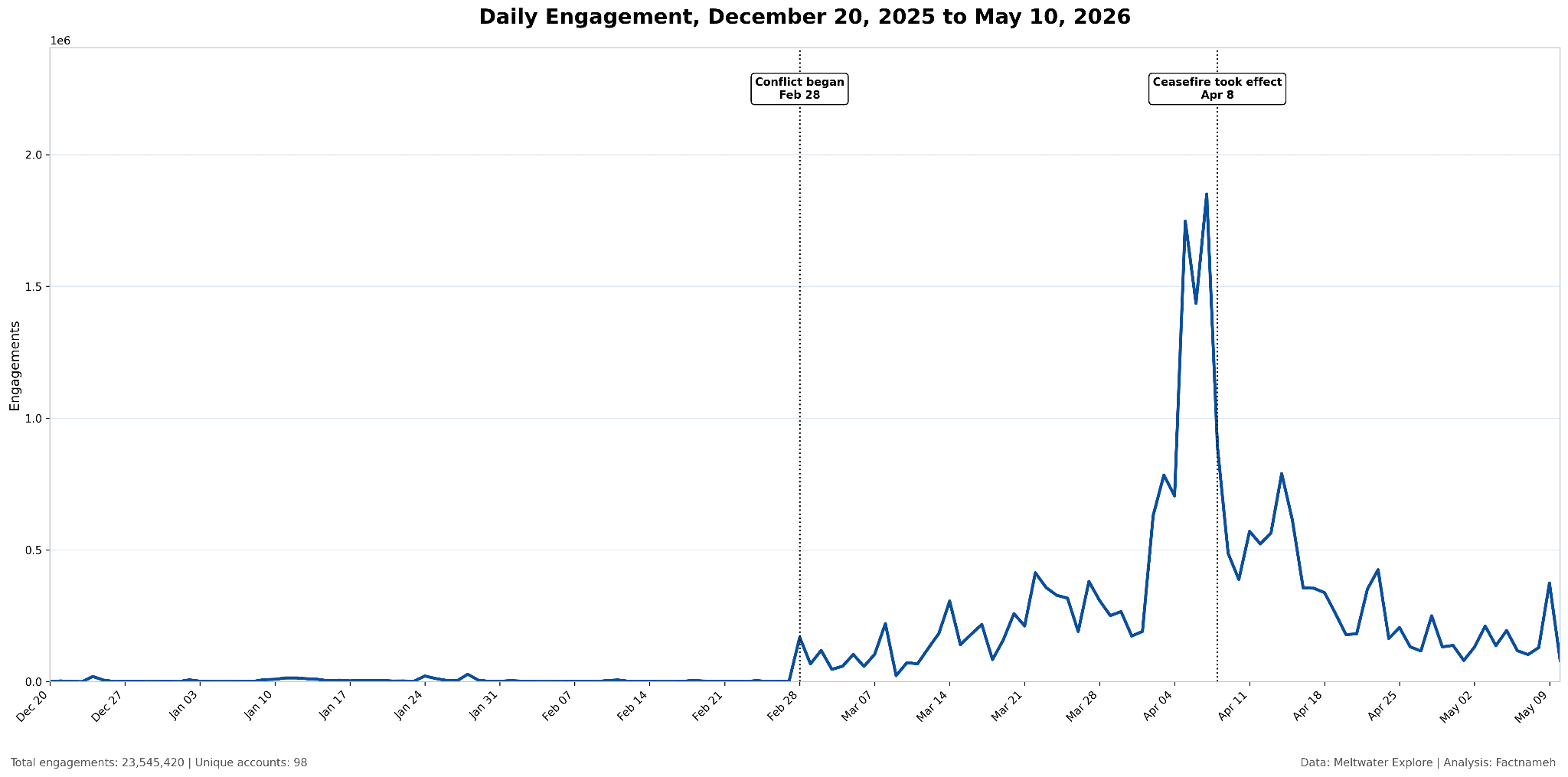
Figure 5. Daily engagement with posts published by Iranian diplomatic accounts on X between December 20, 2025 and May 10, 2026. Engagement increased sharply following the start of the war on February 28, 2026, reaching its highest levels during periods of military escalation in early April.
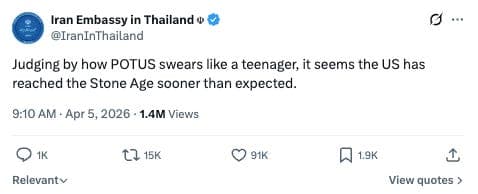
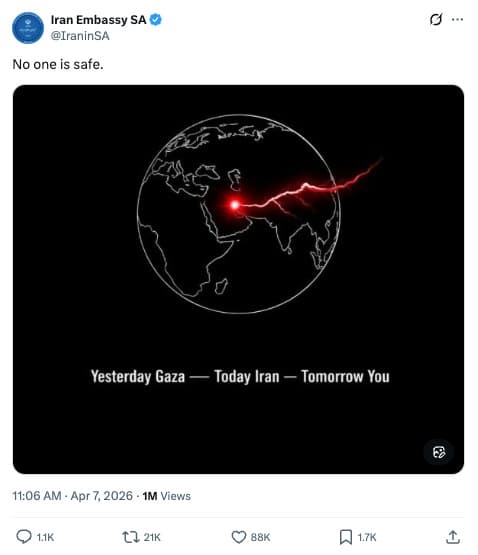
Examples of highly engaged posts published on April 5 and 7, when the engagement was the highest:
Narrative Patterns: The Messaging of Iranian Diplomatic Accounts
The content published by Iranian diplomatic missions on X during this period revolved around five recurring themes.
Anti-U.S. rhetoric as a key driver of engagement
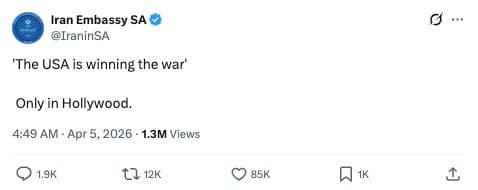
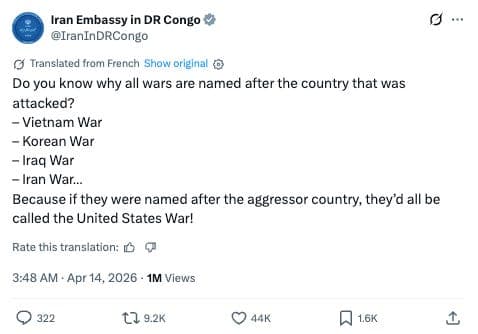
A large share of the content focused on mocking Donald Trump and other U.S. political figures through sarcasm, insults, and meme-style messaging that portrayed American leadership as weak, childish, unserious, or incompetent. Other posts attempted to repurpose official U.S. political messaging against itself, including direct replies to White House content and sarcastic commentary on official announcements, timing, as well as meme-like responses to White House posts referencing winning the war as a game of UNO. The United States was also repeatedly depicted as aggressive, declining, and responsible for the war, blockades, and destruction across the region, including comparisons portraying the country as pushing others back into the “Stone Age”.
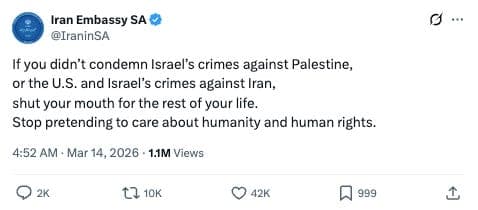
Construction of moral and political narratives through Israel and Gaza-centered hostility
Israel was consistently portrayed as an enemy, a terrorist entity, and a source of crimes against humanity, reflecting a sustained pattern of antagonistic framing across diplomatic accounts. Many posts linked Israel and the United States together as joint perpetrators responsible for violence in Iran and Palestine. This framing appeared to position Iran in moral opposition to its military adversaries while reinforcing national unity against the common enemy. The rhetoric often relied on highly emotional, confrontational, and at times abusive language. At the same time, some posts escalated further by invoking revenge, violence, and threats directed toward Tel Aviv.
Military deterrence and control of strategic chokepoints
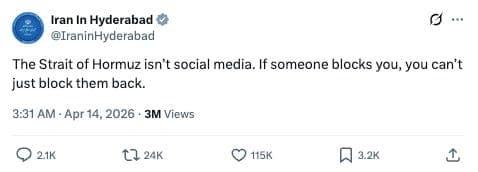
The Strait of Hormuz appeared repeatedly as both a symbolic and strategic reference point associated with Iranian leverage, blockades, escalation, and regional control. Other posts emphasized missiles, military retaliation, armed resistance, and warnings that “no one is safe,” framing the conflict through the language of deterrence and insecurity. Some messaging celebrated perceived victories and framed the conflict through narratives of retribution, endurance, and strategic strength.
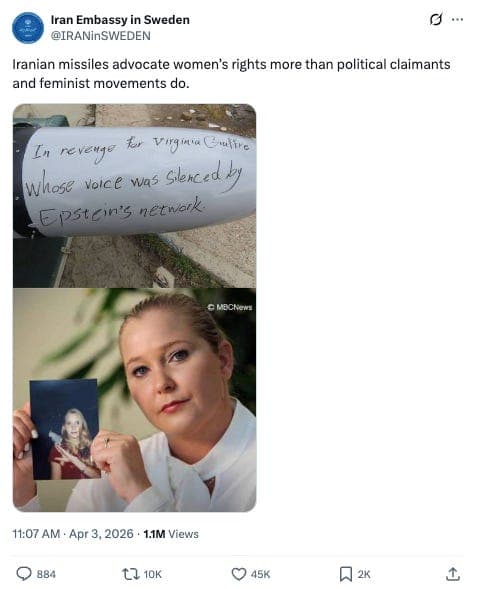
Martyrdom, Civilian Harm, and Historical Grievance as Drivers of Emotional Tone
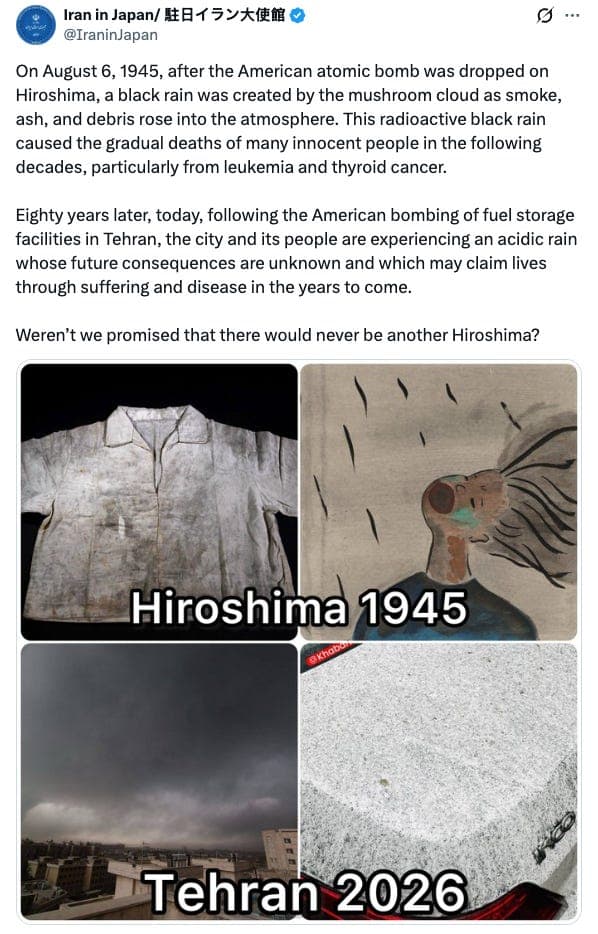
The Minab school incident became a recurring symbol of civilian suffering, with many posts naming victims, condemning perpetrators, and invoking imagery of children, mothers, and wartime loss. Historical traumas also appeared frequently through comparisons to contemporary disasters, including references linking the “black rain” following the bombing of Hiroshima to the recent toxic precipitation in Tehran. Other posts emphasized Iran’s endurance, innocence, and defensive posture while rejecting accusations that Iran initiates wars or invasions.
National Identity and Symbolic Pride as Responses to Foreign Pressure
Many posts framed Iran as an ancient civilization defined by continuity, resilience, and resistance against external pressure. Other content drew on cultural symbolism, architecture, language-based wordplay, and national slogans to reinforce patriotic themes and national identity. A smaller but still visible subset of posts emphasized diplomatic friendship and historical ties, particularly between Iran and Japan.
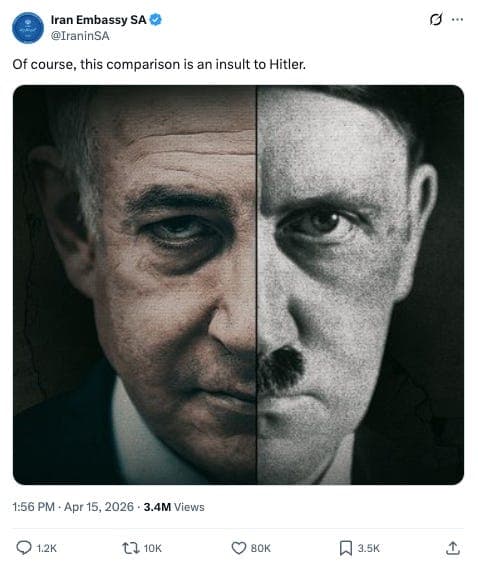
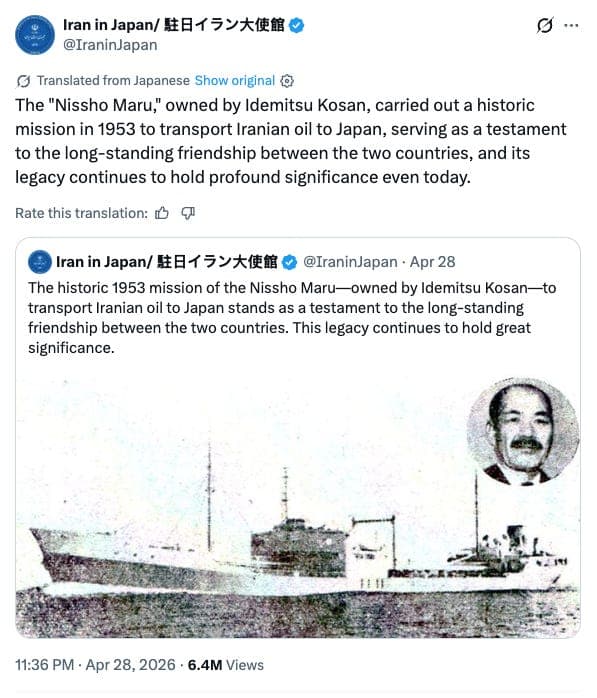
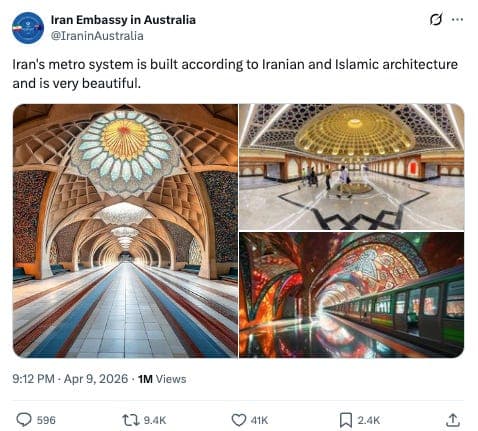
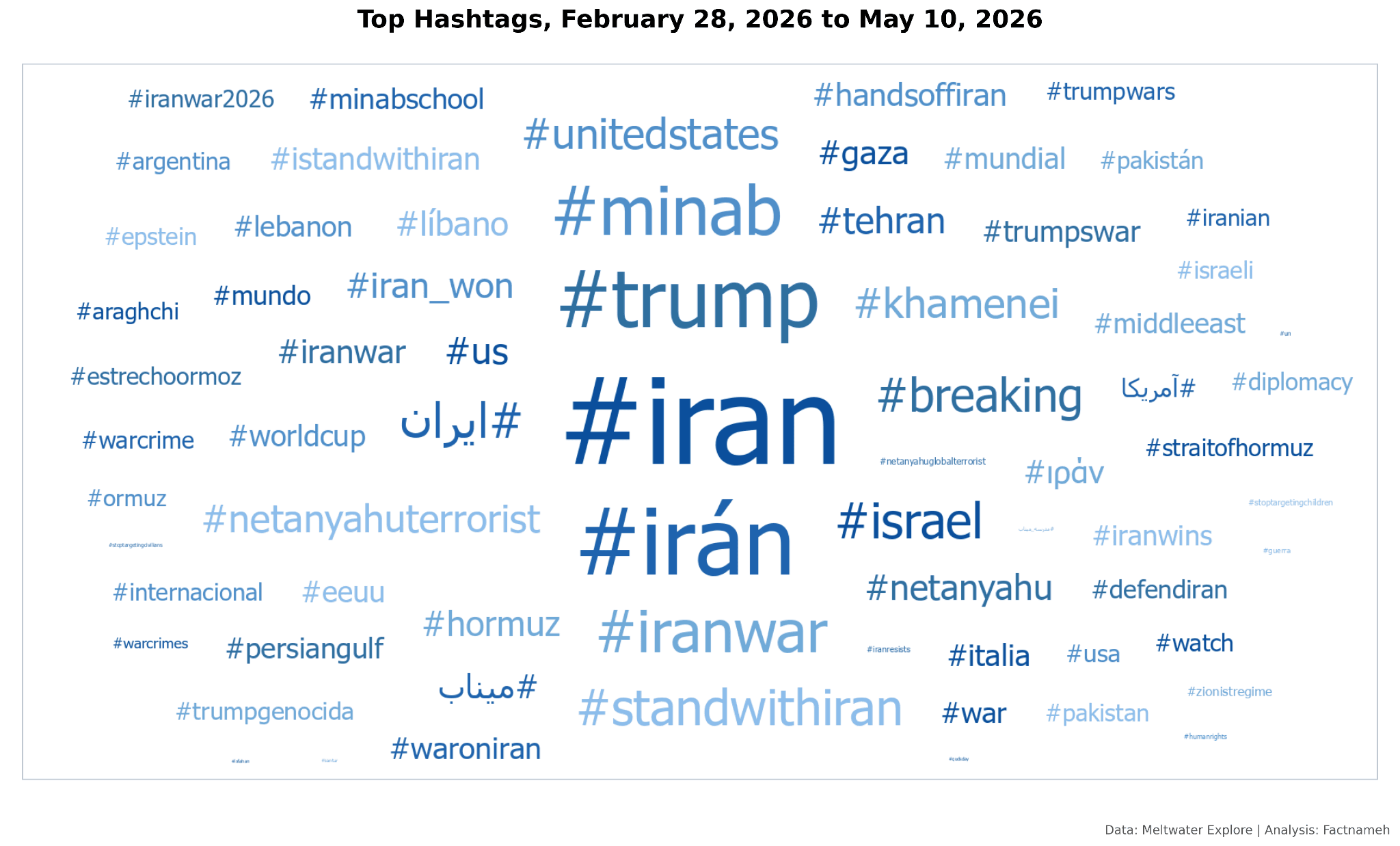
Figure 6. Most frequently used hashtags by Iranian diplomatic accounts on X between February 28 and May 10, 2026. The hashtag ecosystem centered heavily on the war, Iran, Trump, the United States, Israel, Minab, and Strait of Hormuz-related narratives across multiple languages.
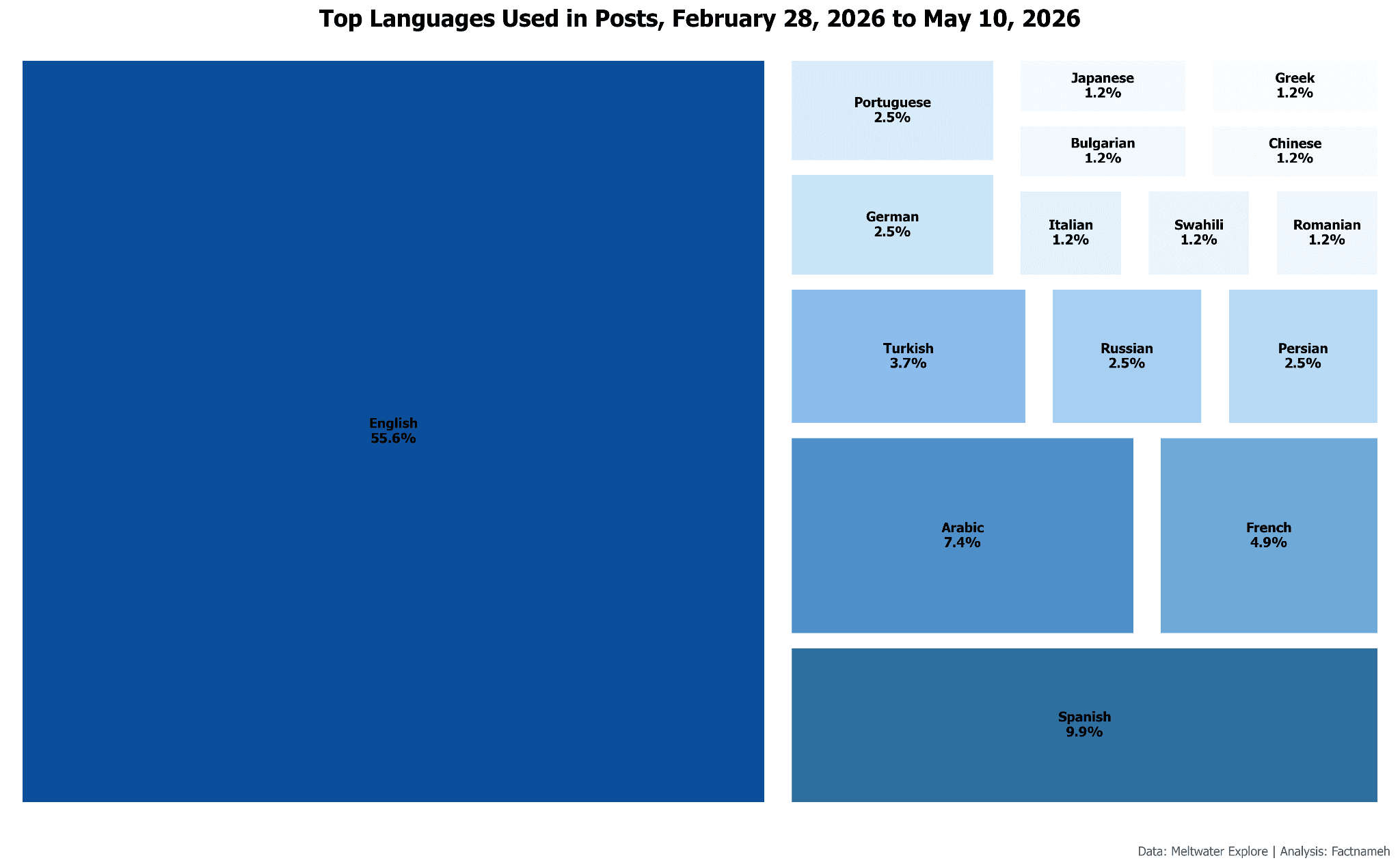
Figure 7. Languages used in posts published by Iranian diplomatic accounts on X between February 28 and May 10, 2026. More than half of all posts were published in English, followed by Spanish, Arabic, French, and Turkish, reflecting the network’s multilingual international outreach strategy.
The Political and Security Structure Behind Iran’s External Messaging
To understand the messaging published by Iranian diplomatic accounts during the war, it is important first to understand how foreign policy and external communication operate inside the Islamic Republic. Although embassies and consulates formally operate under Iran’s Ministry of Foreign Affairs, the country’s foreign policy system extends far beyond the ministry itself. Foreign policy, regional strategy, and external messaging are shaped through a broader political and security structure centered in Tehran, in which institutions connected to the Supreme Leader, the national security apparatus, and the Islamic Revolutionary Guard Corps play significant roles in defining strategic priorities.
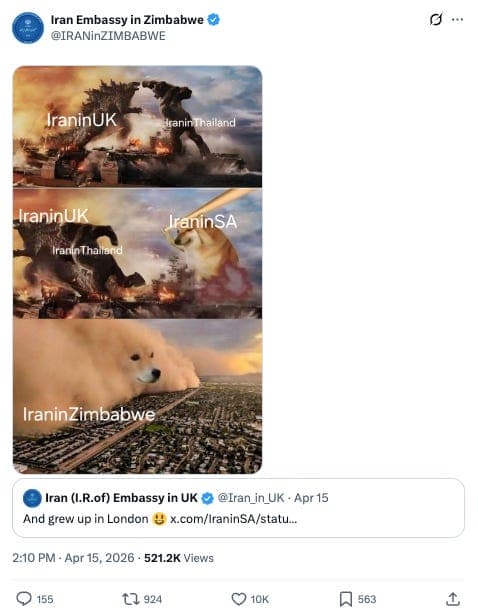
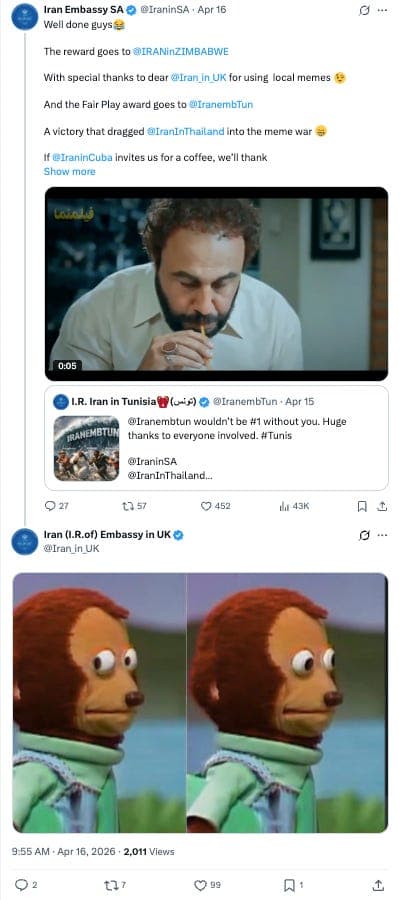
Since the start of the war on February 28, the Iranian diplomatic accounts on X have operated as part of an interconnected online network that regularly amplifies, references, and interacts with one another across countries and languages. Accounts from the United Kingdom, Pakistan, South Africa, Thailand, Zimbabwe, Bulgaria, and India frequently participated in shared meme threads, cross-referenced one another’s content, tagged affiliated accounts, and built recurring visual and textual narratives around the war [Example 1], [Example 2], [Example 3], [Example 4], [Example 5], [Example 6], [Example 7], [Example 8], [Example 9], [Example 10], [Example 11], [Example 12], and [Example 13]. Despite visible coordination between the accounts, however, it remains unclear how the network is internally organized, who ultimately directs its online messaging strategy, and whether account management is handled exclusively by Iranian personnel or also involves media teams and contributors from host countries.
The Growing Role of Diplomatic Missions in Online Influence Operations
Iran’s use of diplomatic missions as highly active online messaging actors is not a unique occurrence. Over the past decade, several authoritarian governments have increasingly transformed embassy and consulate accounts into tools for online influence, information warfare, and narrative amplification during geopolitical crises. Russian diplomatic missions, for example, have repeatedly used X, Telegram, Facebook, and other platforms to spread coordinated wartime narratives, attack Western governments, amplify state messaging, and circulate misleading or inflammatory content related to Ukraine and NATO. Studies examining Russian embassy activity in Europe, Africa, and the Indo-Pacific have described unusually synchronized posting behaviour, high-volume narrative coordination, and direct participation by diplomatic missions in broader state propaganda ecosystems.
China developed a parallel model through what became known as “Wolf Warrior diplomacy,” where diplomats and embassy accounts adopted aggressive online behaviour, conspiracy narratives, trolling tactics, and meme-driven messaging to defend Beijing’s geopolitical positions on platforms that remain blocked inside China itself. Since the beginning of the COVID-19 pandemic, Chinese diplomatic missions across multiple countries have increasingly operated as coordinated online influence actors rather than conventional diplomatic channels focused solely on bilateral relations. More recently, researchers examining Iran’s diplomatic activity during the war noted similarities with earlier Russian and Chinese digital diplomacy strategies, particularly in the use of memes, coordinated amplification, emotionally charged messaging, and confrontational online engagement.
Conclusion
Iranians have been cut off from the global community for most of 2026 due to government-imposed internet blackouts, limiting their ability to freely share their own accounts of events, particularly as the country experienced the deadliest crackdown in its recent history and later entered a regional war. At the same time, the Islamic Republic has increasingly relied on a broad online influence ecosystem to shape global perceptions of the war and developments inside Iran, contributing to international narratives that often align with the state’s interests and messaging priorities. While this analysis focuses specifically on the role of diplomatic missions on X, these accounts represent only a small component of a much larger network, which also includes domestic state-aligned users and foreign influencers that promote narratives favourable to the Islamic Republic.
As this analysis shows, Iranian diplomatic accounts were not marginal actors during the war. On X, they generated substantial visibility and engagement across multiple languages and regions, becoming highly active participants in the online discourse surrounding the conflict. Through high-volume posting, coordinated amplification, meme-driven content, and emotionally charged messaging, official diplomatic missions extended their role beyond conventional diplomatic channels focused solely on state-to-state communication. At the same time, millions of Iranians remain cut off from the global internet and unable to communicate with international audiences freely, allowing the Islamic Republic and its aligned online ecosystem to project narratives outward during some of the country’s most consequential and violent moments, while limiting the ability of ordinary Iranians to challenge or counter those narratives in real time publicly.