Phantom Millions and Imaginary Casualties
The Islamic Republic’s persistent use of impossible numbers to sustain an illusion of strength
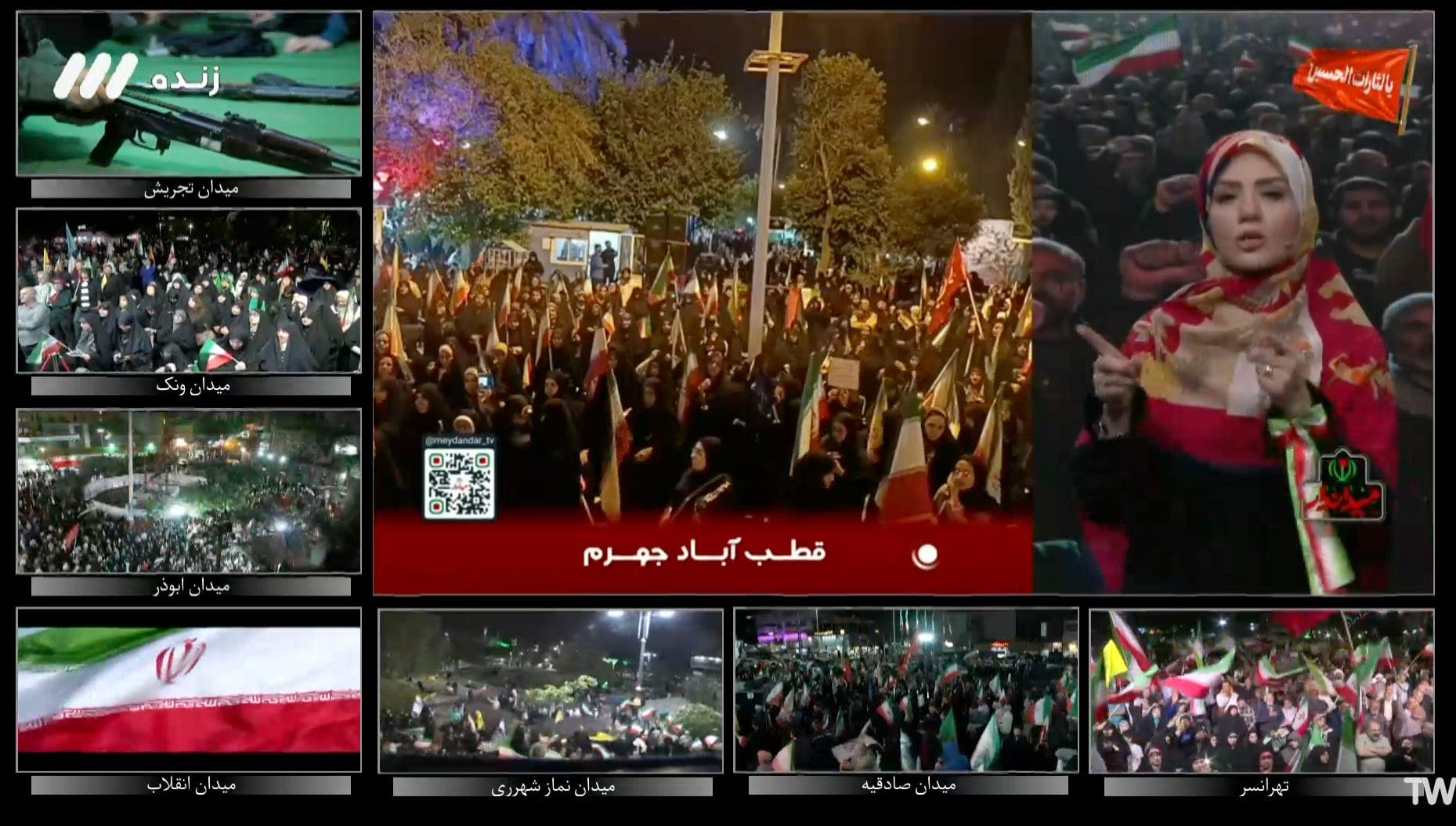
In the past week, we have yet again been faced with inflated numbers coming from the regime to manufacture an image of a popular regime that is very much successful in its military operations when neither has any ground in reality. Specifically, we were confronted with two astonishing fabrications: a hardline Member of Parliament’s claim that 60 million Iranians have participated in state-organized rallies at least once, and a state TV expert’s assertion that thousands of Israeli and American soldiers were killed in a recent 40-day conflict.
In the past nine years of professionally monitoring information integrity in Iran and countering information manipulation, we here at Factnameh have become quite familiar with some of the tactics they use in various situations. The Islamic Republic has always had to deal with the challenge of legitimacy. And in the absence of transparent and democratic means to assess public support, such as free and independent polls and referendums, the state resorts to alternative measures to demonstrate public support, such as state-organized demonstrations. Even then, there are only so many people they can lure onto the streets. After that, they report fabulously logic-defeating inflated numbers.
This habit of numerical invention is something we see constantly. For example, the government recently boasted that 30 million citizens voluntarily registered for a state-sponsored loyalty campaign. However, technical analysis exposed that the backend database had fewer than 4 million entries and exhibited perfectly linear, bot-like daily growth. Similarly, state media falsely claimed that 3 million people attended a pro-government rally (in response to the nationwide anti-regime protests) in Tehran in January 2026. Our analysis proved this mathematically impossible, as the total square footage of the rally route could hold a maximum of only 140,000 people. A few years back, in another staggering fabrication, a state-aligned newspaper claimed 21 million people participated nationwide in the 22 Bahman rallies. Calculations showed the combined maximum capacity of the designated rally routes in Iran’s ten largest cities was barely 2.6 million people. The list of numerous similar examples will make this article much longer than it should be.
Here is a closer look at these two recent fact-checks that perfectly illustrate this defining habit of Iranian officials and media.
The 60 Million Phantom Marchers
The first involves Amirhossein Sabeti, a hardline political figure and current member of parliament. In a recent interview, Sabeti confidently claimed that according to the latest polls, “nearly 60 million Iranians have participated in these street rallies at least once” in support of the regime. He repeatedly used this figure to argue that the Islamic Republic possesses a base of 60 million “hardline” loyalists.
Since the early days of the recent conflict, the state has broadcast continuous, organized nightly gatherings in major city squares to project an image of total domestic consensus. These events serve not only as propaganda but also a practical security function by occupying public space and preventing spontaneous anti-regime protests.

Iranian MP and former TV presenter Amir Hossein Sabeti
Let’s look at the basic math. According to estimates from the Statistical Center of Iran, the entire population of Iran over the age of 18 is at most 65 million people (with the population over 15 being around 68 million). Sabeti’s claim requires us to believe that almost every single adult in the country is actively marching in the streets for the government.
Where did this number come from? It appears to be loosely inspired by an online poll conducted by the “META Social Analysis Center” (no connection with Zuckerberg’s Meta), which claimed that 53% of its respondents had attended pro-regime night rallies. Even if we were to treat this internet poll of 1,118 people as absolute truth and extrapolate it to the entire adult population, it would still only amount to roughly 34 to 35 million people—barely half of what Sabeti claimed.
The Imaginary Thousands of Casualties
This week, the habit of manufacturing alternate realities is not limited to domestic crowds; it is aggressively applied to military and foreign policy narratives as well.
Recently, Alireza Davoudi, a state TV expert and deputy of Radio Tehran, went on State television to discuss the toll of regional conflicts. He claimed that in a 40-day war period, Israel suffered over 2,000 dead and 5,000 wounded, while the United States suffered over 1,000 dead and 7,000 to 8,000 wounded!
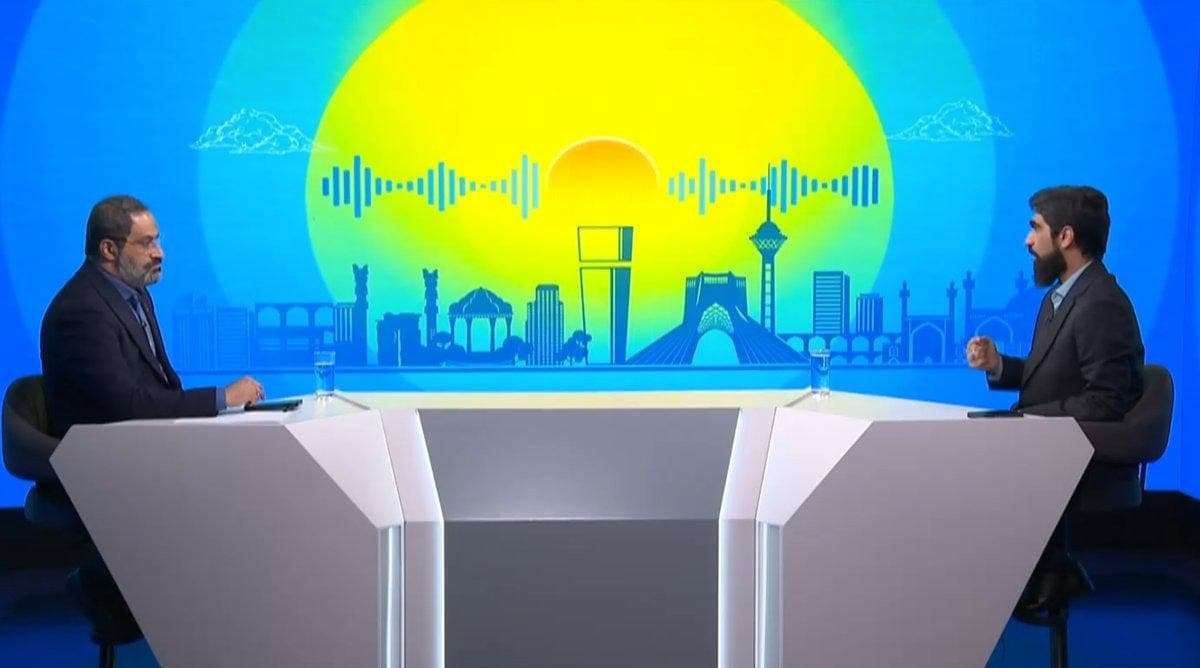
Alireze Davoudi (right), Deputy Director of Radio Tehran
This is another classic, logic-defeating fabrication. When we checked the actual figures across international media, U.S. CENTCOM, and Israeli sources, the real data from those 40 days showed around 24 to 26 deaths in Israel and the West Bank, and 13 U.S. military fatalities.
The idea that the U.S. or Israel could secretly bury thousands of dead soldiers is utterly absurd. In the U.S. and Israel, military casualties are inextricably tied to strict administrative, medical, and legal systems—not to mention notifications to families, payouts of benefits, and coverage by a free press. Hiding thousands of dead and wounded would require a massive conspiracy involving thousands of grieving families, local media, and hospital networks. Yet, on Iranian state TV, claiming 3,000 dead enemies is as easy as breathing.
A Symptom of Desperation
These two examples, inventing tens of millions of domestic supporters and fabricating thousands of foreign casualties, are part of the same pattern. They reflect a media ecosystem that has become detached from reality.
For the Islamic Republic, when real-world indicators such as elections expose limits to its legitimacy, the response is to construct an alternative numerical reality. Whether adding millions to a crowd or thousands to a casualty count, the method is the same. When reality does not support the narrative, the numbers are simply invented.