Who Controls Iran's Internet? The Clash Over the New Cyberspace Task Force
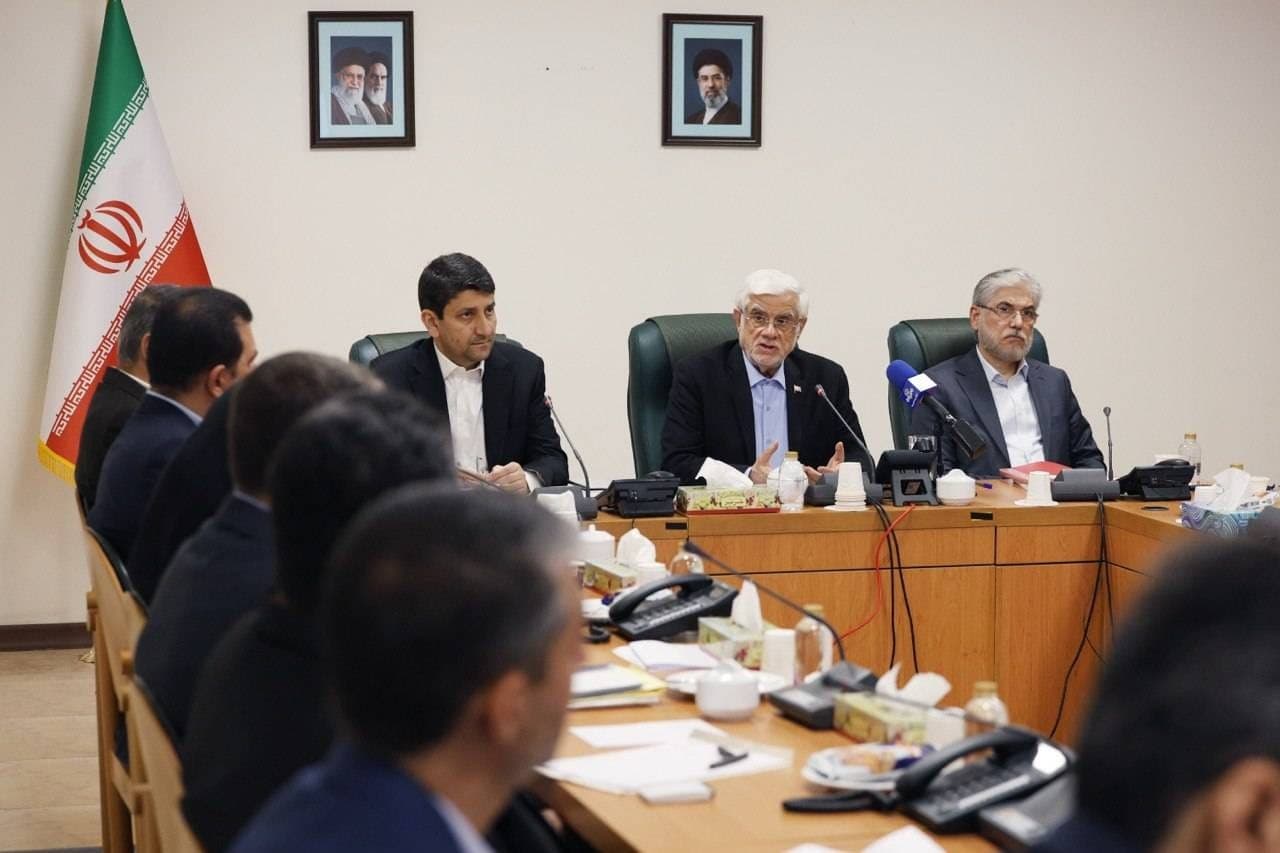
First Vice President Mohammad Reza Aref (center) chairs a meeting of the Special Task Force for Organizing and Guiding the Country's Cyberspace, attended by Minister of Science, Research and Technology Hossein Simaei (right) and Minister of Communications and Information Technology Sattar Hashemi (left). Photo: Irangov.ir
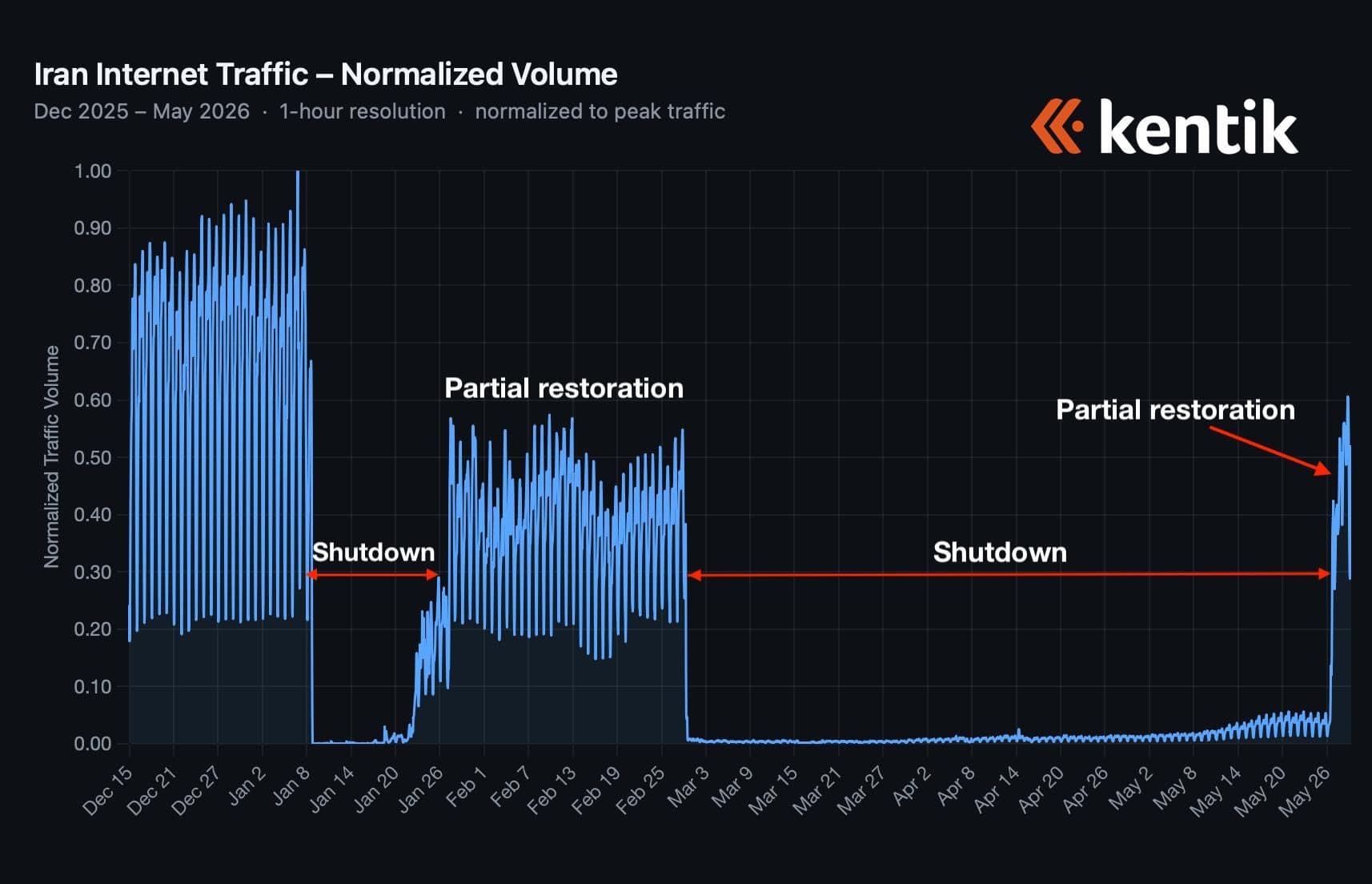
An unprecedented 88-day digital blackout began on the morning of February 28, 2026, immediately following US and Israeli military strikes on Iran. This wartime shutdown was a highly calculated strategy to establish absolute narrative control. The Islamic Republic activated a sophisticated “whitelist” architecture via its National Information Network (NIN), severing global internet access for the general public while granting uninterrupted connectivity to a vetted tier of state-affiliated entities, diplomats, and loyalists. For nearly three months, this shutdown trapped millions of ordinary citizens in a tightly monitored domestic intranet, allowing the state to completely monopolize the flow of information in and out of the country. It is against this backdrop of extreme digital repression that the new government’s sudden attempt to restore connectivity has ignited a fierce legal and political power struggle.
The “Special Task Force for Organizing and Guiding the Country’s Cyberspace” was officially established on May 12, 2026, by order of President Masoud Pezeshkian. After two weeks, it became the most talked-about news topic in Iran.
On May 26, 2026, Minister of Communications Sattar Hashemi announced that the process of returning Iran’s internet to its pre-January state had begun. He stated this was ordered by the President and finalized during the task force’s first official meeting.
According to Hashemi, 11 of the 15 task force members attended this meeting on May 25, voting 9 to 2 in favour of reconnecting the internet. Representatives from military institutions were also reportedly present.
Hours later, hardline groups fought back, calling the move illegal. Most notably, Mizan—the news agency affiliated with the judiciary—announced that the Court of Administrative Justice had ordered a halt to the reconnection. As of the early hours of May 29, this halt order hadn’t actually been executed, and network data showed that internet connectivity was gradually (though unstably) returning.
But where did this new task force come from, and will the internet stay on?
Why was the “Special Task Force” Formed?
President Pezeshkian, acting as both President and Head of the Supreme National Security Council, formed the task force on May 12, appointing First Vice President Mohammad Reza Aref to lead it.
The President’s order outlined several goals: creating unified policies, ending “conflicting voices” in how cyberspace is managed, rewriting the rules for decision-making, and improving the efficiency of the Supreme Council of Cyberspace’s secretariat.
The task force was given broad powers, including deciding when to restrict the internet, monitoring other agencies, regulating platforms, and managing cybersecurity.
The Lawsuit and the Court’s Unprecedented Ruling
On May 26, the judiciary’s Mizan News Agency stated the court had halted the internet reconnection. While Mizan didn’t name the plaintiffs, news outlets revealed them to be four hardline members of the Supreme Council of Cyberspace appointed directly by Supreme Leader Ali Khamenei: Kamyar Saghafi, Reza Taghipour, Rasoul Jalili, and Mohammad Hassan Entezari. All four are known for opposing free internet access.
Mizan claimed the court’s halt order was just standard procedure under Article 36, which allows a temporary halt if an issue has “necessity and urgency”.
However, looking at the history of the court tells a different story. Factnameh reviewed 1,302 rulings issued by the Court of Administrative Justice between 2013 and 2026. (CSV file)
While the court has cancelled government appointments before, issuing a rapid halt order like this is highly unusual. Halt orders are typically reserved for irreversible actions, like demolishing a building. By treating internet reconnection as a “necessity and urgency,” the court is acting as if connecting to the internet would cause irreparable harm.
Is the “Special Task Force” Actually Legal? The answer depends on what part of the government it legally belongs to. It is not clear under which body the order has been issued; within the administration or the Supreme Council of National Security.
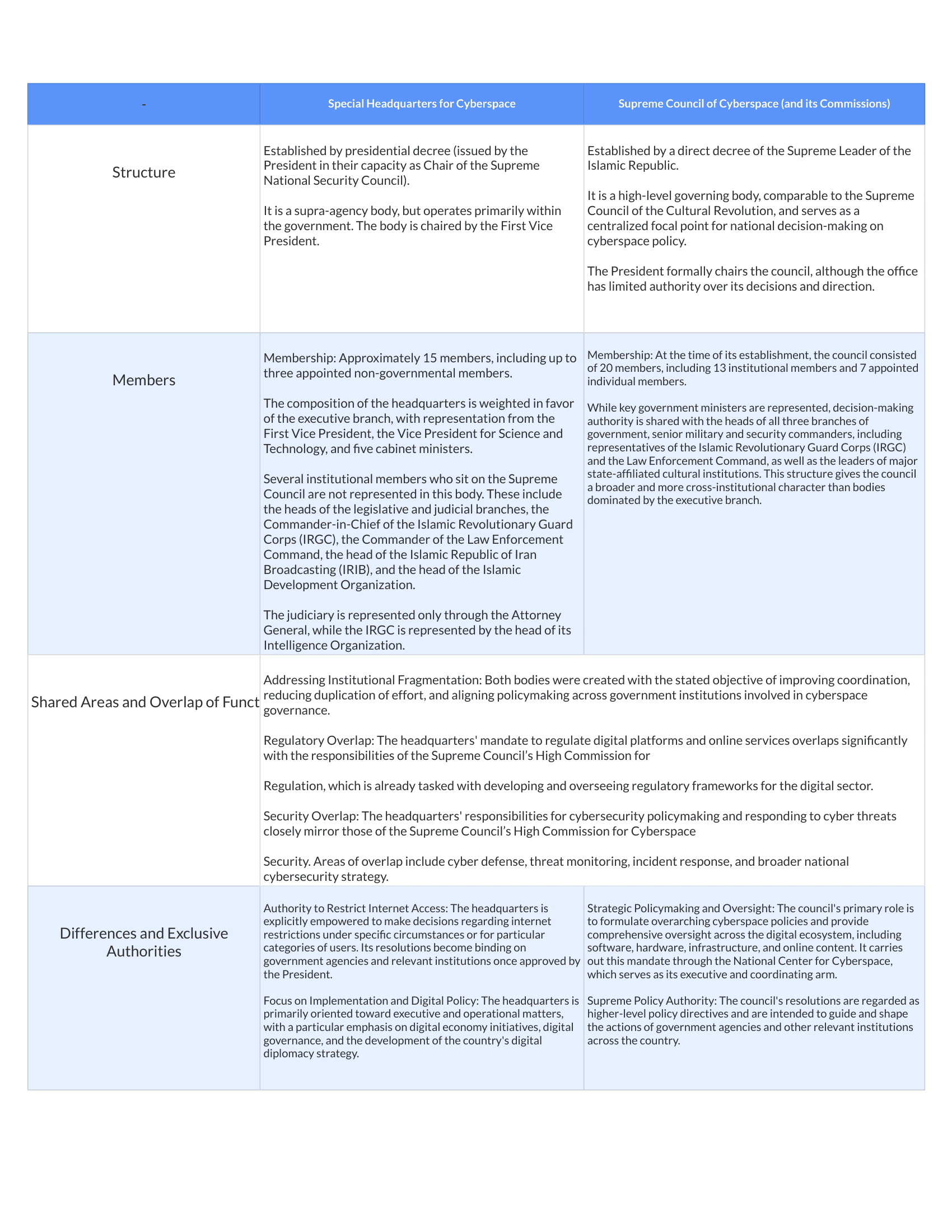
Scenario One: It’s a regular government body. If so, the court could easily shut it down for stepping on the toes of the Supreme Leader. For example, in a 2020 dispute over a research institute, the Supreme Court ruled in favour of the National Cyberspace Center over the Ministry of Communications. The court determined that the government lacked the authority to change the Center’s structure because it was established by a direct order from the Supreme Leader.
Scenario Two: It’s part of the Supreme National Security Council. Pezeshkian signed the order as the head of the Security Council, and the task force spokesperson noted it was created to replace a previous Security Council internet committee after three of its members were martyred. If it truly operates under the Security Council, the Court of Administrative Justice legally has no power to interfere with it.
A Battle Over Who Controls the Internet
Technically, the older Supreme Council of Cyberspace only handles broad internet policy and doesn’t actually have the authority to turn the internet on or off. However, the new task force’s founding documents explicitly state its goal is to reorganize and manage the older Council.
If the new task force survives this legal battle, the entire structure of Iran’s internet governance will shift. Power will move away from military and religious figures (who dominated the old Council) and toward the government. In the new task force, the First Vice President and five ministers call the shots, while hardline figures are notably absent.