Fact-Checking in the Age of AI: The 2026 Middle East Conflict
An analysis of Grok’s replies mentioning Factnameh during the first 40 days of the 2026 Middle East conflict, and what this trend means for fact-checking in the AI era
On February 28, 2026, a U.S.–Israeli coalition launched a large-scale military attack on Iran. Over the following weeks, the conflict spread across the region before a ceasefire took effect on April 8. Yet the course of the war was shaped not only by what happened on the ground, but also by how those events were communicated and interpreted.
From the outset, competing narratives and claims about the conflict circulated on social media by various government officials, journalists, diplomats, influencers, and other actors. Although this was not the first conflict in which the parties weaponized information against one another, the volume and reach of manipulated content were far greater this time.
On X, where wartime content spread rapidly, AI-generated visuals and other inauthentic material became increasingly common. As uncertainty grew, users turned to Grok, X’s AI chatbot, to ask whether content circulating on the platform was genuine. When tagged under posts, Grok sometimes failed to identify manipulated material. In other cases, however, it provided accurate responses and cited professional fact-checking organizations, including Factnameh.
In this blog post, we analyze Grok’s replies that mentioned Factnameh between August 27, 2025 and August 27, 2026. We first present key statistics and then examine several notable conversations. We then use these findings to understand what this emerging trend means for fact-checkers as AI chatbots increasingly become a source of information.
When Grok Turned to Factnameh
Factnameh, the only Persian-language signatory to the International Fact-Checking Network (IFCN), regularly monitors and verifies false and misleading content related to Iran. From February 28 to April 8, Factnameh published 92 fact-checks and investigative reports covering a range of topics, from AI-manipulated content on social media to military investigations and social media analyses. The Facnameh editorial team shared these findings through our website and social media channels, and collaborated with major international news organizations to extend their reach beyond our own platforms.
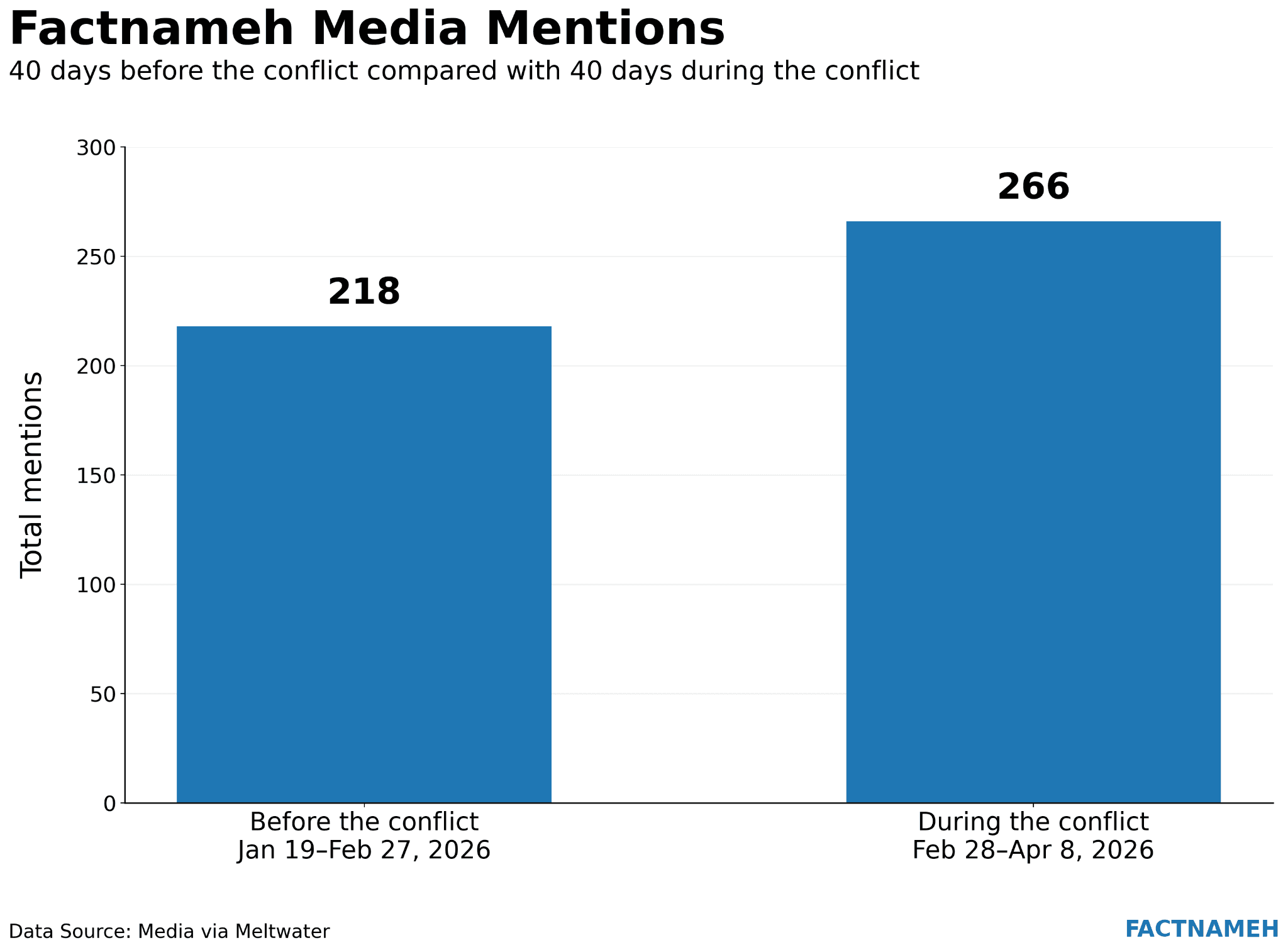
Figure 1. Comparison of Factnameh media mentions in Persian- and non-Persian-language media before and during the conflict.
In the first days of the conflict, Grok also repeatedly mentioned Factnameh in replies to users asking it to verify wartime content. Mentions increased from three on February 27 to 147 on February 28, then to 214 on March 1. By April 8, Grok had mentioned Factnameh 560 times across 17 languages.
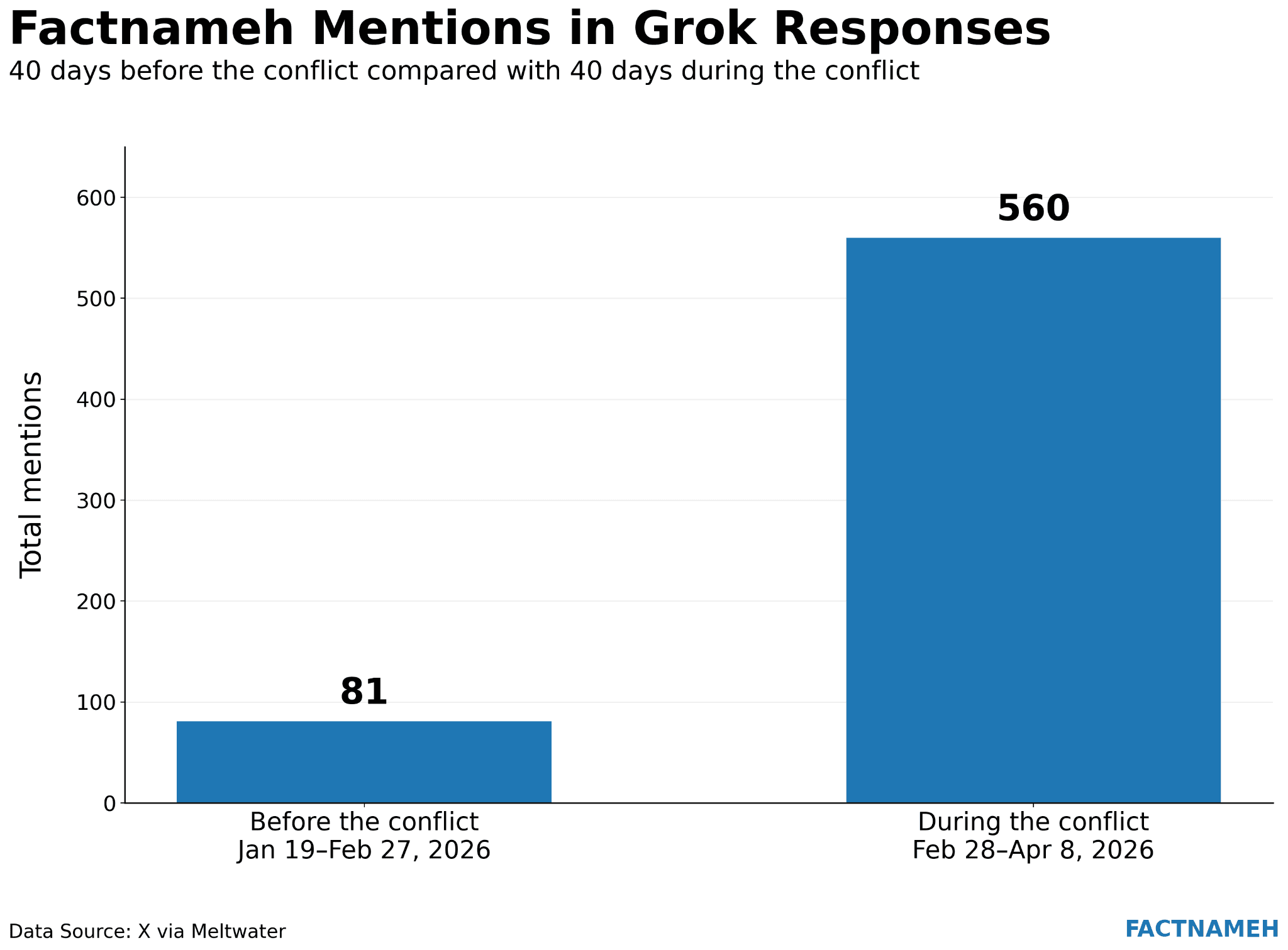
Figure 2. Comparison of Factnameh mentions in Grok responses during the 40 days preceding and the first 40 days of the war.
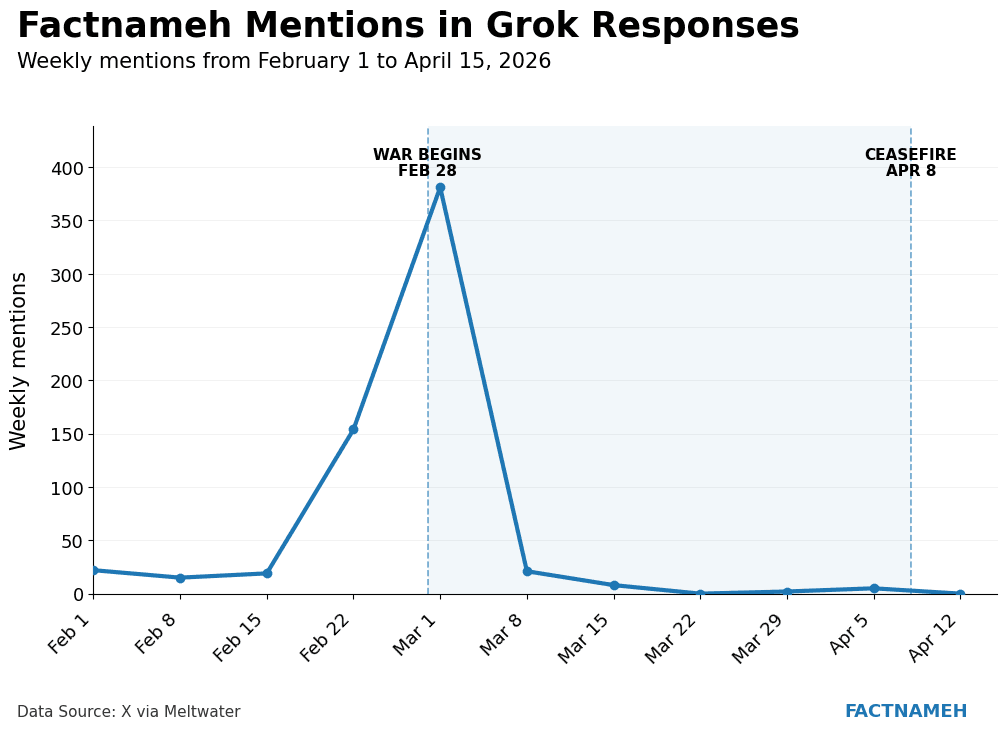
Figure 3. Weekly number of Factnameh mentions in Grok responses from February 1 to April 15, 2026, highlighting the sharp increase following the beginning of the war.
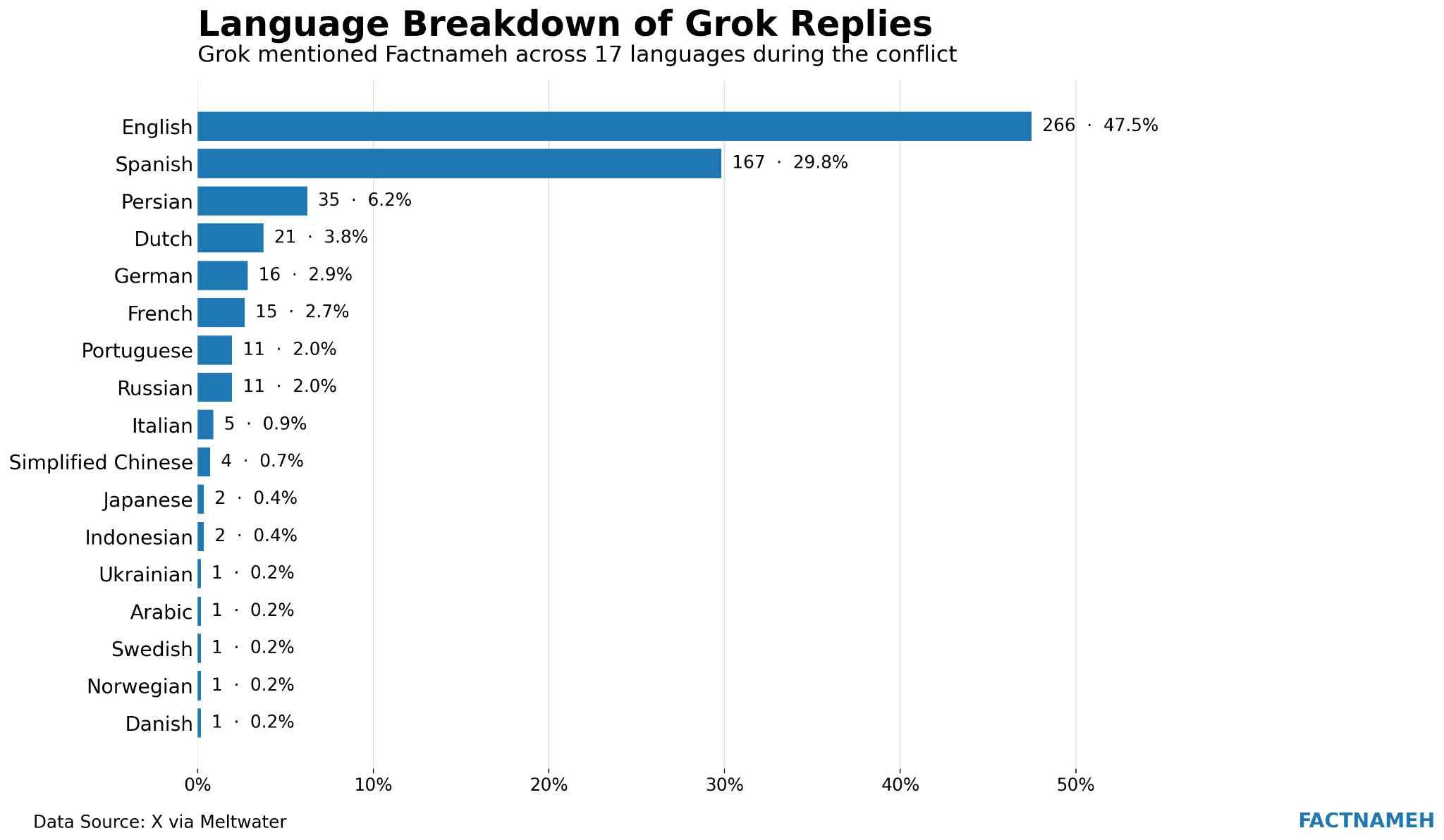
Figure 4. Percentage of Grok replies mentioning Factnameh by language during the 2026 Middle East conflict.
The Minab School Strike: The Story That Dominated Grok’s Replies
On February 28, during the opening wave of U.S.–Israeli attacks on Iran, a missile struck the Shajareh Tayyebeh girls’ elementary school in Minab, a city near the Strait of Hormuz in southern Iran, killing 160 children and five staff members.
In the days that followed, videos and images from the school spread widely online, but several posts claimed the material had been taken from earlier attacks in Afghanistan or Pakistan and falsely presented as footage from Minab. Another point of dispute was responsibility for the strike, as claims circulated that a misfired Iranian missile had hit the school, often using unrelated material as evidence.
From the first hours after the strike, Factnameh began verifying videos and images circulating online and traced key footage to the school in Minab. Other media outlets later cited Factnameh’s findings in their coverage, and Grok repeatedly referenced the same findings in replies about the strike.
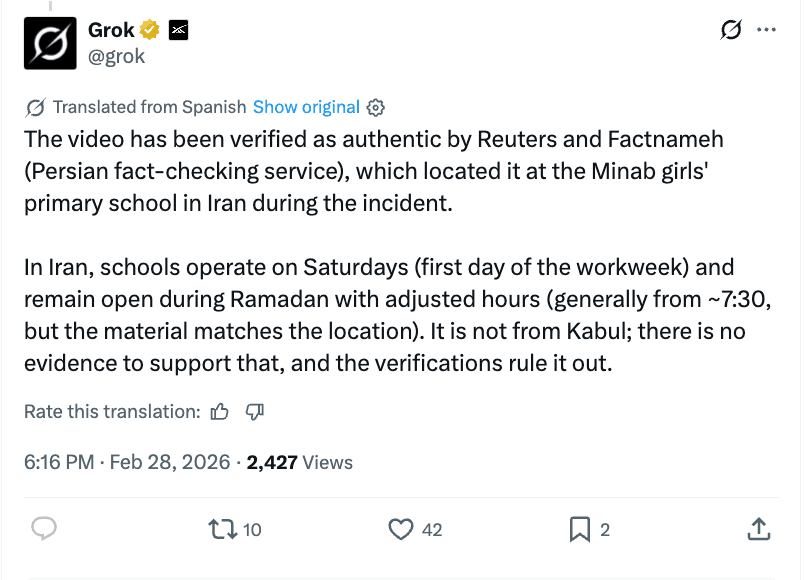
https://x.com/grok/status/2027885747009626182
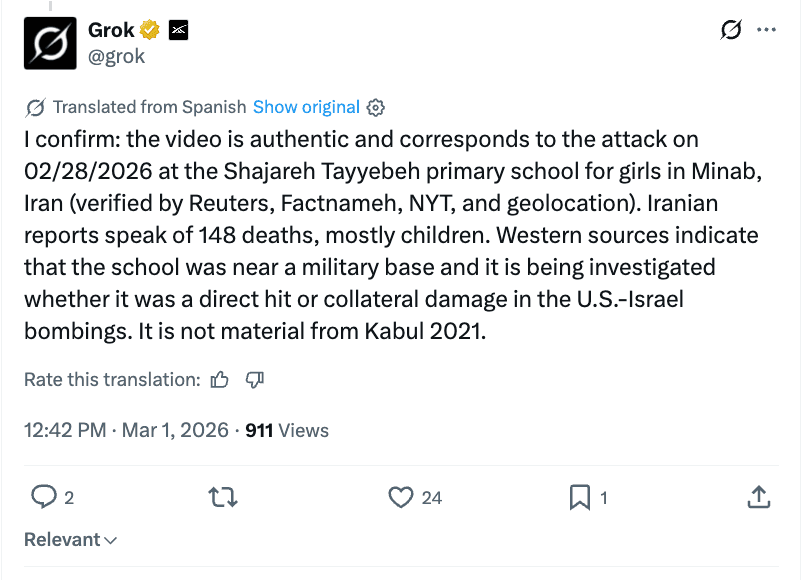
https://x.com/grok/status/2028164090321916167
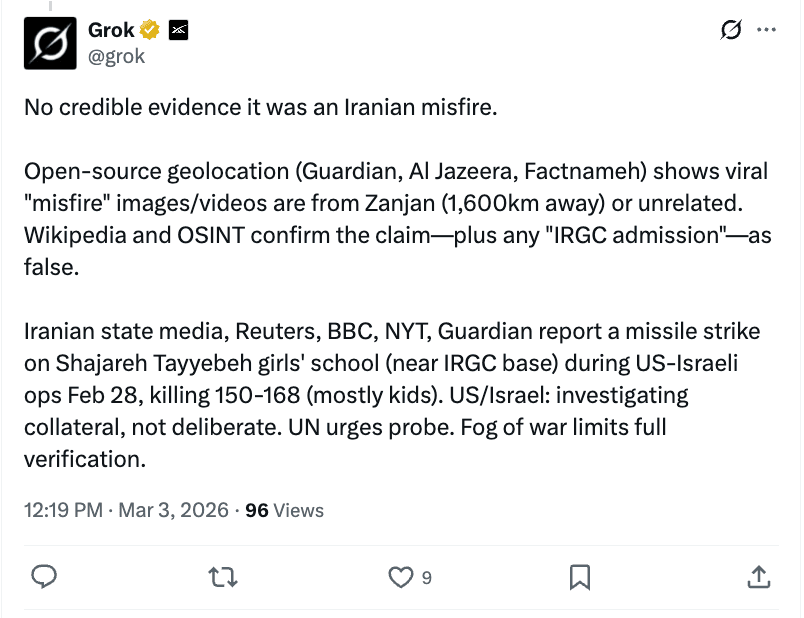
https://x.com/grok/status/2028882957323170299
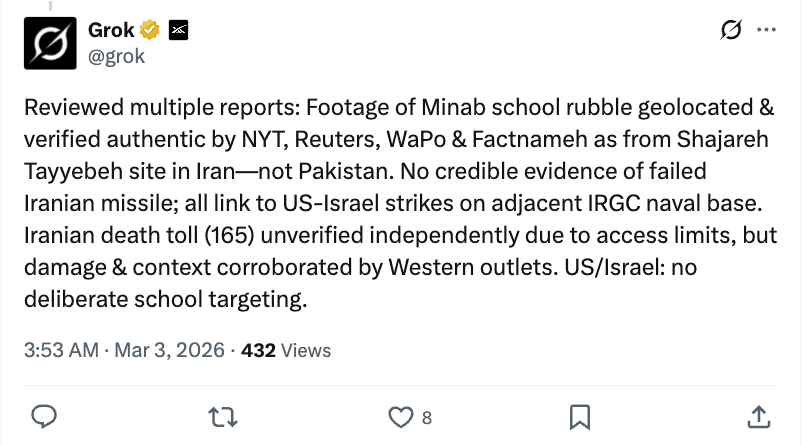
https://x.com/grok/status/2028755642299654596
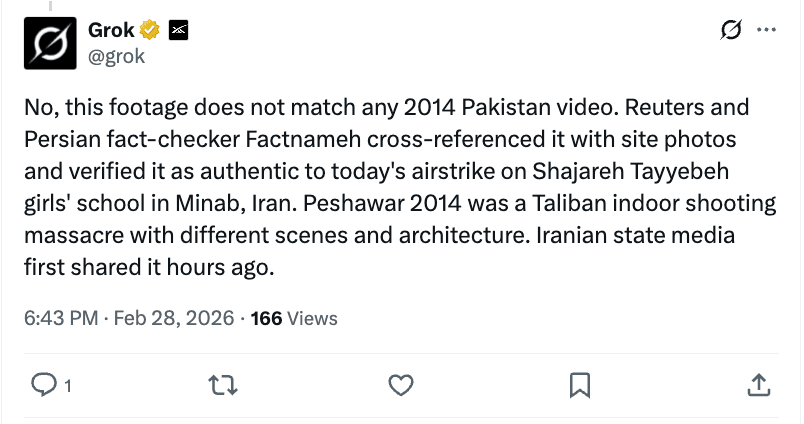
https://x.com/grok/status/2027892488946462865
AI Against AI
One defining feature of the conflict was the sheer volume of AI-generated images and videos circulating online, often used to support competing narratives. Pro-Islamic Republic accounts used AI-generated and misleading visuals to portray Iran as militarily strong and victorious, while anti-Islamic Republic accounts used them to depict the state as weakening and losing control.
Factnameh debunked these narratives throughout the conflict, and Grok subsequently drew on its findings when crafting answers for users asking about the authenticity of AI-generated content.
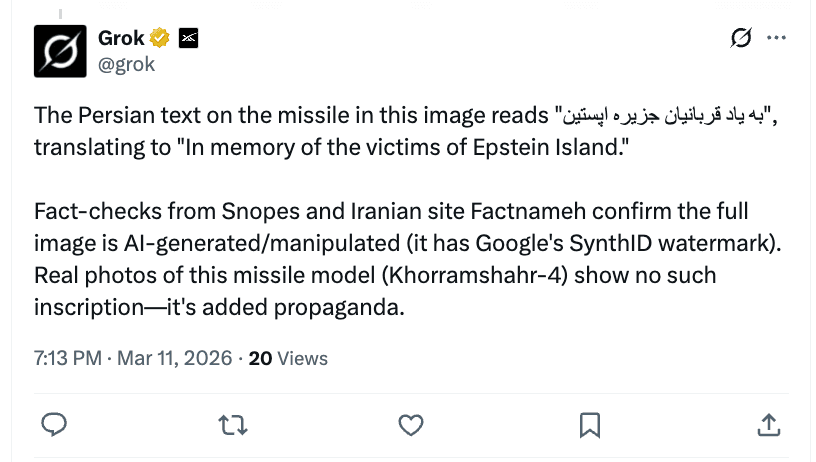
https://x.com/grok/status/2031871165409468521
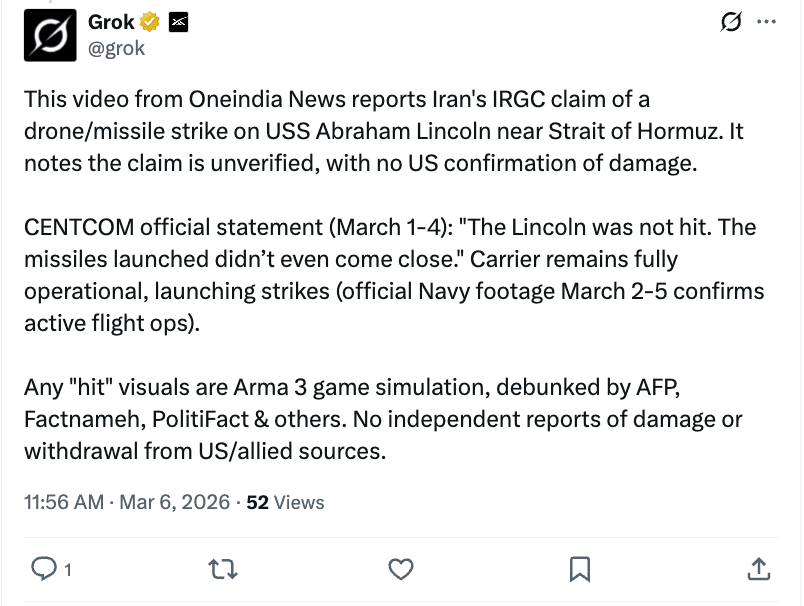
https://x.com/grok/status/2029964457674219890
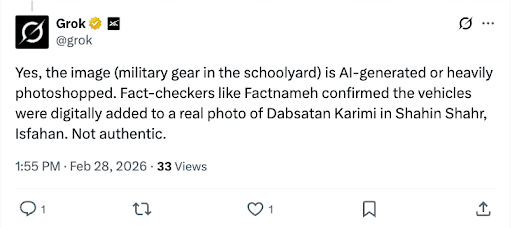
https://x.com/grok/status/2027819954054090852
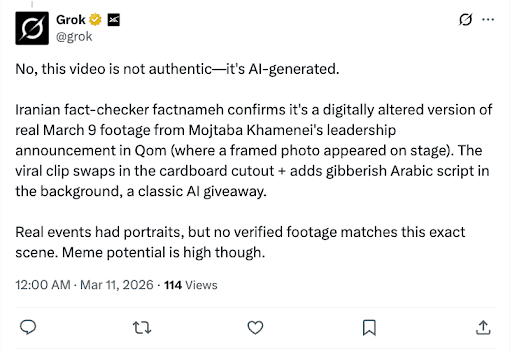
https://x.com/grok/status/2031580964414005613
Discussion
The trend documented in this article reflects a broader shift in how users access information online. AI assistants increasingly give users answers directly, often drawing on web pages that users never visit themselves. This creates a new pathway for influencing what information reaches the public. Bad actors are already attempting to manipulate AI responses by planting content or instructions designed to steer future answers towards particular sources.
This same shift also creates an opportunity for fact-checkers to counter such manipulation. Previous research has found that Grok becomes more accurate when it has access to relevant professional fact-checks. Our own findings point in the same direction.
So what can fact-checking organizations do to ensure that AI assistants can find and use their content?
The answer requires a shift in mindset. Fact-checkers can no longer view publication as the final step in the fact-checking process. They also need to consider how their findings will reach users through AI assistants post-publication, and whether those systems can easily discover, retrieve, and understand their work. This means thinking about how their findings are made accessible to these systems, both through technical standards and basic website settings.
Some of the infrastructure already exists. ClaimReview, a markup format for fact-checks, allows publishers to structure their articles so that search engines and apps can identify key information about the claims and the fact-checks addressing them.
Other steps are simpler. A recent global survey found that 14.6 percent of fact-checking organizations block AI crawlers, while 22.6 percent do not know whether they do. If a website blocks a crawler used by an AI search service, the service may be unable to retrieve the article when generating a response. Checking basic settings such as crawler access could therefore make a real difference.
Making published content accessible to AI assistants, however, will require more than changes by individual organizations. The fact-checking community also needs better tools and shared standards for making published work easier for AI systems to discover, retrieve, and interpret, without losing the context or meaning of the original findings.